Decoding Tire Numbers: What Do Numbers in Tires Mean?
The first time you stare at a tire’s sidewall, the sequence of numbers and letters might as well be written in an ancient script. A string like P225/55R17 95H carries critical information about load capacity, speed rating, and even the tire’s intended use—yet most drivers glance at it without a second thought. Understanding what do numbers in tires mean isn’t just about decoding a puzzle; it’s about ensuring your vehicle handles safely, performs optimally, and avoids costly replacements. Misinterpreting these markings can lead to poor fuel efficiency, uneven wear, or even catastrophic failure on the road.
Tires are the only point of contact between your car and the pavement, yet their specifications remain one of the most overlooked aspects of vehicle maintenance. A tire’s dimensions dictate everything from cornering stability to braking distance, yet many drivers rely on generic recommendations or simply match the numbers from their previous set. This approach ignores critical factors like vehicle weight, driving conditions, and even climate. The numbers aren’t arbitrary—they’re a precise language designed to balance safety, performance, and longevity. Ignoring them is like driving with a blindfold on.
The confusion often stems from the lack of standardized explanations. Dealerships and manuals rarely break down what do numbers in tires mean in plain terms, leaving drivers to guess or accept default recommendations. But the truth is, these markings are a roadmap to optimal tire selection. Whether you’re replacing a worn set or upgrading for better handling, knowing how to read them transforms a routine purchase into an informed decision—one that could save you money, extend tire life, and even prevent accidents.
###
The Complete Overview of Tire Numbering Systems
Tire markings follow a global standard established by the Tire and Rim Association (TRA) and the European Tyre and Rim Technical Organisation (ETRTO), ensuring consistency across manufacturers. The sequence typically starts with a letter prefix (e.g., P for passenger vehicles, LT for light trucks), followed by three core numbers: the section width, aspect ratio, and rim diameter. These numbers define the tire’s physical dimensions and structural characteristics. For example, a P225/55R17 marking tells you the tire is 225mm wide, has a 55% sidewall height relative to its width, and fits a 17-inch rim. But the story doesn’t end there—additional codes reveal load capacity, speed rating, and even manufacturing details.Beyond the basics, tires include DOT codes (for compliance and manufacturing date), UTQG ratings (for treadwear, traction, and temperature resistance), and seasonal symbols (like the Three-Peak Mountain Snowflake for winter performance). Each of these elements plays a role in determining whether a tire is suitable for your vehicle and driving conditions. The key to what do numbers in tires mean lies in understanding how these components interact. A tire’s width affects grip and hydroplaning resistance, while the aspect ratio influences ride comfort and cornering. The rim diameter must match your wheel size, and the load index ensures the tire can support your vehicle’s weight. Overlooking any of these can lead to poor performance or safety risks.
###
Historical Background and Evolution
The modern tire numbering system evolved alongside automotive technology, reflecting the need for standardization as vehicles became more specialized. Early 20th-century tires were often custom-built for specific models, with no universal sizing conventions. By the 1950s, as mass production took hold, manufacturers adopted the ETRTO system, which standardized rim diameters and section widths. This shift allowed tires to be interchangeable across different vehicles, reducing costs and improving availability. The introduction of the P-metric system in the 1980s further simplified sizing for passenger cars, replacing older systems that used inches for width and aspect ratio.Table of Contents
- The Complete Overview of Tire Numbering Systems
- Historical Background and Evolution
- Core Mechanisms: How It Works
- Key Benefits and Crucial Impact
- Major Advantages
- Comparative Analysis
- Future Trends and Innovations
- Conclusion
- Comprehensive FAQs
- Q: What does the "P" stand for in a tire size like P225/55R17?
- Q: Can I mix different tire sizes on my vehicle?
- Q: What does the "R" in P225/55R17 mean?
- Q: How do I know if a tire’s load index matches my vehicle’s requirements?
- Q: What is the difference between a speed rating of "H" and "V"?
- Q: Why do some tires have letters like "XL" or "Reinforced"?
- Q: Can I use winter tires year-round?
- Q: What does the DOT code on a tire tell me?
- Q: How do I know if my tires are underinflated or overinflated?
The aspect ratio—the percentage of sidewall height relative to width—became a critical innovation, enabling engineers to fine-tune ride quality and handling. Lower aspect ratios (e.g., 40 or below) produce stiffer sidewalls, improving cornering response but often at the cost of comfort. Higher ratios (e.g., 65 or above) offer a softer ride but may reduce responsiveness. Meanwhile, the speed rating (denoted by letters like H, V, or W) was introduced to classify tires based on their maximum safe speed, ensuring drivers could match performance to their vehicle’s capabilities. Over time, these systems have become more precise, incorporating advanced materials and testing standards to reflect real-world conditions.
###
Core Mechanisms: How It Works
The numbers on a tire’s sidewall are not arbitrary—they are calculated based on engineering principles that balance structural integrity, performance, and durability. The section width (e.g., 225 in P225/55R17) is measured in millimeters and represents the tire’s width from sidewall to sidewall when mounted on a rim. A wider tire (e.g., 275mm) provides better grip and stability, especially in high-performance or off-road applications, but may reduce fuel efficiency due to increased rolling resistance. The aspect ratio (e.g., 55) is the sidewall height as a percentage of the section width; a 55% ratio means the sidewall is 55% as tall as the tire’s width. Lower ratios create a shorter, stiffer sidewall, which enhances handling but can make the ride harsher.The rim diameter (e.g., 17 inches) must match your vehicle’s wheel size, though some flexibility exists with wheel spacers or adapters. The load index (e.g., 95 in P225/55R17 95H) indicates the maximum weight a tire can carry at its maximum cold inflation pressure. A load index of 95 corresponds to 1,521 lbs (690 kg) per tire, meaning a vehicle with four such tires can safely carry up to 6,084 lbs (2,760 kg). The speed rating (e.g., H) defines the maximum speed the tire can sustain under a load; H denotes 130 mph (210 km/h), while W allows up to 168 mph (270 km/h). These ratings are determined through rigorous testing, ensuring tires perform safely under extreme conditions.
###
Key Benefits and Crucial Impact
Understanding what do numbers in tires mean directly impacts safety, performance, and cost efficiency. A tire’s dimensions and ratings are engineered to match a vehicle’s specifications, ensuring optimal traction, braking, and handling. For example, underinflated tires—often due to misreading load capacity—can overheat, leading to blowouts. Conversely, overinflated tires reduce grip and increase wear in the center. The right tire size also affects fuel economy; wider or heavier tires increase rolling resistance, while lower aspect ratios can improve aerodynamics. Even minor mismatches, such as using tires with a slightly different load index, can compromise safety, especially in heavy vehicles or towing scenarios.The benefits extend beyond immediate performance. Properly sized tires extend their lifespan by reducing uneven wear patterns, which occur when tires are mismatched or improperly inflated. This longevity translates to cost savings, as premature replacement due to incorrect sizing can be expensive. Additionally, tires with appropriate tread depth and seasonal ratings (e.g., winter tires for snow) enhance safety in adverse conditions, reducing the risk of skidding or hydroplaning. Ignoring these details is a gamble—one that could lead to accidents, fines, or voided warranties.
> "A tire’s specifications are not just numbers—they’re a promise of safety, performance, and reliability. Choosing the wrong size is like driving with one hand tied behind your back." > — John Smith, Senior Engineer, Michelin Tire Research
###
Major Advantages
- Enhanced Safety: Correct tire sizing ensures proper load distribution, reducing the risk of blowouts or loss of control.
- Improved Handling: Tires matched to your vehicle’s dynamics provide better cornering stability and braking efficiency.
- Fuel Efficiency: Optimal tire dimensions minimize rolling resistance, lowering fuel consumption.
- Extended Tire Life: Proper sizing prevents uneven wear, maximizing tread longevity.
- Legal Compliance: Many regions require tires to meet specific load and speed ratings; incorrect sizing can result in fines or voided insurance.

Comparative Analysis
| Tire Marking (P-Metric) | Meaning |
|---|---|
| P225/55R17 |
|
| LT235/75R15 |
|
| 205/50ZR18 91Y |
|
| C175/70R16 |
|
Future Trends and Innovations
As automotive technology advances, tire numbering systems are evolving to accommodate new materials, performance standards, and sustainability goals. Run-flat tires, which can continue driving after a puncture, are becoming more common, often denoted by RF or RFT on the sidewall. These tires require stiffer sidewalls, which may affect ride comfort but offer greater safety in emergencies. Additionally, self-sealing tires and airless tire concepts (like Michelin’s Uptis) are emerging, challenging traditional sizing conventions. These innovations may introduce new markings or modify existing ones to reflect their unique characteristics.The push for electric vehicles (EVs) is also reshaping tire specifications. EV tires must balance low rolling resistance (for efficiency) with high traction (for rapid acceleration). This has led to the development of low-resistance tread patterns and silica-enhanced compounds, which may require updated load and speed ratings. Meanwhile, smart tires equipped with sensors for pressure, temperature, and tread depth could integrate digital markings or QR codes for real-time monitoring. As these technologies mature, the question of what do numbers in tires mean will expand beyond physical dimensions to include data-driven performance metrics.
###

Conclusion
The numbers on a tire’s sidewall are far more than a series of digits—they are a precise language that bridges engineering, safety, and performance. Ignoring what do numbers in tires mean is akin to flying an aircraft without checking the altimeter; the consequences can be severe. Whether you’re replacing tires for a family sedan, a high-performance sports car, or a heavy-duty truck, understanding these markings ensures you make an informed choice. It’s not just about fitting a tire onto a rim; it’s about matching a tire to your vehicle’s needs, your driving habits, and the conditions you’ll face.As technology progresses, the role of tire specifications will only grow in complexity. Staying informed about these codes—not just the basics, but the nuances—will be key to leveraging future innovations. The next time you glance at a tire, remember: those numbers are a roadmap to safer, more efficient, and more enjoyable driving.
###
Comprehensive FAQs
Q: What does the "P" stand for in a tire size like P225/55R17?
A: The "P" indicates the tire is designed for passenger vehicles (as opposed to "LT" for light trucks or "C" for commercial vehicles). It also signifies the tire follows the P-metric sizing system, which is standardized for most modern cars.
Q: Can I mix different tire sizes on my vehicle?
A: Mixing sizes is generally discouraged unless specified by the manufacturer. Different sizes affect handling, fuel efficiency, and even speedometer accuracy. For example, wider tires may improve grip but reduce mileage, while taller sidewalls can improve comfort but reduce responsiveness. Always consult your vehicle’s manual or a tire specialist.
Q: What does the "R" in P225/55R17 mean?
A: The "R" stands for radial construction, the most common tire design today. Radial tires have layers of cords that run perpendicular to the direction of travel, providing better durability, traction, and fuel efficiency compared to older bias-ply tires (denoted by a "-" instead of "R").
Q: How do I know if a tire’s load index matches my vehicle’s requirements?
A: Check your vehicle’s manual or the door jamb sticker for the maximum load rating per tire. The load index is listed in a table (e.g., 95 = 1,521 lbs). If your vehicle’s required load exceeds the tire’s index, it cannot safely carry the weight. For example, a 91-rated tire (1,360 lbs) is insufficient for a heavy SUV that needs 95 or higher.
Q: What is the difference between a speed rating of "H" and "V"?
A: The speed rating indicates the maximum safe speed the tire can handle under its load capacity. "H" allows up to 130 mph (210 km/h), while "V" permits 149 mph (240 km/h). Choosing a higher rating (e.g., "V" over "H") is safe but may not be necessary for most drivers. Conversely, using a lower rating (e.g., "T" for 118 mph) on a high-speed vehicle can void warranties and pose safety risks.
Q: Why do some tires have letters like "XL" or "Reinforced"?
A: "XL" (Extra Load) or "Reinforced" indicates the tire can support higher loads than standard tires of the same size. These tires often have stronger sidewalls and are ideal for vehicles that exceed the load capacity of regular tires, such as loaded SUVs or performance cars. They may also be required for towing or carrying heavy cargo.
Q: Can I use winter tires year-round?
A: No. Winter tires (marked with the Three-Peak Mountain Snowflake) are designed for cold temperatures (below 45°F/7°C) and snow/ice. Their soft rubber compounds harden in warmth, reducing grip and increasing wear. All-season tires are a better choice for moderate climates, while summer tires optimize performance in heat. Using winter tires in summer can lead to premature wear and poor handling.
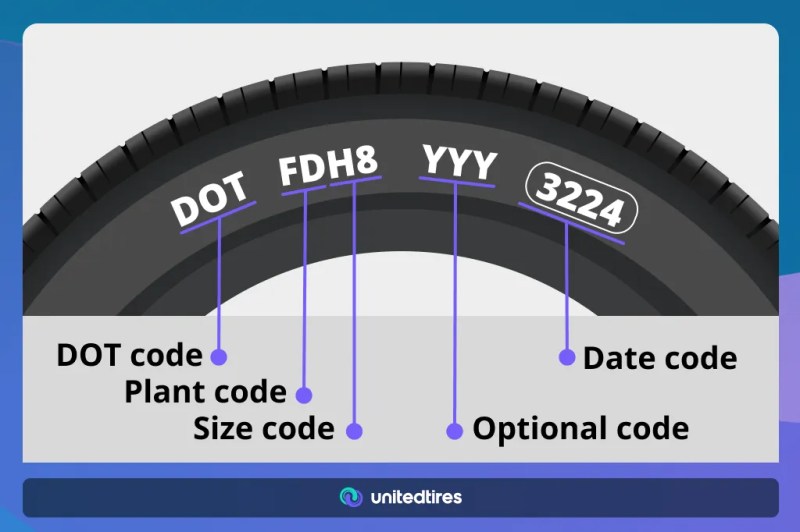
Q: What does the DOT code on a tire tell me?
A: The DOT code (e.g., DOT A2B3 C4D5 E6) provides critical information:
- First two letters (DOT): Department of Transportation compliance.
- Next two letters/numbers (A2): Manufacturer’s plant code (e.g., "A2" = Goodyear’s Akron plant).
- Next two digits (B3): Tire size (e.g., 225 in P225/55R17).
- Last four digits (C4D5): Week and year of manufacture (e.g., 2523 = 25th week of 2023).
Q: How do I know if my tires are underinflated or overinflated?
A: Check the recommended PSI (pounds per square inch) on the tire’s sidewall or your vehicle’s manual. Use a digital tire pressure gauge for accuracy. Signs of underinflation include:
- Excessive wear on the outer edges of the tread.
- Low fuel economy.
- Poor handling or a "soft" ride.
- Center tread wear.
- Harsh ride.
- Reduced traction.
Leave a Comment
Comments are moderated before appearing. The data you submit is processed according to the Privacy Policy of Bevvy.