Tag
scientific principles
-

Decoding khz to hz: The Science Behind Frequency Conversions
At its core, the conversion from khz to hz is a matter of scientific notation—a way to simplify the expression of extremely high frequencies while maintaining...
-

The Hidden Science of What Defines Matter: From Atoms to the Universe’s Building Blocks
The question of what defines matter has haunted philosophers since antiquity, from Democritus’ atomic theories to Einstein’s relativity. Today, scientists...
-

The Hidden Physics: What Is the Formula of the Speed?
The equation itself is deceptively simple: speed = distance / time . But peel back the layers, and you uncover a framework that underpins navigation...
-

The Hidden Science Behind What Is a Phase Change and Why It Shapes Our World
At its core, phase change is a dance between molecular energy and structural integrity. When heat is added or removed, particles in a substance rearrange...
-

The Hidden Force: What Is Osmotic Pressure and Why It Shapes Life
At its core, osmotic pressure arises from the collision of particles in a solution against a semipermeable membrane. This collision creates a pressure...
-

Understanding What Is the Proportional Relationship: The Hidden Math Behind Everyday Decisions
Yet, the proportional relationship extends far beyond basic arithmetic. In physics, it explains the relationship between force and acceleration (Newton’s...
-

The Hidden Force of Gravity: How It Shapes Our Universe and Daily Lives
What if you could step outside Earth’s pull? Astronauts orbiting the International Space Station experience this firsthand, floating effortlessly as the...
-

Unlocking Science: What Is Chemical Change and Examples That Define Modern Chemistry
The line between physical and chemical change is where science meets the tangible. A glass shattering is physical; a log burning is chemical. One preserves...
-

The Science Behind Precipitation Reaction: From Lab Basics to Real-World Applications
The beauty of a precipitation reaction lies in its predictability. By mastering solubility rules—those elegant guidelines that dictate which compounds dissolve...
-

The Hidden Force: What Is Energy in Physics Explained
The question of what is energy in physics isn’t just academic; it’s the foundation of modern technology, from solar panels harnessing sunlight to nuclear...
-

The Hidden Science of Resonance Structures: How They Shape Reality
Resonance structures aren’t just a tool for chemists; they’re a window into how nature itself balances uncertainty and order. Take benzene, for instance: its...
-
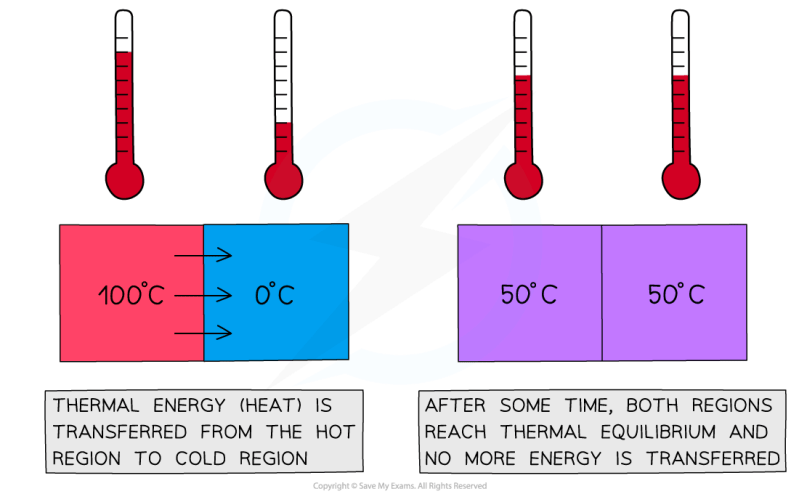
The Science Behind What Is Thermal Equilibrium: How Heat Shapes Our World
The concept transcends everyday observations. In a human body, thermal equilibrium ensures cells function without overheating or freezing. In industrial...
-

Cycles What You Need Know: The Hidden Forces Shaping Modern Life
The problem isn’t a lack of awareness; it’s a failure to connect the dots. We live in an era where data floods us daily—sleep trackers, stock alerts, climate...
-

The Hidden Forces: Why Do Atoms Form a Chemical Bond?
The story begins with electrons. These tiny, negatively charged particles orbit atomic nuclei like planets around a sun, but their paths are far from orderly...
-

When an atom loses an electron it becomes: The science behind ionization and its ripple effects
What happens when an atom loses an electron isn’t a one-time event but a cascade of consequences. The atom’s identity changes, its ability to bond with others...
-

How Newton’s Three Laws of Motion Still Shape Modern Science and Daily Life
What makes these laws enduring is their simplicity coupled with profound universality. The first law—often called the law of inertia—explains why a car lurches...
-

The Hidden Laws of Energy: What Is Thermodynamics and Why It Rules the Universe
Thermodynamics isn’t just about numbers in textbooks; it’s the reason your coffee cools down, why stars burn for billions of years, and why some processes are...
-

What Is Corrosion? The Hidden Enemy of Materials Science
At its core, what is corrosion is the gradual destruction of materials by chemical or electrochemical reactions with their environment. It’s not just limited...
-

The Enigmatic E: What Is the E and Why It Matters Now
The paradox deepens when considering how a single symbol can carry such weight. Mathematicians Leonhard Euler and John Napier didn’t invent the e so much as...
-

Unlocking Science: What Is Neutralisation Reaction and Why It Matters
The beauty of what is neutralisation reaction lies in its simplicity and its profound impact. At its essence, it’s a dance between hydrogen ions (H⁺) and...