Tag
chemical-bonding
-

How Carbon’s Electron Configuration Shapes Life, Tech, and the Universe
Carbon’s electron configuration is the silent architect of existence—dictating everything from the DNA helix to graphene’s super-strength. Six protons anchor...
-

The Science Behind Sodium’s Electron Count: How Many Electrons Does Sodium Have?
The question how many electrons does sodium have isn’t just academic; it’s practical. Understanding this count explains why sodium is never found in pure form...
-

The Hidden Power of Electron Dot Diagrams in Modern Chemistry
Yet, their power extends beyond textbooks. In labs and boardrooms alike, electron dot diagrams serve as a bridge between abstract theory and tangible...
-

The Hidden Science Behind What Is a Compound Chemistry and Why It Shapes Modern Life
The misconception that chemistry is merely about memorizing elements or balancing equations obscures its true power: what is a compound chemistry is...
-

Unlocking the Science: What Is a Dispersion Bond and Why It Matters
Beneath the surface of everyday materials—from the adhesive holding your smartphone screen to the lubricants keeping industrial machinery running—lies a subtle...
-

Is CO2 Polar? The Science, Debates, and Hidden Truths Behind Carbon Dioxide’s Molecular Nature
What makes the inquiry "is carbon dioxide polar?" particularly compelling is its intersection with real-world consequences. Take, for instance, the design of...
-

What Is Superglue Used For? 100+ Examples & Hidden Uses
Yet its reputation as a household essential masks a darker side. Misuse can lead to skin burns, respiratory issues, or even accidental poisoning. Understanding...
-

The Science Behind What Are Ionic Bonds: From Theory to Real-World Power
Yet for all their ubiquity, these bonds remain misunderstood. Many assume they exist only in textbooks or industrial labs, unaware that they shape the very air...
-

The Hidden Code: Electron Configuration Periodic Table Explained
Yet for all its elegance, this system remains misunderstood. Many students memorize electron configurations without grasping why they matter—why sodium’s...
-

Why Sodium Valence Electrons Define Modern Chemistry
At first glance, the simplicity of sodium’s electron configuration—[Ne] 3s¹—might seem unremarkable. Yet this single valence electron is the linchpin of its...
-

How Many Valence Electrons Are in Calcium? The Science Behind Its Chemical Behavior
The answer lies in the element’s position in the periodic table, specifically in Group 2, the alkaline earth metals. Unlike transition metals or noble gases...
-

How to Tell If Something Is Polar or Nonpolar: The Science Behind Molecular Behavior
At its core, how to tell if something is polar or nonpolar hinges on two pillars: the electronegativity difference between bonded atoms and the...
-

Unraveling what is the effective nuclear charge: The Hidden Force Shaping Chemistry
The term itself is deceptively simple. At its core, the effective nuclear charge refers to the net positive charge experienced by an electron in a...
-
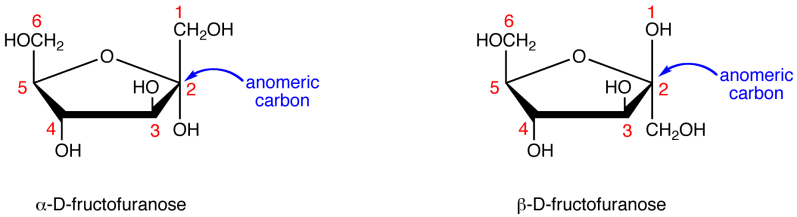
The Hidden Role of the Anomeric Carbon in Chemistry
What makes the anomeric carbon so critical is its dual nature: it’s both a structural pivot and a reactive hotspot. When a sugar like glucose transitions from...
-

Unraveling what is effective nuclear charge: The hidden force shaping atomic behavior
The confusion arises because textbooks often gloss over the distinction between raw nuclear charge (Z) and the effective nuclear charge (Z_eff). While Z is...
-

Decoding PBR3 Lewis Structure: The Hidden Rules of Boron’s Molecular Geometry
The pbr3 lewis structure —a deceptively simple formula—exposes a paradox at the heart of molecular geometry. Boron trifluoride (BF 3 , not PBr 3 , though...
-

The Science Behind What Is the Polymerization: A Deep Dive into Molecular Transformation
At its core, polymerization is the art of chaining molecules together like beads on a string, but the precision required to control this process defines entire...
-

The Hidden Geometry: Unraveling the Trigonal Pyramidal Structure
What makes the trigonal pyramidal structure fascinating is its ubiquity in both organic and inorganic chemistry. From ammonia (NH₃) to phosphine (PH₃) and even...
-

Unlocking the Secrets: The Science Behind Sulfur’s Atomic Number
The periodic table’s 16th element, sulfur, is more than just a yellow powder found in volcanoes or the stench of rotten eggs. Its atomic number—16—defines its...
-

The Hidden Truth: What Family Is Calcium In and Why It Matters More Than You Think
The confusion often arises from calcium’s dual nature: it’s a mineral essential to life, yet its chemical classification is purely inorganic. This dichotomy is...