The Gulag Archipelago: How Stalin’s Forced Labor Empire Reshaped History
The Gulag Archipelago was not merely a collection of prisons—it was a deliberate, industrialized system of human exploitation that stretched across Siberia, the Arctic, and remote corners of the USSR. From the early 1920s to the late 1950s, millions were sent to these camps under the guise of "re-education," where disease, starvation, and forced labor became the norm. The term Gulag Archipelago—coined by dissident writer Alexander Solzhenitsyn—evokes the sprawling, interconnected nature of this network, a labyrinth of suffering that mirrored the Soviet state’s paranoia and ambition.
What makes the Gulag Archipelago uniquely terrifying is its scale. At its peak, the system encompassed over 400 camps, labor colonies, and prison settlements, housing between 10 and 17 million inmates by some estimates. Unlike traditional prisons, these facilities were designed for permanent labor exploitation, where prisoners were worked to death in mines, logging operations, and construction projects—often under conditions that defied basic human dignity. The Gulag was not just a punishment; it was an economic engine, fueling Stalin’s rapid industrialization while erasing entire populations.
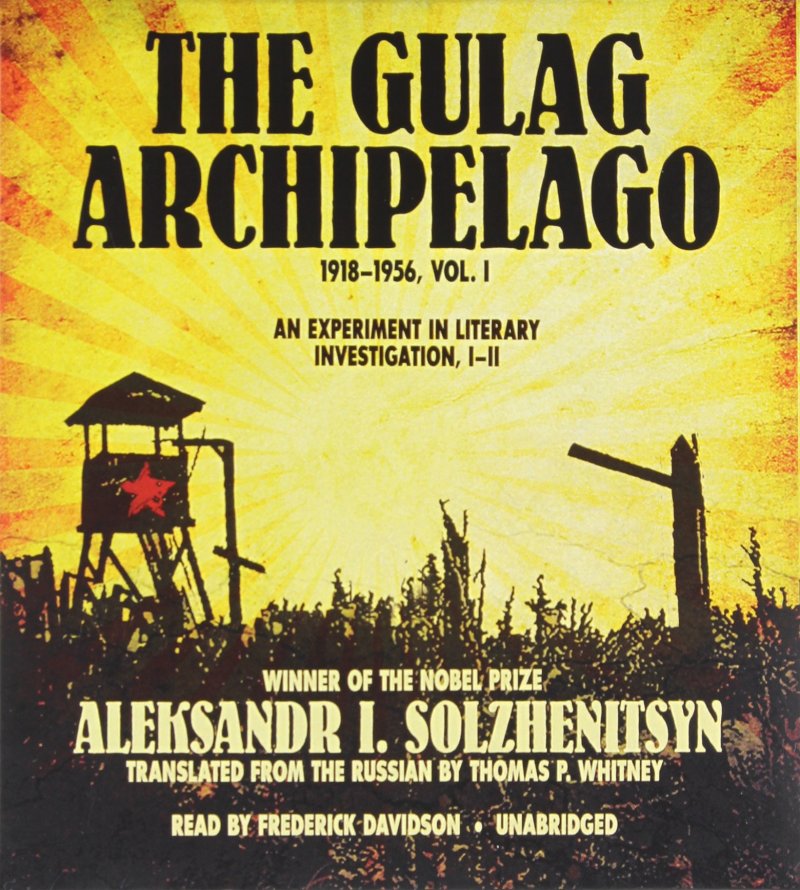
The Gulag Archipelago remains one of history’s most harrowing examples of state-sponsored terror. Its existence was systematically erased from Soviet history until the late 1980s, when glasnost policies allowed Solzhenitsyn’s three-volume exposé to circulate. Even today, the full extent of its operations—hidden in archives and oral testimonies—continues to emerge, revealing a system so vast it reshaped entire regions of the USSR.

The Complete Overview of the Gulag Archipelago
The Gulag Archipelago was the physical manifestation of Stalin’s purges, a tool to eliminate perceived enemies while simultaneously extracting forced labor. Officially, the system began with the creation of the Main Camp Administration (Glavnoe Upravlenie Lagerei, or GULAG) in 1930, though its roots trace back to the Russian Civil War and the early Bolshevik concentration camps. By the time of Stalin’s Great Terror (1936–1938), the Gulag had become a cornerstone of Soviet governance, absorbing intellectuals, peasants, ethnic minorities, and even party members accused of treason.The camps were not uniform; they ranged from relatively "mild" labor colonies to the infamous Kolyma in the Far East, where temperatures plunged to -50°C (-58°F) and mortality rates exceeded 20% annually. Prisoners were categorized by skill—engineers, doctors, and artisans were prized for their labor, while "useless eaters" (the elderly, disabled, or unskilled) were sent to die in remote outposts. The Gulag’s infrastructure was so vast that entire towns, like Norilsk and Magadan, were built by slave labor, their foundations still bearing the scars of forced construction.
Historical Background and Evolution
The origins of the Gulag Archipelago lie in the Bolshevik Revolution’s immediate aftermath. Following Lenin’s decree in 1918, which legalized "concentration camps for counter-revolutionaries," the system evolved under Stalin into a mechanized tool of control. The Five-Year Plans (1928–1941) accelerated its expansion, as industrialization demanded a disposable workforce. By 1934, the GULAG employed over 2 million prisoners, and by 1953—Stalin’s death—estimates suggest 18 million had passed through its gates, with 1.5–2 million perishing.The Gulag’s evolution reflected Soviet priorities: during World War II, it temporarily slowed as prisoners were repurposed for military support, but by the 1940s, it resumed with renewed vigor, targeting "cosmopolitans" (Jewish and non-Russian intellectuals) and former war heroes accused of collaboration. The system’s adaptability—shifting from ideological purges to economic exploitation—made it uniquely resilient. Even after Stalin’s death, Khrushchev’s de-Stalinization (1956) only partially dismantled it; many camps persisted until the 1960s, repurposed for political dissidents.
Core Mechanisms: How It Works
The Gulag Archipelago operated on a hierarchical, bureaucratic model designed to obscure accountability. At the top were the Chekists (secret police), who determined who was sent to the camps based on vague charges like "anti-Soviet agitation." Prisoners were transported in sealed trains, often without food or water, to destinations marked only as "Point X" on maps. Once inside, they were assigned a lagpunkt (camp number) and integrated into a rigid labor system where quotas—not survival—were the priority.Table of Contents
- The Complete Overview of the Gulag Archipelago
- Historical Background and Evolution
- Core Mechanisms: How It Works
- Key Benefits and Crucial Impact
- Major Advantages
- Comparative Analysis
- Future Trends and Innovations
- Conclusion
- Comprehensive FAQs
- Q: How many people died in the Gulag Archipelago?
- Q: Were all Gulag prisoners political dissidents?
- Q: Did the Gulag contribute to Soviet industrialization?
- Q: How did prisoners survive in the Gulag?
- Q: Is the Gulag Archipelago still visible today? Yes, but much of it is in ruins. Former camps like Perm-36 and Vorkuta are now museums, while others, like Magadan’s transit prison , remain standing. Satellite imagery reveals abandoned settlements across Siberia, their ghostly outlines still visible in the tundra. Q: Why was the Gulag’s existence denied for so long?
The mechanics of survival were brutal. Prisoners were issued zakuski (ration cards) that provided minimal calories, and those who couldn’t meet work quotas faced katorga (hard labor) or execution. The arbat (prisoner labor exchange) system allowed some to earn privileges by working in skilled trades, but most were trapped in cycles of exhaustion. Escape was nearly impossible: the Kolyma Highway, a 1,000-km stretch of road built by prisoners, was lined with watchtowers and patrols. Those who tried to flee were shot on sight.
Key Benefits and Crucial Impact
The Gulag Archipelago was not just a tool of repression—it was an economic powerhouse. By the 1930s, it produced 20% of Soviet gold, vast quantities of timber, and critical infrastructure like the White Sea-Baltic Canal, built entirely by slave labor. The system also served as a social experiment, stripping prisoners of identities and replacing them with camp numbers, fostering a culture of mutual distrust. For the Soviet state, the Gulag solved two problems at once: it eliminated political threats and provided a cheap, expendable workforce.Yet its impact extended far beyond economics. The Gulag Archipelago became a defining feature of Soviet society, shaping generations of survivors who returned to civilian life traumatized and silenced. Entire ethnic groups, like the Chechens and Crimean Tatars, were deported en masse to the Gulag, with entire populations erased from their ancestral lands. The psychological toll was incalculable; as Solzhenitsyn wrote, "The line dividing good and evil cuts through the heart of every human being."
"The Gulag was not an exception to Soviet history—it was its essence." — Alexander Solzhenitsyn, The Gulag Archipelago
Major Advantages
- Economic Exploitation: The Gulag provided a limitless labor force for Stalin’s industrialization, extracting resources that would have been impossible to obtain through conventional means.
- Political Control: By imprisoning dissenters, intellectuals, and minorities, the system ensured compliance and eliminated organized opposition.
- Geopolitical Expansion: Remote regions like Siberia and the Arctic were developed through forced labor, securing Soviet territorial claims.
- Bureaucratic Efficiency: The GULAG’s centralized administration allowed for rapid scaling, with camps appearing overnight in response to state needs.
- Cultural Erasure: The systematic destruction of prisoner identities and histories served to rewrite Soviet collective memory, reinforcing state propaganda.
Comparative Analysis
| Feature | Gulag Archipelago | Nazi Concentration Camps |
|---|---|---|
| Primary Purpose | Forced labor, political repression, economic extraction | Genocide, racial extermination, slave labor (e.g., Auschwitz) |
| Duration | 1920s–1950s (with fluctuations) | 1933–1945 (accelerated during WWII) |
| Geographic Scope | Siberia, Arctic, Central Asia (USSR-wide) | Germany, Poland, occupied Europe |
| Survivor Testimonies | Solzhenitsyn’s Gulag Archipelago, Varlam Shalamov’s Kolyma Tales | Primo Levi’s If This Is a Man, Elie Wiesel’s Night |
Future Trends and Innovations
In the post-Soviet era, the Gulag Archipelago’s legacy has taken on new dimensions. Former camp sites, like Perm-36 and Vorkuta, now serve as museums, though many remain abandoned, their ruins a stark reminder of state violence. Scholarly interest has surged, with archives in Russia, Germany, and the U.S. gradually releasing documents that paint a fuller picture of the system’s operations.Technologically, digital humanities projects are mapping the Gulag’s geography using GIS tools, while AI-assisted transcriptions of survivor testimonies (like those from the Russian State Archive) are uncovering new details. However, Russia’s modern government remains ambivalent about confronting this history, occasionally whitewashing its darker aspects in favor of nationalist narratives. The challenge for historians and activists alike is to ensure that the Gulag Archipelago’s lessons—about the dangers of unchecked state power—are not forgotten.

Conclusion
The Gulag Archipelago was more than a collection of camps; it was a microcosm of Stalin’s dictatorship, where ideology and economics merged into a single, lethal machine. Its existence forced millions into a cycle of suffering that redrew the map of the USSR, leaving behind a landscape of abandoned settlements and unmarked graves. Today, as authoritarian regimes resurge globally, the Gulag serves as a cautionary tale about the ease with which states can instrumentalize human lives for political and economic gain.Yet the Gulag’s story is also one of resilience. Survivors like Solzhenitsyn, along with lesser-known voices, ensured that the truth endured. Their testimonies compel us to ask: how far will a state go to control its people? And what happens when history’s darkest chapters are buried—not in the ground, but in the archives?
Comprehensive FAQs
Q: How many people died in the Gulag Archipelago?
Estimates vary widely, but historians generally agree that 1.5–2 million prisoners perished in the Gulag, with total incarcerations reaching 10–17 million over its 30-year existence. Mortality rates were highest in remote camps like Kolyma, where conditions were most extreme.
Q: Were all Gulag prisoners political dissidents?
No. While political prisoners (intellectuals, former nobles, and party members) made up a significant portion, the Gulag also held criminals, ethnic minorities, and ordinary citizens accused of minor offenses like hoarding grain. By the 1940s, entire nationalities (e.g., Chechens, Koreans) were deported en masse.
Q: Did the Gulag contribute to Soviet industrialization?
Absolutely. The Gulag produced gold, timber, and infrastructure critical to Stalin’s Five-Year Plans. For example, the White Sea-Baltic Canal was built by 170,000 prisoners in just two years, with tens of thousands dying in the process.
Q: How did prisoners survive in the Gulag?
Survival depended on skill, luck, and connections. Skilled workers (doctors, engineers) could earn privileges like better food or reduced labor. Others relied on arbat (black-market trading) or forming underground networks. Most, however, succumbed to disease, exhaustion, or execution.
Q: Is the Gulag Archipelago still visible today?
Yes, but much of it is in ruins. Former camps like Perm-36 and Vorkuta are now museums, while others, like Magadan’s transit prison, remain standing. Satellite imagery reveals abandoned settlements across Siberia, their ghostly outlines still visible in the tundra.
Q: Why was the Gulag’s existence denied for so long?
The Soviet government suppressed information about the Gulag to maintain its image as a workers’ paradise. Even after Stalin’s death, Khrushchev’s de-Stalinization was limited, and full disclosure only began with glasnost in the 1980s. Many archives remain classified in Russia today.
Leave a Comment
Comments are moderated before appearing. The data you submit is processed according to the Privacy Policy of Bevvy.