The Soul of Southern Comfort: Why Red Beans and Rice Still Rules American Kitchens
There’s a reason why the scent of red beans simmering with smoked sausage or andouille drifts through New Orleans’ French Quarter on Mondays like a sacred ritual. This dish—red beans and rice—is more than a meal; it’s a living testament to survival, adaptation, and the quiet strength of Southern Black cuisine. Born in the crucible of enslaved Africans’ resourcefulness, refined by Creole ingenuity, and immortalized by jazz-age chefs, it endures as a symbol of community and comfort. Even today, when food trends flicker like candlelight, this dish remains unshaken, its simplicity masking layers of history, technique, and soul.
The magic lies in its duality: the earthy, smoky depth of the beans—slow-cooked until they melt into the pot—and the crisp, fragrant rice that absorbs every whisper of flavor. It’s a dish that thrives on patience, where time transforms humble ingredients into something transcendent. Yet for all its reverence, red beans and rice is also democratic. A pot on the stove can feed a family, a crowd, or a lonely soul craving warmth. It’s the kind of food that doesn’t just fill a plate but stitches together generations, one bite at a time.
What makes this dish so enduring? Partly, it’s the alchemy of its ingredients—pig fat, cayenne, thyme, and the unmistakable tang of dried red kidney beans. But it’s also the story behind it: a dish that was once a necessity, now celebrated as a masterpiece. To understand red beans and rice is to trace the contours of American history, from the rice fields of West Africa to the kitchens of Louisiana, where it became a Monday tradition that still defines the city’s identity.
The Complete Overview of Red Beans and Rice
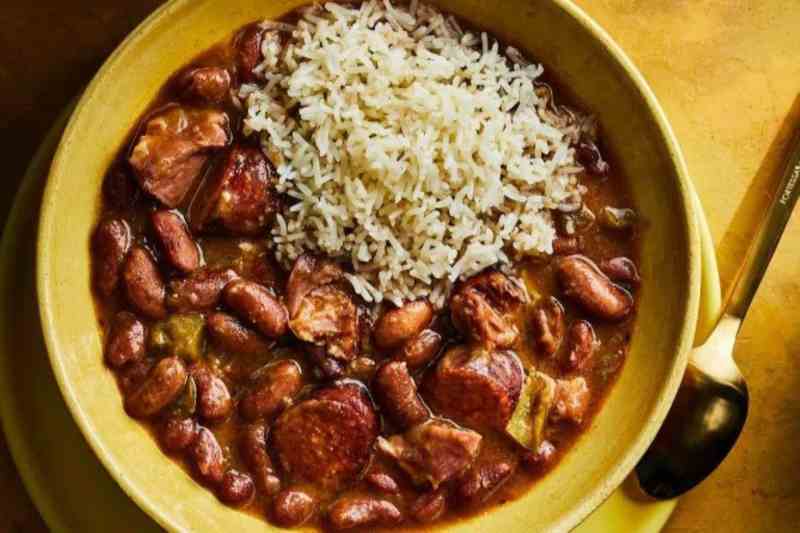
Red beans and rice is the bedrock of Southern cooking, a dish so deeply embedded in cultural fabric that it transcends its ingredients. At its core, it’s a one-pot wonder: dried red kidney beans simmered with a roux-based broth, often enriched with smoked meats like andouille or tasso ham, and served over long-grain white rice. But its genius lies in its adaptability—it can be rustic or refined, spicy or mild, a quick weeknight dinner or a labor-of-love Sunday feast. The key is balance: the beans must be tender but not mushy, the broth rich without being greasy, and the rice perfectly infused with the flavors around it.
What sets red beans and rice apart from other bean-and-rice dishes (like Mexican frijoles or Caribbean red beans) is its Creole-Cajun heritage. The French influence is subtle but unmistakable in the use of a dark roux—a technique borrowed from French cooking but perfected in Louisiana’s humid kitchens. Meanwhile, the African roots are unapologetic: the slow-cooking of beans, the reliance on pig fat for depth, and the rhythmic layering of spices. Together, these elements create a dish that’s both humble and sophisticated, a testament to how oppression and creativity can birth something extraordinary.
Historical Background and Evolution
The origins of red beans and rice are a microcosm of the African diaspora’s culinary resilience. Enslaved Africans brought their knowledge of legumes—especially beans—from West and Central Africa, where dishes like waakye (Ghana) and feijoada (Brazil) already existed. In Louisiana, these beans were paired with rice, a crop introduced by Spanish colonists but quickly adopted by enslaved people who recognized its potential. The result was a dish that mirrored the resourcefulness of its creators: using every part of the pig, stretching meals over days, and turning scraps into something nourishing.
Table of Contents
- The Complete Overview of Red Beans and Rice
- Historical Background and Evolution
- Core Mechanisms: How It Works
- Key Benefits and Crucial Impact
- Major Advantages
- Comparative Analysis
- Future Trends and Innovations
- Conclusion
- Comprehensive FAQs
- Q: Why is red beans and rice traditionally served on Mondays in Louisiana?
- Q: Can I substitute red kidney beans for another type?
- Q: What’s the difference between a Creole and Cajun version?
- Q: How do I prevent my red beans and rice from tasting greasy?
- Q: Is red beans and rice gluten-free?
- Q: Why does my rice turn out mushy when cooking with red beans?
- Q: Can I make red beans and rice in an Instant Pot or slow cooker?
- Q: What’s the best way to store leftover red beans and rice?
- Q: Are there regional variations outside Louisiana?
- Q: How can I make my red beans and rice more flavorful?
By the 19th century, red beans and rice had evolved into a Creole staple, particularly in New Orleans, where it became a Monday tradition. The story goes that after Sunday church services, cooks would prepare a large pot of beans to sustain families through the week—a practice that endured even as the city’s demographics shifted. Today, it’s a dish tied to identity: in Louisiana, it’s a point of pride; in African American communities nationwide, it’s a link to heritage. Chefs like Leah Chase (of Dooky Chase’s) elevated it to haute cuisine, proving that what was once a necessity could also be art.
Core Mechanisms: How It Works
The secret to red beans and rice lies in its technique, particularly the roux and the cooking process. A proper roux—made by slowly cooking flour and fat (traditionally lard or bacon grease) until it turns a deep mahogany color—is the flavor anchor. This isn’t just about color; it’s about developing a nutty, almost caramelized depth that carries the dish. The beans themselves are soaked overnight (or parboiled) to soften them, then simmered for hours with aromatics like onions, garlic, bell peppers, and spices (thyme, bay leaves, cayenne). The slow cook transforms tough beans into a creamy, velvety texture.
Equally critical is the rice. In Louisiana, long-grain white rice is preferred because it absorbs flavors without becoming mushy. The rice is cooked separately and then layered with the beans, allowing it to soak up the broth’s essence. Some cooks even toast the rice in the pot with a bit of the bean broth before adding water, ensuring each grain is infused with the dish’s smoky, spicy soul. The result is a harmony of textures: the beans’ creaminess, the rice’s slight crunch, and the broth’s richness—each element playing its part in a symphony of taste.
Key Benefits and Crucial Impact
Red beans and rice isn’t just a dish; it’s a cultural keystone with ripple effects across nutrition, economics, and social identity. Nutritionally, it’s a powerhouse: beans provide plant-based protein and fiber, while rice offers carbohydrates for energy. The addition of smoked meats or vegetables adds healthy fats and vitamins, making it a balanced, budget-friendly meal. Historically, it was a lifeline for communities with limited resources, proving that ingenuity could turn simple ingredients into sustenance. Today, it remains a cornerstone of affordable, wholesome eating, especially in regions where access to fresh produce is uneven.
Beyond its practical benefits, red beans and rice carries emotional weight. For many, it’s tied to childhood memories—grandmothers stirring pots, the communal act of eating from a single dish, the way the scent of cayenne and pork belly evokes nostalgia. In New Orleans, it’s a marker of resilience, a dish that survived hurricanes, economic shifts, and cultural erasure. Even now, as food trends come and go, this dish endures because it’s more than a recipe; it’s a living tradition.
"Food is our greatest treasure. And through it, we express our love, our culture, our faith. Red beans and rice isn’t just food—it’s a prayer in a pot."
— Leah Chase, Legendary New Orleans Chef
Major Advantages
- Nutritional Density: A single serving delivers 15–20g of protein, 8–10g of fiber, and essential minerals like iron and magnesium, making it a complete meal.
- Budget-Friendly: Dried beans and rice are among the most affordable protein sources, ideal for large families or tight budgets.
- Versatility: Can be adapted with vegetables (okra, tomatoes), seafood (shrimp, crawfish), or different meats (sausage, ham hock) to suit regional tastes.
- Cultural Significance: Serves as a culinary bridge between African, French, and Spanish influences, embodying Louisiana’s unique heritage.
- Meal-Prep Friendly: Flavors deepen overnight, making it perfect for batch cooking and reheating without losing quality.

Comparative Analysis
| Red Beans and Rice (Louisiana) | Frijoles Rojos (Mexico) |
|---|---|
|
|
| Feijoada (Brazil) | Red Beans and Rice (Caribbean) |
|
|
Future Trends and Innovations
The future of red beans and rice lies in its ability to evolve without losing its soul. As plant-based diets grow in popularity, chefs are experimenting with versions that swap pork for smoked tofu or mushrooms, proving the dish can thrive without meat. Meanwhile, fusion takes hold: some modern interpretations blend Creole techniques with global flavors, like adding miso to the roux or serving the rice with kimchi. Yet, there’s a counter-trend toward authenticity—home cooks and restaurants double down on traditional methods, preserving the dish’s historical integrity.
Sustainability is another frontier. With climate change affecting rice and bean crops, there’s a push for heirloom varieties and local sourcing. Some Louisiana farms now grow heritage beans, while urban gardens revive old-school cooking techniques. Even the Monday tradition isn’t static: in New Orleans, food trucks and pop-ups reimagine the dish with global twists, ensuring it remains relevant to new generations. The challenge will be balancing innovation with respect—for this dish isn’t just food; it’s a legacy.

Conclusion
Red beans and rice is a masterclass in how food can be both practical and profound. It’s a dish that speaks to survival, creativity, and the power of tradition. Whether you’re eating it in a bustling New Orleans restaurant or a quiet kitchen in Chicago, the experience is the same: warmth, comfort, and a taste of history. It’s a reminder that the most enduring foods aren’t just about ingredients or technique—they’re about the stories we carry in our pots.
As long as there are cooks willing to stir a pot for hours, as long as there are families gathered around a table, and as long as there’s a Monday in New Orleans where the air smells like cayenne and pork, red beans and rice will endure. It’s not just a meal; it’s a heritage, a ritual, and a testament to the fact that even the simplest dishes can hold entire worlds within them.
Comprehensive FAQs
Q: Why is red beans and rice traditionally served on Mondays in Louisiana?
A: The Monday tradition stems from post-Sunday church meals. Enslaved people and later Black families would cook a large pot of beans on Sundays to last through the week, with Mondays becoming the designated day to eat it. The practice also tied to the Catholic tradition of fasting on Fridays, making Monday the next available meat-heavy meal.
Q: Can I substitute red kidney beans for another type?
A: While red kidney beans are traditional, you can use pinto beans or even black beans for a similar texture. However, kidney beans hold their shape better and have a slightly sweeter flavor. For a closer match, soak them overnight and simmer for at least 2 hours.
Q: What’s the difference between a Creole and Cajun version?
A: Creole versions often include tomatoes, bell peppers, and sometimes seafood, with a lighter roux. Cajun styles rely more on the roux’s depth, with cayenne and smoked meats like andouille. Both use the same base ingredients but differ in spice levels and additional flavors.
Q: How do I prevent my red beans and rice from tasting greasy?
A: The key is controlling the roux. Cook it slowly to a dark brown (not burnt) and skim excess fat during cooking. Also, use lean meats like chicken or turkey instead of fatty pork, and simmer the beans uncovered to evaporate excess liquid.
Q: Is red beans and rice gluten-free?
A: Traditionally, no—it relies on a flour-based roux. For a gluten-free version, use a cornstarch or rice flour roux, or omit it entirely and build flavor with aromatics like celery and onions. Many modern recipes also incorporate gluten-free thickeners.
Q: Why does my rice turn out mushy when cooking with red beans?
A: Overcooking or adding too much liquid are common culprits. Louisiana cooks often toast the rice in the pot with a bit of the bean broth before adding water, then cook it separately. Use a 1:2 rice-to-liquid ratio and avoid stirring the rice once it’s boiling.
Q: Can I make red beans and rice in an Instant Pot or slow cooker?
A: Absolutely. For an Instant Pot, sauté the roux, add beans and broth, then pressure cook for 30 minutes. In a slow cooker, simmer on low for 6–8 hours. The key is patience—the beans need time to soften and absorb flavors. Adjust liquid as needed.
Q: What’s the best way to store leftover red beans and rice?
A: Let it cool completely, then store in an airtight container in the fridge for up to 5 days. For longer storage, freeze in portions. Reheat gently on the stove with a splash of water or broth to restore moisture.
Q: Are there regional variations outside Louisiana?
A: Yes! In Texas, it’s often spicier with chili peppers. In the Caribbean, coconut milk or saltfish may be added. African American communities in the South may include collard greens or cornbread. Each version reflects local ingredients and history.
Q: How can I make my red beans and rice more flavorful?
A: Boost depth with smoked paprika, a splash of apple cider vinegar, or a bay leaf tied in cheesecloth. For umami, add a dash of fish sauce or miso. Fresh herbs like parsley or cilantro at the end brighten the dish. Don’t skimp on the roux—it’s the flavor foundation.
Leave a Comment
Comments are moderated before appearing. The data you submit is processed according to the Privacy Policy of Bevvy.