When Did the PS2 Launch? The Console That Defined Gaming Forever
The moment Sony unveiled the PlayStation 2 in March 2000, it didn’t just announce a new console—it declared a gaming revolution. When did the PS2 hit shelves? The answer isn’t just a date; it’s the beginning of an era where blockbuster films, immersive RPGs, and online multiplayer collided in living rooms worldwide. While competitors like Nintendo and Microsoft scrambled to catch up, the PS2’s dominance was immediate, selling over 155 million units across its lifecycle. Its launch wasn’t just a product release; it was a cultural reset, proving that gaming could be both an art form and a mainstream phenomenon.
Behind its sleek, DVD-player guise lay a machine built on Sony’s audacious bet: that consumers would pay premium prices for a console that could also play movies. The strategy paid off spectacularly, but the real magic was in its library—titles like Grand Theft Auto: San Andreas, Shadow of the Colossus, and Metal Gear Solid 3 didn’t just define genres; they redefined what games could achieve. The PS2’s launch wasn’t just about hardware; it was about creating an ecosystem where developers pushed boundaries, and players became participants in a shared digital experience.
Yet the story of when the PS2 arrived is more than a timeline—it’s a study in timing. Sony’s decision to merge gaming with DVD playback in 2000 wasn’t just strategic; it was prophetic. As the internet bubble burst and DVD players became household staples, the PS2 positioned itself as the centerpiece of entertainment. Its longevity—spanning over a decade—wasn’t accidental. It was the result of a perfect storm: a killer app (DVD playback), a library that evolved with player tastes, and a business model that made it accessible yet aspirational. To understand the PS2’s rise, you must first grasp the forces that shaped its arrival.

The Complete Overview of the PS2’s Launch and Legacy
The PlayStation 2’s launch in Japan on March 4, 2000, wasn’t just a product debut—it was a middle finger to the industry’s expectations. While Nintendo’s N64 had dominated the late ‘90s with its analog sticks and 3D prowess, Sony’s second console was designed to be more than a gaming machine. By integrating DVD playback, Sony transformed the PS2 into a multimedia hub, a move that would later cement its status as the best-selling console of all time. The console’s initial price in Japan was ¥39,800 (~$350 USD), a premium for an era when gaming hardware was still a niche investment. Yet within months, it became clear that Sony had struck gold: the PS2 wasn’t just competing with Nintendo; it was redefining what a console could be.In North America, the PS2 launched on October 26, 2000, arriving with a bang. Sony’s marketing campaign—featuring the iconic "PlayStation 2: The Next Generation"—positioned it as the future, not just of gaming, but of home entertainment. The console’s dual-layer DVD drive allowed for higher-quality games and films, a feature that would later enable the rise of Blu-ray. Meanwhile, in Europe, the PS2 debuted on November 24, 2000, with regional pricing adjustments to match local markets. What followed was a phenomenon: by 2004, the PS2 had outsold all other consoles combined, a feat that remains unmatched in gaming history. Its success wasn’t just about sales—it was about creating a cultural moment where gaming became a universal language.
Historical Background and Evolution
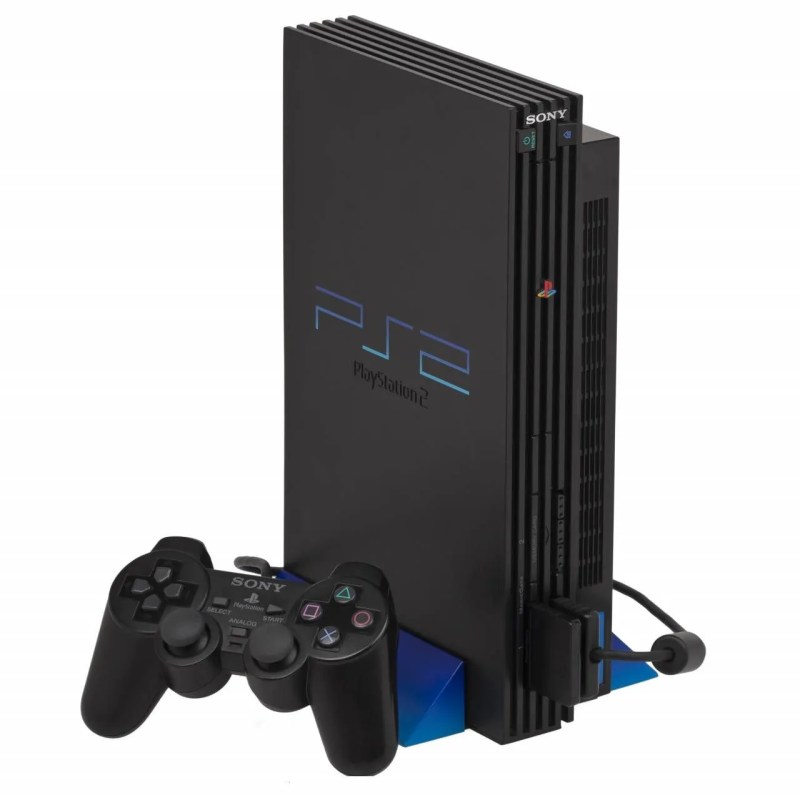
The PS2’s origins trace back to Sony’s post-PS1 struggles. After the original PlayStation’s massive success in the mid-’90s, Sony faced a dilemma: how to evolve without alienating its core audience. The answer came in the form of a partnership with Nintendo, where Sony was originally slated to develop the hardware for Nintendo’s next console. However, creative differences led to a split, and Sony decided to build its own machine. The result was the PS2, a console that blended cutting-edge technology with backward compatibility—a feature that allowed PS1 games to run on the new system. This move was crucial, as it gave existing PlayStation owners a reason to upgrade, while also appealing to newcomers.The PS2’s development was marked by secrecy and high stakes. Sony’s engineers worked in isolation, ensuring the console’s DVD capabilities wouldn’t be compromised by third-party interference. The decision to use a DVD drive was risky—at the time, DVD players were expensive and not yet standard in households. But Sony’s gamble paid off, as the PS2’s ability to play movies and games on the same system made it a must-have for families. The console’s design, with its sleek, black-and-silver aesthetic, was also a departure from the colorful, cartoonish consoles of the era. It signaled maturity, positioning the PS2 as a serious entertainment device rather than just a toy. By the time it launched, the PS2 wasn’t just a competitor—it was the benchmark against which all other consoles would be measured.
Core Mechanisms: How It Works
At its core, the PS2 was a marvel of engineering for its time. Powered by a 128-bit Emotion Engine CPU and a 16GB hard drive (optional), it delivered graphics and performance that dwarfed its contemporaries. The console’s Graphics Synthesizer handled rendering, while the Sound Processing Unit (SPU2) delivered Dolby Digital 5.1 surround sound, making games feel cinematic. What set the PS2 apart, however, was its DVD drive, which not only played movies but also enabled larger game capacities—something that would become essential for open-world titles like Grand Theft Auto: Vice City. The PS2’s architecture was also designed for flexibility, allowing developers to push the limits of what was possible in gaming.Table of Contents
- The Complete Overview of the PS2’s Launch and Legacy
- Historical Background and Evolution
- Core Mechanisms: How It Works
- Key Benefits and Crucial Impact
- Major Advantages
- Comparative Analysis
- Future Trends and Innovations
- Conclusion
- Comprehensive FAQs
- Q: When did the PS2 actually launch globally?
- Q: Why was the PS2 so successful compared to other consoles?
- Q: Did the PS2 have any major flaws or criticisms?
- Q: How did the PS2 influence modern gaming?
- Q: Are there any rare or collectible PS2 models?
One of the PS2’s most underrated features was its memory card system, which used MagicGate encryption to prevent piracy—a bold move in an era when game copying was rampant. The console’s IEEE 1394 (FireWire) port also allowed for high-speed data transfer, a feature that would later be used for online play via the Network Adapter. Despite its power, the PS2 was surprisingly compact, fitting seamlessly into living rooms while delivering performance that would keep it relevant for years. Its backward compatibility with PS1 games was another masterstroke, ensuring that owners didn’t feel like they were starting from scratch. Even by today’s standards, the PS2’s hardware was a testament to Sony’s ability to balance innovation with accessibility.
Key Benefits and Crucial Impact
The PS2’s impact on gaming and popular culture cannot be overstated. It didn’t just sell consoles—it created an ecosystem where developers thrived, players connected, and entertainment became democratized. By making DVD playback a standard feature, Sony ensured that the PS2 wasn’t just a gaming device but a home entertainment center. This dual functionality was revolutionary, as it allowed families to enjoy movies and games on the same system, blurring the lines between leisure activities. The console’s success also led to a surge in third-party development, with studios like Rockstar, Square Enix, and Capcom creating some of gaming’s most iconic franchises exclusively for the PS2.What made the PS2 truly special was its ability to evolve with its audience. Unlike competitors that stagnated, Sony continued to support the console long after its initial launch, releasing updates, accessories, and even a PS2 Slim model in 2004 to keep it competitive. The PS2’s influence extended beyond gaming—it helped popularize online multiplayer with services like PS2 Network Adapter and Sony’s Online Network, laying the groundwork for future online gaming platforms. Even its failures, such as the PS2 Linux kit, became cultural footnotes, proving that the console’s legacy was as much about experimentation as it was about success.
"The PlayStation 2 wasn’t just a console—it was a cultural reset. It proved that gaming could be serious, that it could be art, and that it could be for everyone." — Shuhei Yoshida, Former Sony Interactive Entertainment Executive
Major Advantages
The PS2’s dominance wasn’t accidental—it was the result of several key advantages that set it apart from its competitors:- DVD Integration: The first console to include a built-in DVD drive, making it a multimedia powerhouse in an era when DVD players were still a luxury.
- Backward Compatibility: Seamless support for PS1 games ensured a smooth transition for existing PlayStation owners, reducing the barrier to entry.
- Developer Support: Sony’s aggressive third-party partnerships led to an unparalleled library of exclusives, from Metal Gear Solid to Final Fantasy X.
- Affordability Over Time: While initially priced high, the PS2’s cost dropped significantly over its lifecycle, making it accessible to a global audience.
- Longevity and Updates: Sony’s continued support with the Slim model, network adapters, and even a PS2 Prototype (later leaked) kept the console relevant for over a decade.

Comparative Analysis
While the PS2 was a juggernaut, it wasn’t without competition. Below is a comparative breakdown of how it stacked up against its contemporaries:| Feature | PlayStation 2 (2000) | Nintendo GameCube (2001) | Microsoft Xbox (2001) |
|---|---|---|---|
| Launch Date | March 4, 2000 (Japan) / October 26, 2000 (NA) | September 14, 2001 (Japan/NA) | November 15, 2001 (NA) |
| Key Innovation | DVD playback, backward compatibility | Mini-DVD format, Nintendo Game Boy Advance compatibility | DirectX support, online gaming (Xbox Live) |
| Sales (Lifetime) | 155 million+ (best-selling console ever) | 21.74 million | 24 million |
| Library Highlights | GTA: San Andreas, Shadow of the Colossus, God of War | The Legend of Zelda: The Wind Waker, Super Smash Bros. Melee | Halo: Combat Evolved, Fable, Gears of War (later) |
Future Trends and Innovations
The PS2’s legacy didn’t end with its discontinuation in 2013. Its influence can still be seen in modern gaming, from the rise of remastered classics to the continued popularity of indie games that draw inspiration from its library. The console’s success also paved the way for Sony’s future ventures, including the PlayStation 3 (which initially struggled but later found its footing) and the PlayStation 4, which benefited from the brand’s established reputation. Today, the PS2 remains a symbol of what happens when a company bets big on innovation and execution.Looking ahead, the lessons from when the PS2 launched are clear: timing, multimedia integration, and developer relationships are key to long-term success. As gaming continues to evolve with cloud streaming and VR, the PS2’s ability to adapt—through updates, accessories, and a willingness to take risks—serves as a blueprint for future consoles. Its story isn’t just about the past; it’s a masterclass in how to build an empire that lasts generations.
Conclusion
The PlayStation 2’s launch in 2000 wasn’t just a product release—it was a seismic shift in entertainment. By answering the question of when did the PS2 arrive, we uncover a story of bold decisions, cultural impact, and unparalleled innovation. The console didn’t just sell millions of units; it redefined what gaming could be, blending art, technology, and mainstream appeal in a way no other machine had before. Even today, its games, its influence, and its legacy continue to shape the industry, proving that some revolutions never truly end—they simply evolve.As we reflect on the PS2’s journey, it’s clear that its success wasn’t accidental. It was the result of Sony’s willingness to take risks, to think beyond gaming, and to create a product that resonated with people on a personal level. The PS2 didn’t just change the game—it changed the way we play, the way we consume media, and the way we remember our childhoods. And that, perhaps, is its greatest achievement.
Comprehensive FAQs
Q: When did the PS2 actually launch globally?
The PS2 launched in Japan on March 4, 2000, in North America on October 26, 2000, and in Europe on November 24, 2000. Its global rollout was one of the most aggressive in gaming history, ensuring widespread adoption within months.
Q: Why was the PS2 so successful compared to other consoles?
The PS2’s success stemmed from its DVD integration, which made it a multimedia hub, its backward compatibility with PS1 games, and Sony’s aggressive third-party partnerships. Additionally, its affordable pricing (especially after the initial launch) and long support cycle (including the Slim model) kept it relevant for over a decade.
Q: Did the PS2 have any major flaws or criticisms?
Despite its success, the PS2 faced criticism for its overheating issues (especially in the original model), lack of built-in Wi-Fi (requiring a separate Network Adapter), and limited online functionality compared to later consoles. However, these were minor compared to its achievements.
Q: How did the PS2 influence modern gaming?
The PS2’s impact is still felt today through remastered classics, the rise of indie games inspired by its library, and Sony’s continued focus on multimedia integration (seen in the PS4/PS5’s media features). Its business model also set a precedent for long-term console support, which later consoles followed.
Q: Are there any rare or collectible PS2 models?
Yes! Beyond the standard PS2, there are several collectible variants, including the PS2 Slim (2004), the PS2 Slim & Lite (2006), and limited-edition models like the PS2 "The Urge to Destroy" (2000) and PS2 "Final Fantasy X" (2001). Some prototypes and development kits also fetch high prices among collectors.
Leave a Comment
Comments are moderated before appearing. The data you submit is processed according to the Privacy Policy of Bevvy.