Why the Police Are Called 12: The Hidden Code Behind Emergency Numbers
The number 12 isn’t just a digit—it’s a cipher woven into the fabric of emergency response systems worldwide. When someone asks why the police are called 12, they’re tapping into a centuries-old communication protocol that predates modern telephony. This system, rooted in telegraphy and early radio dispatch, transformed how law enforcement operates, turning abstract urgency into a standardized signal. The answer lies not in coincidence but in the deliberate engineering of efficiency during an era when every second counted.
What makes the connection between police and the number 12 particularly fascinating is its persistence across time and technology. From the Morse code era to today’s digital dispatch centers, the number has remained a shorthand for immediate action, even as the methods of transmission have evolved. It’s a relic of a time when operators relayed messages manually, where numbers like 12, 13, or 14 served as coded instructions for priority responses. Understanding why police are called 12 requires peeling back layers of historical necessity, operational logic, and even cultural adaptation.
The system’s longevity also reveals something deeper: the universal need for clarity in crisis. Whether in a bustling city or a remote outpost, the number 12 became a beacon for law enforcement—part of a broader lexicon of emergency codes that still influence how we think about help. But how did this specific number emerge? And why has it endured when other codes faded into obscurity?
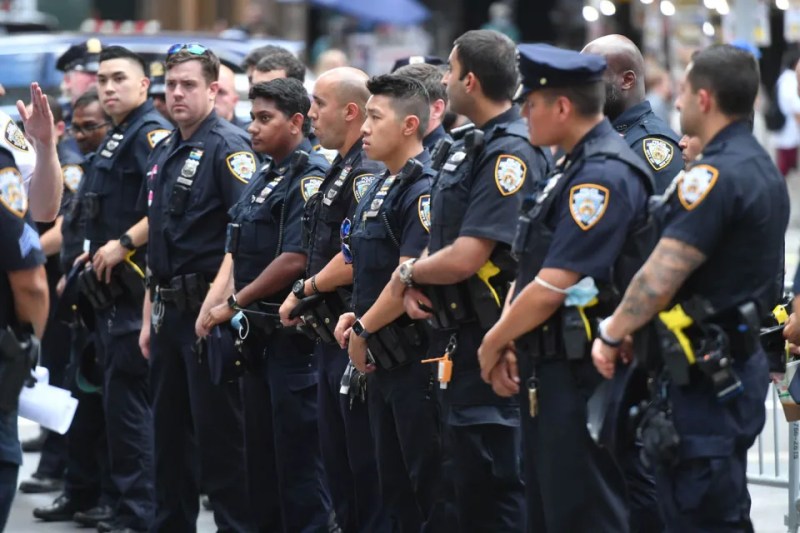
The Complete Overview of Why the Police Are Called 12
The association between police and the number 12 stems from a practical solution to a critical problem: how to communicate emergencies efficiently before the advent of direct-dial telephones. In the late 19th and early 20th centuries, police departments relied on centralized switchboards where operators fielded calls and dispatched units based on preassigned codes. The number 12 wasn’t arbitrary—it was the most logical choice for a high-priority alert, given the constraints of manual systems. Operators would hear a request like “police needed immediately” and respond with “12,” a shorthand that could be quickly relayed to patrol units via telegraph or radio.This system wasn’t just about brevity; it was about reducing ambiguity. In an era where miscommunication could mean the difference between life and death, codes like 12, 13 (for fire), and 14 (for medical emergencies) provided a universal language. The number 12, in particular, became synonymous with police due to its placement in the sequence of emergency priorities. It wasn’t until the 1960s, with the introduction of 911 in the U.S., that the direct-dial system replaced these coded interactions. Yet, the legacy of why police are called 12 persists in the collective memory of emergency response, even as the mechanics of calling for help have changed dramatically.
Historical Background and Evolution
The origins of the number 12 as a police code can be traced back to the 1870s, when telegraph networks began connecting police stations across cities. Before telephones, operators at central switchboards would receive calls and transmit them via Morse code or written messages. To streamline the process, departments adopted a numerical system where each number corresponded to a type of emergency. The number 12 was assigned to police calls because it was the second in a sequence of priority codes, following 11 (often reserved for immediate life-threatening situations) and preceding 13 (fire) and 14 (ambulance).This hierarchy wasn’t just about order—it was about survival. In a time when response times were measured in minutes, not seconds, every piece of information had to be conveyed with precision. The number 12 became a signal that a law enforcement unit was needed now, without delay. As radio technology improved in the early 20th century, police departments continued to use these codes, broadcasting them over airwaves to patrol cars. The persistence of the number 12 in this context highlights its role as a bridge between analog and digital communication eras.
Core Mechanisms: How It Works
At its core, the system behind why police are called 12 was designed for speed and clarity. Operators would receive a call, identify the nature of the emergency, and assign a code based on predefined protocols. For example, a call about a robbery might trigger a “12” response, while a traffic accident might use a different code. The number itself was a trigger for dispatchers to prioritize the call, ensuring that police units were alerted before other services. This mechanism relied on two key principles: standardization and immediacy.Table of Contents
- The Complete Overview of Why the Police Are Called 12
- Historical Background and Evolution
- Core Mechanisms: How It Works
- Key Benefits and Crucial Impact
- Major Advantages
- Comparative Analysis
- Future Trends and Innovations
- Conclusion
- Comprehensive FAQs
- Q: Is the number 12 still used by police today?
- Q: Why wasn’t a different number chosen for police?
- Q: Are there other countries that use similar codes?
- Q: How did the public learn about these codes?
- Q: Could the number 12 be revived in modern emergency systems?
- Q: Are there any famous references to “12” in pop culture?
Standardization ensured that every operator, regardless of location, understood the code’s meaning. Immediacy was achieved by eliminating the need for verbose descriptions—just the number 12 would suffice to convey urgency. Over time, this system became so ingrained in police culture that it transcended its original purpose, evolving into a cultural shorthand for law enforcement. Even today, references to “12” in media or slang often evoke images of police sirens and rapid response.
Key Benefits and Crucial Impact
The adoption of numerical codes like 12 revolutionized emergency response by introducing a level of efficiency that manual systems couldn’t match. Before these codes, operators had to relay entire sentences, which could lead to miscommunication or delays. The number 12, as a police-specific identifier, ensured that law enforcement was always the first to know when their services were required. This not only saved time but also lives, as critical incidents could be addressed before they escalated.The impact of this system extended beyond operational efficiency. It also fostered a sense of trust between the public and law enforcement. When people learned that calling for police would trigger a rapid, standardized response, they were more likely to report crimes or emergencies promptly. This trust was built on the reliability of the system, which, in turn, strengthened community-police relations—a dynamic that still influences emergency services today.
“In the early days of police radio, every second counted. The number 12 wasn’t just a code—it was a lifeline. It told us that someone was in trouble and needed us now. That’s why it stuck.”
— Retired Police Dispatcher, New York City
Major Advantages
- Speed: Numerical codes like 12 allowed operators to transmit urgent requests in seconds, reducing response times.
- Clarity: The standardized system eliminated ambiguity, ensuring all parties understood the priority of the call.
- Scalability: Codes could be easily adapted as technology evolved, from telegraph to radio to digital dispatch.
- Public Trust: The reliability of the system encouraged citizens to report emergencies without hesitation.
- Cultural Legacy: The number 12 became ingrained in public consciousness, reinforcing the idea of police as protectors.

Comparative Analysis
| System | Key Feature |
|---|---|
| Telegraph Era (1870s–1920s) | Codes like 12 were manually relayed via Morse code or written messages. Highly dependent on operator skill. |
| Radio Dispatch (1920s–1960s) | Numbers like 12 were broadcast over airwaves, reducing delays but still requiring human interpretation. |
| 911 System (1960s–Present) | Direct dialing replaced codes, but the legacy of 12 persists in slang and emergency protocols. |
| Digital Dispatch (Present) | Automated systems now prioritize calls, but historical codes like 12 remain cultural touchstones. |
Future Trends and Innovations
As emergency response systems continue to evolve, the legacy of why police are called 12 may seem like a relic of the past. However, the principles behind it—efficiency, clarity, and immediacy—remain as critical as ever. Modern systems now rely on AI-driven dispatch, predictive policing, and real-time data analytics, but the core need for rapid law enforcement response hasn’t changed. Future innovations may see the integration of blockchain for secure emergency communications or drone-assisted patrols, but the cultural significance of numbers like 12 will likely endure as a symbol of public safety.One potential shift could be the revival of numerical codes in digital contexts, where brevity is still key. For instance, emergency apps might use shorthand like “12” to indicate a police-related alert, blending old and new technologies. Whether through tradition or innovation, the question of why police are called 12 will continue to resonate as a reminder of how far emergency response has come—and how far it still has to go.

Conclusion
The number 12 is more than just a police code—it’s a testament to human ingenuity in the face of crisis. From the clatter of telegraph keys to the quiet hum of digital dispatch centers, its evolution reflects our unending quest for faster, clearer communication. While the methods have changed, the need for immediate police intervention remains constant, and the number 12 stands as a historical marker of that necessity.Today, when someone asks why police are called 12, they’re not just seeking an answer—they’re connecting with a piece of history that shaped modern emergency services. It’s a reminder that even in an age of instant communication, some traditions are too valuable to lose.
Comprehensive FAQs
Q: Is the number 12 still used by police today?
A: While modern emergency systems like 911 have replaced manual codes, the number 12 persists in slang, media, and some dispatch protocols as a cultural reference to police urgency. It’s no longer a functional code but remains a symbol of law enforcement response.
Q: Why wasn’t a different number chosen for police?
A: The number 12 was selected based on its position in a prioritized sequence of emergency codes. Historically, 11 was often reserved for the highest priority (e.g., life-threatening situations), making 12 the logical choice for police-related calls. The system was designed for efficiency, not symbolism.
Q: Are there other countries that use similar codes?
A: Yes. Many European countries used (or still use) variations of the 12 code system, often tied to their own emergency numbering conventions. For example, in some regions, “12” might correspond to a different service, but the principle of numerical prioritization remains consistent.
Q: How did the public learn about these codes?
A: Public awareness of codes like 12 grew through education campaigns, media exposure, and word-of-mouth. Police departments often included these codes in safety brochures or community outreach programs to ensure citizens knew how to request help efficiently.
Q: Could the number 12 be revived in modern emergency systems?
A: While unlikely in its original form, the concept of shorthand codes could see a resurgence in digital or app-based emergency systems. For example, a “12” button in a safety app might trigger an immediate police alert, blending nostalgia with modern technology.
Q: Are there any famous references to “12” in pop culture?
A: Absolutely. The number 12 has appeared in films, TV shows, and music as a shorthand for police presence. For instance, in The Wire, the term “12” is used colloquially to refer to police, reinforcing its cultural significance beyond its original function.
Leave a Comment
Comments are moderated before appearing. The data you submit is processed according to the Privacy Policy of Bevvy.