What Are Part-Time Hours? The Hidden Rules Behind Flexible Work
The term part-time hours rarely appears in job descriptions, yet it dictates the rhythm of millions of careers. What separates a 20-hour weekly shift from a "full-time equivalent" isn’t just the clock—it’s a labyrinth of labor laws, employer policies, and economic trade-offs. A retail associate might log 25 hours under company rules while a nurse works 30 hours and is classified as full-time by their insurer. The ambiguity isn’t accidental; it reflects how part-time hours serve as both a safety net and a loophole in modern employment.
These schedules aren’t just about fewer days at the office. They determine eligibility for benefits, shape tax brackets, and even influence career growth. A barista working 28 hours might qualify for overtime pay in one state but not another, while a consultant billing 32 hours could face audit flags for misclassified income. The confusion stems from a system where definitions vary by industry, jurisdiction, and employer interpretation—yet the stakes (healthcare access, retirement contributions, job security) couldn’t be higher.
The rise of gig work and hybrid models has only deepened the complexity. Platforms like Uber classify drivers as independent contractors regardless of hourly output, while traditional employers redefine part-time hours to avoid benefit costs. What’s consistent? The need to understand how these schedules function—and how they’re evolving.

The Complete Overview of What Are Part-Time Hours
Part-time employment isn’t a fixed concept but a sliding scale defined by hours, not titles. At its core, part-time hours refer to any weekly schedule that falls below the threshold set by employers, labor laws, or industry standards—typically 30–35 hours, though this varies. The U.S. Department of Labor, for instance, considers part-time work as anything under 30 hours, while the Affordable Care Act ties eligibility for subsidies to 30+ hours. This disconnect creates a patchwork where a 29-hour week might qualify for unemployment benefits in one scenario but not healthcare subsidies in another.The ambiguity extends to scheduling. Part-time roles can range from predictable shifts (e.g., a librarian working 20 hours weekly) to variable hours (e.g., a freelance graphic designer billing 15–25 hours). Some employers use "fluctuating schedules" to avoid classifying workers as full-time, while others enforce rigid hours to control labor costs. The key variable isn’t just the number of hours but how they’re structured—whether they’re consistent, seasonal, or project-based.
Historical Background and Evolution
The modern notion of part-time hours emerged in the early 20th century as industrialization demanded flexible labor pools. Factories hired women and students for short shifts, exploiting loopholes in child labor laws. By the 1930s, the Fair Labor Standards Act (FLSA) began regulating overtime for full-time workers, implicitly defining part-time as hours below 40 per week—a threshold that persists today. The post-WWII boom solidified the 40-hour workweek as the norm, pushing part-time roles to the periphery.The 1970s and 1980s saw a shift as dual-income households became common, and employers increasingly relied on part-time staff to cut costs. The rise of service-sector jobs (retail, hospitality) further cemented part-time hours as a standard, though often with unstable scheduling. The 2010s brought another transformation: the gig economy. Platforms like TaskRabbit and DoorDash redefined part-time work by decoupling hours from traditional employment, creating a new category of "independent part-time" labor.
Core Mechanisms: How It Works
The mechanics of part-time hours hinge on three pillars: legal definitions, employer policies, and economic incentives. Legally, the FLSA doesn’t mandate minimum hours for part-time status, but states like California require overtime for any hours over 8 in a day or 40 in a week—regardless of classification. Employers often exploit this by capping part-time schedules at 29.9 hours to avoid overtime pay. Meanwhile, benefits like health insurance are tied to full-time thresholds (usually 30+ hours), creating a perverse incentive for workers to exceed part-time limits to access coverage.Table of Contents
- The Complete Overview of What Are Part-Time Hours
- Historical Background and Evolution
- Core Mechanisms: How It Works
- Key Benefits and Crucial Impact
- Major Advantages
- Comparative Analysis
- Future Trends and Innovations
- Conclusion
- Comprehensive FAQs
- Q: Can part-time hours be converted to full-time?
- Q: Do part-time workers get paid overtime?
- Q: How do part-time hours affect healthcare benefits?
- Q: Can you work two part-time jobs to reach full-time hours?
- Q: Are part-time hours the same globally?
- Q: How do part-time hours impact retirement savings?
- Q: What’s the difference between part-time and per diem work?
- Q: Can part-time hours be reduced without notice?
- Q: Do part-time workers qualify for unemployment benefits?
- Q: How do part-time hours affect career growth?
Scheduling algorithms now play a critical role. Retail giants use data-driven tools to assign part-time shifts with just 3 days’ notice, a practice criticized for disrupting work-life balance. The result? A system where part-time hours can mean anything from stable 20-hour weeks to erratic 10-hour bursts—with no universal standard.
Key Benefits and Crucial Impact
Part-time work offers flexibility, but its advantages are often overshadowed by its limitations. For students, retirees, or caregivers, part-time hours provide a way to earn income without sacrificing personal time. The ability to balance multiple roles—teaching a class while freelancing, for example—is a cornerstone of modern livelihoods. Yet the trade-off is frequently higher stress: part-time workers report lower job satisfaction due to unpredictable schedules and fewer career advancement opportunities.The economic impact is equally bifurcated. On one hand, part-time roles have reduced unemployment rates by creating entry points into the labor market. On the other, they’ve contributed to the "precariat" class—workers with unstable hours and no benefits. The rise of "part-time poverty" (earning below subsistence wages despite working full-time-equivalent hours) highlights how part-time hours can trap workers in cycles of financial insecurity.
"Part-time work is the ultimate double-edged sword: it offers freedom but often at the cost of stability. The challenge isn’t just the hours—it’s the lack of a safety net when those hours disappear."
— Dr. Sarah Williams, Labor Economist, University of Michigan
Major Advantages
- Work-Life Balance: Part-time schedules allow individuals to prioritize education, family, or hobbies without the burnout of full-time commitments.
- Lower Stress Levels: Studies show part-time workers report higher life satisfaction due to reduced workplace pressure.
- Diverse Income Streams: Many professionals combine part-time roles (e.g., teaching + consulting) to diversify revenue.
- Lower Barrier to Entry: Part-time jobs are often the first step for career changers or re-entering the workforce.
- Tax and Benefit Optimization: In some cases, part-time hours can reduce taxable income or qualify for specific subsidies.
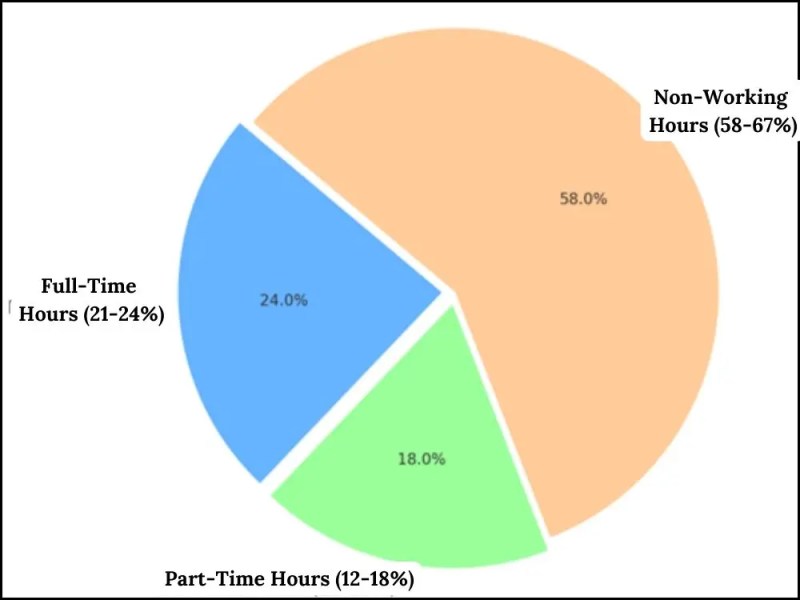
Comparative Analysis
| Full-Time Hours | Part-Time Hours |
|---|---|
| Typically 35–40 hours/week | Varies by employer (usually <30 hours) |
| Eligible for benefits (healthcare, retirement) | Often benefits-limited; may require supplemental plans |
| Stable scheduling (with exceptions) | Variable hours; higher risk of last-minute changes |
| Higher earning potential (salary/wage) | Lower base pay; may include tips/commissions |
Future Trends and Innovations
The future of part-time hours will be shaped by automation, remote work, and regulatory shifts. As AI handles routine tasks, part-time roles in sectors like customer service may shrink, while demand grows in care-based fields (elderly assistance, childcare). The "4-day workweek" movement could redefine part-time norms, with 30-hour schedules becoming the new standard for full-time equivalence.Legally, states like Oregon are testing universal basic income pilots that could decouple part-time work from survival wages. Meanwhile, unions are pushing for "predictable scheduling" laws to limit on-call shifts. The key trend? Part-time work will increasingly mirror full-time flexibility—but with fewer guarantees.

Conclusion
Understanding part-time hours isn’t just about counting minutes at a desk; it’s about navigating a system designed to balance employer needs with worker autonomy. The lack of uniformity in definitions creates both opportunities and pitfalls. For those seeking stability, part-time roles can be a stepping stone—but only if structured intentionally. The rise of hybrid models suggests that the future may lie in redefining "full-time" itself, with hours becoming less about duration and more about impact.The conversation around part-time hours must evolve beyond semantics. Policymakers, employers, and workers must align on what these schedules should entail—not just in hours, but in rights, benefits, and dignity.
Comprehensive FAQs
Q: Can part-time hours be converted to full-time?
A: Yes, but it depends on the employer’s policy and your performance. Some companies offer "part-time to full-time" promotions after 6–12 months, while others require you to apply for full-time roles separately. Always check your contract or ask HR about internal mobility pathways.
Q: Do part-time workers get paid overtime?
A: It depends on local laws. Under federal U.S. law, part-time workers aren’t automatically entitled to overtime, but some states (e.g., California) mandate overtime for any hours over 8 in a day or 40 in a week—regardless of classification. Always verify state-specific regulations.
Q: How do part-time hours affect healthcare benefits?
A: Most employers offer health insurance only to full-time employees (typically 30+ hours/week). Part-time workers may qualify for subsidies via the Affordable Care Act or must purchase private plans. Some companies provide limited benefits (e.g., dental) to part-timers.
Q: Can you work two part-time jobs to reach full-time hours?
A: Yes, but it’s complex. If you combine two 20-hour part-time roles, you’d hit 40 hours—potentially triggering full-time benefits or tax implications. However, some employers prohibit moonlighting, and multiple jobs may affect unemployment or workers’ comp claims.
Q: Are part-time hours the same globally?
A: No. In the UK, part-time is defined as <30 hours/week, while Germany’s threshold is <20 hours. Some countries (e.g., France) mandate equal pay for part-time workers compared to full-time counterparts, while others offer fewer protections. Always research local labor laws.
Q: How do part-time hours impact retirement savings?
A: Part-time workers often miss out on employer-matched 401(k) contributions. However, they can contribute to IRAs or Roth accounts independently. Some states (e.g., California) require employers to offer retirement plans to part-timers after a set tenure.
Q: What’s the difference between part-time and per diem work?
A: Part-time work has set (or semi-set) hours, while per diem roles (e.g., hospital staffing) offer variable shifts with no guaranteed schedule. Per diem workers are often classified as part-time but face higher scheduling instability.
Q: Can part-time hours be reduced without notice?
A: Employers can cut hours with little warning, especially in "at-will" states. However, some contracts or collective bargaining agreements require 30–90 days’ notice. Always review your employment agreement or consult a labor attorney if hours are slashed abruptly.
Q: Do part-time workers qualify for unemployment benefits?
A: Yes, but eligibility varies by state. You must meet minimum earnings thresholds (e.g., $1,500 in the past year) and be actively seeking work. Part-time status alone doesn’t disqualify you, but some states prioritize full-time claimants during high unemployment.
Q: How do part-time hours affect career growth?
A: Part-time roles often lack advancement opportunities compared to full-time positions. However, some industries (e.g., healthcare, education) allow part-time employees to earn certifications or seniority. Networking and internal transfers can help bridge the gap.
Leave a Comment
Comments are moderated before appearing. The data you submit is processed according to the Privacy Policy of Bevvy.