How *Roberts Rules of Order* Still Shapes Modern Governance & Meetings
For over a century, Roberts Rules of Order has been the unspoken constitution of democratic assemblies—whether in city councils, corporate boards, or nonprofit associations. Its principles govern how debates unfold, motions are proposed, and decisions are reached, yet most participants rely on instinct rather than its precise framework. The irony? Many organizations adopt this system without fully grasping its nuances, leading to inefficiencies or outright chaos when conflicts arise. What separates a smoothly run meeting from one that devolves into gridlock? Often, it’s an understanding of how Roberts Rules of Order balances fairness with efficiency.
The manual’s influence extends beyond physical meeting rooms. Virtual governance—from shareholder votes to global policy forums—still defaults to its structure when consensus is critical. But why does a 19th-century framework persist in the 21st century? The answer lies in its adaptability: it’s not a rigid doctrine but a dynamic toolkit for resolving disputes while preserving order. Even tech-driven platforms like Slack or Zoom now integrate Roberts Rules-inspired workflows for remote voting and amendments. The question isn’t whether it’s outdated; it’s how organizations can leverage its core principles to navigate modern complexities.
The Complete Overview of Roberts Rules of Order
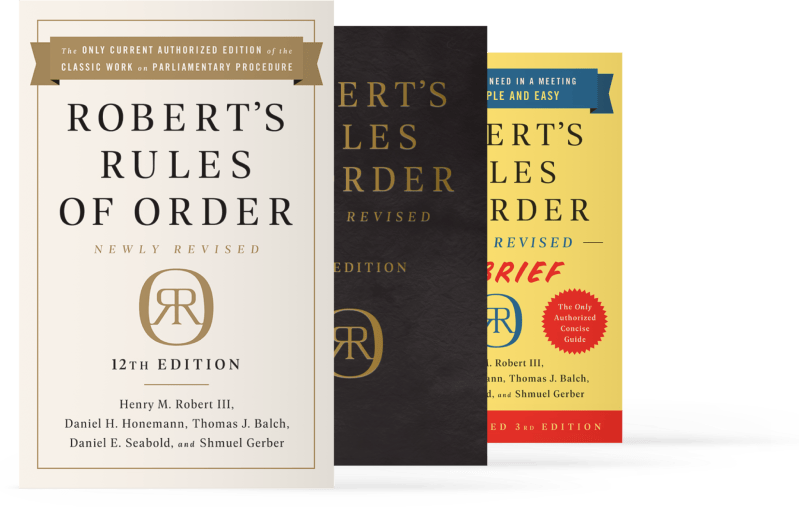
At its heart, Roberts Rules of Order (RRO) is a standardized system for conducting business in groups, designed to ensure fairness, clarity, and efficiency. First published in 1876 by General Henry M. Robert, it was originally intended to simplify parliamentary procedure for small associations—yet its adoption by governments, corporations, and even international bodies transformed it into a global standard. The manual’s latest edition, Roberts Rules of Order Newly Revised (12th ed., 2020), reflects updates to address contemporary challenges like electronic voting and hybrid meetings. What makes RRO distinctive is its emphasis on majority rule with minority rights, ensuring that even dissenting voices have structured avenues to influence outcomes.The system operates on three pillars: orderly debate, equitable participation, and decision-making transparency. Unlike ad-hoc meeting protocols, RRO provides specific rules for everything from recognizing speakers to handling controversial motions. This predictability reduces ambiguity, which is why it’s favored in high-stakes environments—from legislative bodies to corporate shareholder meetings. However, its effectiveness hinges on proper training and cultural buy-in. Many groups adopt RRO without understanding its underlying philosophy, leading to superficial compliance rather than true procedural mastery.
Historical Background and Evolution
The origins of Roberts Rules of Order trace back to the 19th century, when democratic participation was expanding beyond elite circles into local associations. Henry M. Robert, a civil engineer and military officer, sought to create a user-friendly guide for small groups struggling with chaotic meetings. His 1876 manual was a departure from the dense, legalistic parliamentary manuals of the time, focusing instead on practicality. The first edition’s success stemmed from its plain-language approach and emphasis on practical solutions—principles that remain central to its legacy.Over time, RRO evolved alongside democratic institutions. The 1915 edition introduced key innovations like quorum requirements and amendment procedures, while later editions (1951, 1970) expanded to address corporate governance and international organizations. The 2020 revision marked a turning point, incorporating digital-age adaptations such as guidelines for virtual meetings and electronic balloting. This evolution reflects RRO’s core strength: its ability to retain foundational principles while adapting to new contexts. Today, it’s not just a rulebook but a living framework for governance in an era of rapid technological change.
Core Mechanisms: How It Works
The mechanics of Roberts Rules of Order revolve around structured debate and motion handling. Every meeting operates within a hierarchy of motions, from main motions (proposing new actions) to incidental motions (addressing procedural issues). For example, a member proposing a budget amendment would introduce a main motion, while another member might raise a point of order to correct a procedural error. The system ensures that no single voice dominates by enforcing time limits, seconding requirements, and majority votes—unless specified otherwise.A lesser-known but critical feature is parliamentary inquiry, which allows participants to ask the chair or assembly for clarification on rules. This prevents misunderstandings from derailing proceedings. Additionally, RRO introduces special majorities (e.g., two-thirds) for sensitive actions like suspending rules, ensuring that significant changes require broader consensus. The manual also codifies debate etiquette, such as yielding the floor and avoiding personal attacks—a discipline often overlooked in informal settings.
Key Benefits and Crucial Impact
The adoption of Roberts Rules of Order isn’t just about following procedures; it’s about preserving the integrity of group decision-making. In environments where emotions run high—whether in activist collectives or corporate boards—RRO provides a neutral arbiter for conflicts. By standardizing how motions are introduced, debated, and voted on, it reduces the risk of majority tyranny or minority obstruction. This balance is why RRO is the default for organizations prioritizing fairness and efficiency.Table of Contents
- The Complete Overview of Roberts Rules of Order
- Historical Background and Evolution
- Core Mechanisms: How It Works
- Key Benefits and Crucial Impact
- Major Advantages
- Comparative Analysis
- Future Trends and Innovations
- Conclusion
- Comprehensive FAQs
- Q: Is Roberts Rules of Order legally binding?
- Q: Can Roberts Rules of Order be used in virtual meetings?
- Q: How do I learn Roberts Rules of Order quickly?
- Q: What’s the difference between Roberts Rules of Order and Dodd’s Parliamentary Handbook ?
- Q: Can a group modify Roberts Rules of Order ?
- Q: Why do some meetings feel chaotic even with Roberts Rules of Order ?
Organizations that implement RRO often report fewer disruptions, clearer outcomes, and greater member satisfaction. The rules act as a shared language for governance, ensuring that even newcomers can participate effectively. However, its success depends on cultural alignment: groups that treat RRO as a rigid hierarchy risk stifling creativity, while those that view it as a flexible tool unlock its full potential.
"The object of parliamentary law is not to decide controversies, but to define the rules of decision." —Henry M. Robert, Roberts Rules of Order
Major Advantages
- Structured Conflict Resolution: RRO provides escalation paths for disputes, from informal discussion to formal appeals, preventing meetings from collapsing into chaos.
- Transparency in Decision-Making: Every motion’s progression—from introduction to voting—is governed by clear rules, reducing perceptions of favoritism.
- Scalability: Whether applied to a 10-person board or a 100-member legislature, RRO’s principles scale without losing precision.
- Adaptability to Technology: Recent editions include guidelines for virtual meetings, electronic voting, and hybrid participation, ensuring relevance in digital workplaces.
- Legal and Institutional Trust: Courts and regulatory bodies often defer to RRO when assessing the fairness of group decisions, adding a layer of credibility.

Comparative Analysis
| Feature | Roberts Rules of Order vs. Alternatives |
|---|---|
| Primary Audience | Small to medium groups (associations, corporations, nonprofits); Dodd’s Parliamentary Handbook targets larger legislative bodies. |
| Flexibility | Balances structure with adaptability; Riddick’s Rules is more rigid, favoring strict adherence over practicality. |
| Digital Integration | Explicit guidelines for virtual meetings; Demeter’s Manual lacks modern tech adaptations. |
| Learning Curve | Designed for accessibility; Bryce’s Manual assumes prior legal knowledge, making it less user-friendly. |
Future Trends and Innovations
As remote work and global collaboration become standard, Roberts Rules of Order is evolving to address asynchronous governance—where decisions are made across time zones and platforms. Future editions may introduce AI-assisted procedural guidance, using natural language processing to flag rule violations in real time. Additionally, blockchain-based voting systems could integrate RRO’s principles to ensure tamper-proof record-keeping, a priority for transparency-focused organizations.The challenge lies in maintaining RRO’s human-centric ethos while embracing automation. The core tension—between structure and spontaneity—will define its next chapter. Organizations that treat RRO as a living document rather than a static rulebook will be best positioned to navigate the governance challenges of the 2030s.

Conclusion
Roberts Rules of Order endures because it solves a fundamental problem: how to make group decisions without descending into anarchy. Its principles are timeless, yet its applications are constantly reimagined. The key to mastering RRO isn’t memorization but understanding its philosophy—that governance should be inclusive, transparent, and efficient. For leaders and participants alike, the manual offers more than a set of rules; it provides a framework for collaboration in an era of rapid change.As meetings grow more distributed and decisions more complex, the organizations that thrive will be those that embed RRO’s spirit into their culture—not as a bureaucratic hurdle, but as a tool for collective progress.
Comprehensive FAQs
Q: Is Roberts Rules of Order legally binding?
A: No, RRO is a procedural guide, not a legal statute. However, courts may reference it to assess whether a group’s decisions were conducted fairly. Organizations can adopt RRO voluntarily or modify it to fit their needs.
Q: Can Roberts Rules of Order be used in virtual meetings?
A: Absolutely. The 2020 edition includes explicit guidelines for virtual platforms, covering topics like electronic voting, screen-sharing etiquette, and handling technical disruptions. Many organizations now use RRO to structure Zoom or Teams-based governance.
Q: How do I learn Roberts Rules of Order quickly?
A: Start with the abridged version of the manual, then practice in low-stakes settings (e.g., club meetings). Online courses and certified facilitators can accelerate learning, but hands-on experience is critical—many mistakes stem from misapplying rules under pressure.
Q: What’s the difference between Roberts Rules of Order and Dodd’s Parliamentary Handbook?
A: RRO is practical and accessible, targeting small to medium groups, while Dodd’s is more technical, designed for large legislative bodies. RRO focuses on efficiency; Dodd’s emphasizes formality. Most corporate boards use RRO; parliaments often use Dodd’s.
Q: Can a group modify Roberts Rules of Order?
A: Yes. Organizations can amend or supplement RRO by unanimous consent or a two-thirds vote, provided changes are documented. The key is ensuring modifications align with the core principles of fairness and transparency.
Q: Why do some meetings feel chaotic even with Roberts Rules of Order?
A: Chaos often arises from poor facilitation or cultural resistance. RRO provides the rules, but enforcement—through a trained chair or clear norms—is essential. Without buy-in, participants may ignore procedures, leading to the very disorder RRO aims to prevent.
Leave a Comment
Comments are moderated before appearing. The data you submit is processed according to the Privacy Policy of Bevvy.