How to Make Shuriken with Paper: The Art of Precision Craftsmanship
The shuriken, a symbol of stealth and precision in Japanese martial culture, transcends its metallic origins. While traditional versions are forged from steel, the principles of balance and aerodynamics remain unchanged—even when crafted from paper. This transformation isn’t just about replication; it’s about understanding the essence of the tool: a projectile designed to disrupt, distract, or deliver a message. The allure lies in the paradox: a weapon born from fragility, where paper becomes both canvas and projectile.
Mastering how to make shuriken with paper demands more than folding—it requires an appreciation for structural integrity and aerodynamic efficiency. Unlike rigid materials, paper shuriken rely on tension, weight distribution, and sharp edges to mimic their steel counterparts. The result? A lightweight, portable, and customizable alternative that preserves the shuriken’s iconic silhouette while opening doors to artistic expression. Whether for historical reenactment, martial arts training, or creative projects, the process reveals how form follows function in unexpected ways.
Yet, the craft isn’t without its challenges. Paper’s inherent flexibility contrasts with the shuriken’s need for rigidity during flight. The solution? A marriage of traditional origami techniques and engineering principles. By manipulating layers, angles, and adhesive reinforcement, creators can achieve a balance between fragility and functionality. This guide dissects the methodology—from material selection to flight testing—while addressing common pitfalls that turn a promising prototype into a crumpled mess.

The Complete Overview of Crafting Paper Shuriken
The foundation of how to make shuriken with paper lies in replicating the shuriken’s geometric precision. Traditional shuriken—whether the classic hira shuriken (flat, star-shaped) or bo shuriken (spiked, cylindrical)—prioritize symmetry and weight distribution. Paper shuriken mirror this philosophy but introduce variables: thickness, fold strength, and edge sharpness. The process begins with selecting paper suited for durability (e.g., 120–200 gsm cardstock or washi paper layered for reinforcement) and tools like bone folders, cutting mats, and metric rulers to ensure consistency.Beyond aesthetics, the crafting process hinges on understanding the shuriken’s role in flight. A well-made paper shuriken should spin stably, maintaining its trajectory until impact. This requires mastering the "butterfly fold" for hira shuriken or the layered spiral for bo shuriken, where each fold dictates the projectile’s aerodynamics. The key insight? Paper shuriken are less about combat readiness and more about embodying the shuriken’s spirit—precision, balance, and the interplay between fragility and force.
Historical Background and Evolution
The shuriken’s origins trace back to the Sengoku period (1467–1615), where it served as a supplementary tool for ninja and samurai. Initially crafted from iron or steel, its design evolved to maximize disruption with minimal material. Paper shuriken, while anachronistic, echo this ethos by adapting the form to modern constraints. Historical records note that ninja used shaken (decoy shuriken) made from lightweight materials like bamboo or wood to confuse opponents—paper would have been a natural extension for training or misdirection.In contemporary contexts, paper shuriken bridge martial arts and artistry. Origami enthusiasts repurpose the technique into decorative objects, while martial artists use them for non-lethal training. The shift from metal to paper reflects a broader trend: demystifying weapons through accessible materials. Yet, the craft retains its rigor. A poorly folded paper shuriken fails just as spectacularly as a poorly forged steel one—collapsing mid-flight or failing to spin. This historical context underscores why how to make shuriken with paper is as much about respecting tradition as it is about innovation.
Core Mechanisms: How It Works
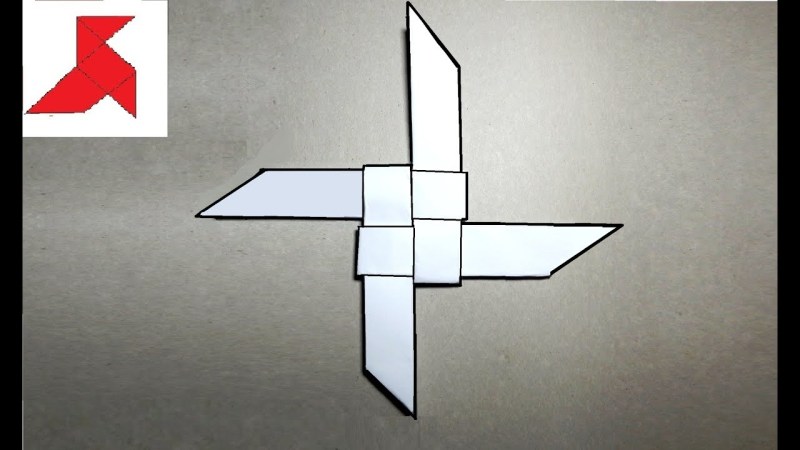
The functionality of a paper shuriken hinges on two principles: center of gravity (CG) placement and airfoil dynamics. The CG must align with the shuriken’s geometric center to prevent wobbling. For hira shuriken, this involves folding paper into a four-pointed star with equal arm lengths, ensuring each point is equidistant from the center. The edges must be sharp enough to create drag but not so thin that they tear upon impact. Reinforcement—such as laminating layers or applying a thin adhesive—enhances durability without adding excessive weight.Table of Contents
- The Complete Overview of Crafting Paper Shuriken
- Historical Background and Evolution
- Core Mechanisms: How It Works
- Key Benefits and Crucial Impact
- Major Advantages
- Comparative Analysis
- Future Trends and Innovations
- Conclusion
- Comprehensive FAQs
- Q: What type of paper is best for durable paper shuriken?
- Q: Can I use scissors to cut shuriken edges, or should I fold them?
- Q: How do I test if my paper shuriken will fly straight?
- Q: Are there cultural considerations when crafting paper shuriken?
- Q: What’s the best way to store paper shuriken to prevent damage?
- Q: Can I paint or decorate paper shuriken without ruining their structure?
- Q: How does humidity affect paper shuriken?
- Q: Are there variations of shuriken that work better with paper?
- Q: Can children safely make paper shuriken?
Airfoil dynamics come into play during flight. A properly folded shuriken spins like a frisbee, with its flat surfaces cutting through the air. The paper’s surface area and weight determine stability: heavier shuriken fly straighter but require more force to throw, while lighter ones spin faster but are prone to drifting. Testing prototypes with varying paper thicknesses and fold angles reveals the sweet spot—typically a 1:3 ratio of width to length for hira shuriken to achieve optimal spin and distance.
Key Benefits and Crucial Impact
The appeal of how to make shuriken with paper extends beyond nostalgia. For martial artists, it offers a scalable training tool—lightweight enough to practice throws without risk, yet heavy enough to simulate resistance. Artists and educators leverage the craft to teach geometry, physics, and patience, transforming a simple sheet of paper into a lesson in aerodynamics. Even collectors value handmade paper shuriken for their uniqueness; each fold carries the maker’s intent, unlike mass-produced replicas.Beyond practicality, the process fosters mindfulness. Folding a shuriken demands focus, much like meditation. The repetitive motions and attention to detail create a meditative rhythm, aligning with Japanese wabi-sabi aesthetics—finding beauty in imperfection. This duality—utility and artistry—makes paper shuriken a gateway to deeper exploration of Japanese culture and craftsmanship.
"The shuriken is not merely a weapon; it is a philosophy of precision. To craft one from paper is to strip away its lethality and reveal its soul." — Historical martial arts scholar, anonymous 19th-century text
Major Advantages
- Cost-Effective: Requires minimal materials (paper, adhesive, basic tools), making it accessible for beginners or large-scale projects.
- Portability: Lightweight designs allow for easy transport, unlike metal shuriken, which require secure storage.
- Customization: Paper permits experimentation with colors, patterns, and sizes, enabling artistic or thematic variations (e.g., thematic for festivals or cosplay).
- Safety: Non-lethal and ideal for training or educational demonstrations where metal projectiles are prohibited.
- Educational Value: Teaches principles of physics (trajectory, aerodynamics) and geometry (symmetry, angles) in a hands-on format.
Comparative Analysis
| Traditional Steel Shuriken | Paper Shuriken |
|---|---|
| Durable, lethal, requires forging skills | Fragile, non-lethal, requires folding precision |
| Heavy (50–100g per shuriken), limited portability | Light (1–10g), highly portable |
| Used in combat or ceremonial contexts | Used for training, art, or historical reenactment |
| Expensive due to metalwork and craftsmanship | Inexpensive; cost scales with paper quality |
Future Trends and Innovations
The evolution of paper shuriken crafting is poised to intersect with technology. Advances in smart paper—embedded with sensors or conductive threads—could enable interactive shuriken for augmented reality training or artistic installations. Meanwhile, 3D-printed molds may standardize folding templates, reducing human error and democratizing complex designs. Sustainability is another frontier: biodegradable papers or recycled materials could redefine the craft’s environmental footprint, aligning with eco-conscious practices in martial arts and art communities.Culturally, paper shuriken may find new roles in performance art, where their ephemeral nature contrasts with traditional weaponry. Collaborations between origami masters and physicists could also yield hybrid designs—combining paper’s flexibility with lightweight carbon fiber for enhanced durability. As the line between functional and decorative blurs, how to make shuriken with paper will continue to adapt, reflecting broader shifts in how we interact with historical tools.

Conclusion
Crafting a shuriken from paper is an exercise in translation—converting the rigid into the pliable, the lethal into the symbolic. It challenges the maker to reconcile opposing forces: fragility and strength, tradition and innovation. The process isn’t about creating a functional weapon but about embodying the shuriken’s essence: precision, balance, and the quiet power of intent. Whether for study, art, or personal challenge, the journey from sheet to shuriken is a testament to the enduring appeal of Japanese craftsmanship.For those drawn to how to make shuriken with paper, the first step is patience. The folds must be crisp, the edges aligned, and the weight distributed with surgical precision. Yet, the reward isn’t just a finished product—it’s the understanding that even the most delicate materials can carry weight, and the most fleeting creations can leave a lasting impression.
Comprehensive FAQs
Q: What type of paper is best for durable paper shuriken?
A: For how to make shuriken with paper, opt for 120–200 gsm cardstock or washi paper (layered for thickness). Avoid newsprint or thin paper, as they lack structural integrity. For reinforcement, laminate layers with PVA glue or mod podge before folding.
Q: Can I use scissors to cut shuriken edges, or should I fold them?
A: Traditional shuriken rely on folded edges for sharpness and stability. While scissors can create points, folded edges distribute weight more evenly and reduce tearing. Use a bone folder to crisply fold edges at 45-degree angles for optimal aerodynamics.
Q: How do I test if my paper shuriken will fly straight?
A: Before throwing, perform a "spin test" by flicking the shuriken horizontally. It should spin smoothly without wobbling. If it drifts or tumbles, adjust the center of gravity by redistributing paper weight or reinforcing lighter sections. For flight testing, throw from a low angle (30 degrees) and observe trajectory.
Q: Are there cultural considerations when crafting paper shuriken?
A: Yes. In Japan, the shuriken holds historical significance tied to bushido and ninja lore. Avoid using them in disrespectful contexts (e.g., pranks, vandalism). If displaying or gifting, consider pairing them with educational notes on their cultural background to honor their heritage.
Q: What’s the best way to store paper shuriken to prevent damage?
A: Store them in a flat, dry environment (e.g., a portfolio sleeve or acid-free box) to avoid warping or moisture damage. Separate individual shuriken with parchment paper to prevent scratching. Avoid stacking heavily, as this can deform fragile folds over time.
Q: Can I paint or decorate paper shuriken without ruining their structure?
A: Use water-based acrylics or ink sparingly, applying them after folding to avoid weakening the paper. Seal with matte varnish to protect designs. For intricate patterns, consider stamping or stenciling before final assembly to preserve structural integrity.
Q: How does humidity affect paper shuriken?
A: High humidity can cause paper to warp or soften, compromising fold precision. Store shuriken in a dehumidified space (e.g., with silica gel packets) or use humidity-resistant paper (like archival cardstock). If exposed to moisture, let them dry flat to prevent permanent deformation.
Q: Are there variations of shuriken that work better with paper?
A: The hira shuriken (flat, star-shaped) is the most adaptable for paper due to its balanced geometry. The bo shuriken (spiked) is harder to replicate but can be attempted with layered washi paper and adhesive reinforcement. Avoid complex designs like kagi shuriken (hook-shaped), as their mechanics rely on metal flexibility.
Q: Can children safely make paper shuriken?
A: With supervision, yes. Use thicker paper (160+ gsm) and rounded edges to minimize injury risk. Teach proper throwing techniques (e.g., underhand tosses) and emphasize that these are training tools, not toys for rough play. For younger children, simplify designs to basic star shapes without sharp points.
Leave a Comment
Comments are moderated before appearing. The data you submit is processed according to the Privacy Policy of Bevvy.