The Hidden Power of Alcohol Functional Group: Chemistry’s Silent Game-Changer
The hydroxyl group—OH—is a deceptively simple arrangement of two atoms, yet it defines the very essence of what we call the alcohol functional group. This molecular feature isn’t just a footnote in organic chemistry textbooks; it’s the linchpin of solubility, reactivity, and biological compatibility that shapes industries from medicine to fine fragrances. Without it, ethanol wouldn’t dissolve in water, pharmaceuticals wouldn’t target cells with precision, and the aromatic profiles of wine or whiskey would dissolve into flatness. The alcohol functional group doesn’t just participate in reactions—it orchestrates them, often determining whether a compound will be a life-saving drug or a toxic byproduct.
What makes this functional group truly extraordinary is its versatility. It can act as a nucleophile in substitution reactions, a hydrogen bond donor in biological systems, or a solvent in lab settings—all while maintaining a structural simplicity that belies its complexity. Chemists and biologists alike rely on its predictable yet adaptable behavior, whether they’re synthesizing polymers, designing flavor molecules, or engineering enzymes. The alcohol functional group is the silent architect behind some of the most critical innovations in modern science, yet its mechanisms remain underappreciated outside specialized fields.
The term "alcohol" in this context is a historical relic, tracing back to medieval alchemists who named volatile compounds derived from fermentation al-kuhl (Arabic for "the essence"). What they didn’t realize was that they were describing a functional group far broader than just ethanol. Today, the alcohol functional group encompasses thousands of compounds—from the simplest methanol to the intricate sterols in cell membranes—each sharing the same defining hydroxyl (–OH) moiety. Its ubiquity in nature and industry stems from a delicate balance: polar enough to interact with water, yet hydrophobic enough to partition into lipid bilayers or organic solvents.

The Complete Overview of the Alcohol Functional Group
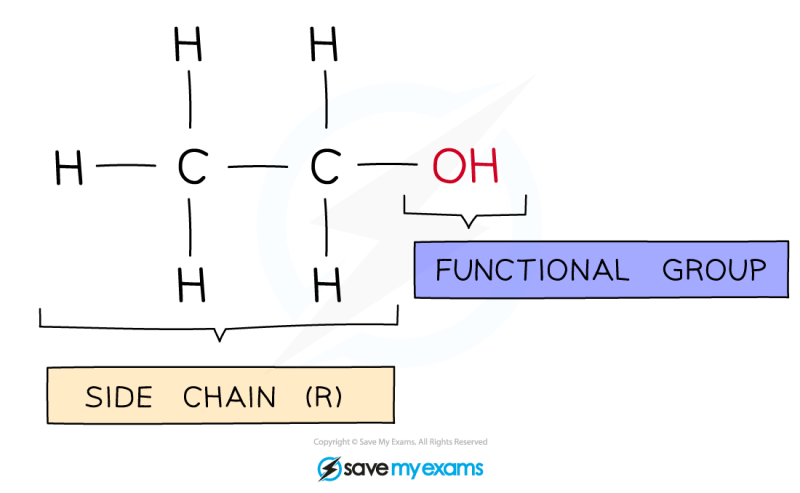
The alcohol functional group is defined by the presence of a hydroxyl group (–OH) bonded to a carbon atom, typically represented as R–OH, where R is an alkyl or aryl group. This seemingly straightforward structure belies its profound influence on chemical properties, including boiling points, solubility, and reactivity. Unlike hydrocarbons, which are nonpolar and inert, alcohols introduce hydrogen bonding capabilities, drastically altering physical behavior. For example, ethanol (C₂H₅OH) boils at 78°C—far higher than its hydrocarbon counterpart ethane (C₂H₆, boiling point: –89°C)—due to intermolecular hydrogen bonding facilitated by the alcohol functional group.Beyond physical properties, the alcohol functional group dictates chemical reactivity. Alcohols can undergo oxidation to form aldehydes or ketones, dehydration to yield alkenes, or substitution reactions to create ethers or esters. These transformations are foundational in synthetic chemistry, enabling the production of everything from pharmaceutical intermediates to biodegradable plastics. The group’s ability to stabilize carbanions or participate in nucleophilic attacks also makes it indispensable in enzymatic catalysis, where enzymes often rely on serine or threonine residues (both containing alcohol functional groups) to facilitate reactions.
Historical Background and Evolution
The study of the alcohol functional group began in earnest during the 18th and 19th centuries, as chemists sought to classify organic compounds beyond the alchemical traditions of distillation and fermentation. Swedish chemist Carl Wilhelm Scheele isolated glycerol in 1779, unknowingly characterizing a triol (a molecule with three alcohol functional groups), while French chemist Antoine Lavoisier later coined the term "alcohol" to describe volatile, flammable liquids. However, it was German chemist Johann Wolfgang Döbereiner who, in 1828, proposed that alcohols were a distinct class of compounds characterized by their reactivity with metals to produce hydrogen gas—a hallmark of the –OH group.The modern understanding of the alcohol functional group emerged with the development of structural theory in the mid-19th century. Friedrich August Kekulé and Alexander Mikhailovich Butlerov independently argued that alcohols were derivatives of hydrocarbons where one hydrogen atom was replaced by a hydroxyl group. This framework laid the groundwork for the IUPAC nomenclature system, which classifies alcohols as "ols" (e.g., methanol, ethanol). The discovery of stereochemistry by Jacobus van’t Hoff and Joseph Le Bel in 1874 further refined the field, revealing how the spatial arrangement of alcohol functional groups could influence optical activity—a principle critical in drug development today.
Core Mechanisms: How It Works
At the molecular level, the alcohol functional group’s behavior is governed by two key factors: its polarity and its ability to form hydrogen bonds. The oxygen atom in –OH is highly electronegative, creating a partial negative charge (δ⁻) on the oxygen and a partial positive charge (δ⁺) on the hydrogen. This polarity enables alcohols to dissolve in water via hydrogen bonding with solvent molecules, a property exploited in everything from hand sanitizers to intravenous fluids. However, the hydrophobic carbon chain (R) can limit solubility in highly polar solvents, leading to the amphiphilic nature observed in surfactants like sodium dodecyl sulfate (SDS), where a long alkyl chain is capped with a sulfate alcohol functional group.Table of Contents
- The Complete Overview of the Alcohol Functional Group
- Historical Background and Evolution
- Core Mechanisms: How It Works
- Key Benefits and Crucial Impact
- Major Advantages
- Comparative Analysis
- Future Trends and Innovations
- Conclusion
- Comprehensive FAQs
- Q: How does the alcohol functional group differ from a phenol group?
- Q: Can alcohols without the alcohol functional group exist?
- Q: Why are primary alcohols more reactive than tertiary alcohols in oxidation?
- Q: How do alcohol functional groups contribute to flavor and aroma?
The reactivity of the alcohol functional group stems from the lability of the O–H bond. In acidic conditions, alcohols can be protonated, making the hydroxyl group a better leaving group for substitution reactions (e.g., converting alcohols to alkyl halides via the Lucas test). Under oxidizing conditions, primary alcohols (RCH₂OH) yield aldehydes or carboxylic acids, while secondary alcohols (R₂CHOH) form ketones. Tertiary alcohols (R₃COH), lacking a hydrogen on the carbon bearing the –OH, are resistant to oxidation but can undergo dehydration to alkenes. These mechanisms underpin industrial processes like the production of acetone from isopropyl alcohol or the synthesis of aspirin from salicylic acid and ethanol.
Key Benefits and Crucial Impact
The alcohol functional group is the unsung hero of chemical synthesis, offering a rare combination of stability and reactivity that few other functional groups can match. Its ability to participate in a wide array of reactions—from simple esterifications to complex enzymatic pathways—makes it a cornerstone of green chemistry, where atom efficiency and biodegradability are paramount. Industries leverage this versatility to design sustainable materials, such as poly(lactic acid) (PLA) derived from lactic acid (a hydroxy acid), or to develop renewable fuels like bioethanol from cellulose fermentation. Even in pharmaceuticals, the alcohol functional group is ubiquitous, appearing in drugs like ibuprofen (a propionic acid derivative) or cholesterol-lowering statins, where its presence often enhances drug-likeness by improving solubility and metabolic stability.The biological relevance of the alcohol functional group cannot be overstated. It is the defining feature of sugars (e.g., glucose, a polyol with five alcohol functional groups), lipids (e.g., cholesterol), and amino alcohols like serine and threonine, which are critical in protein structure and function. The hydroxyl group also plays a role in post-translational modifications, such as glycosylation, where sugars are attached to proteins via alcohol functional group interactions. Without this group, life as we know it—with its intricate network of hydrogen bonds and molecular recognition—would not exist.
"The hydroxyl group is the chemical equivalent of a Swiss Army knife: compact, versatile, and capable of solving problems across disciplines from medicine to materials science." — Dr. Linda J. Broadbelt, Northwestern University
Major Advantages
- Solubility Control: The alcohol functional group enables fine-tuning of solubility in polar and nonpolar media, critical for drug formulation and solvent selection in reactions.
- Biocompatibility: Compounds containing alcohol functional groups are often non-toxic and biodegradable, making them ideal for medical implants, cosmetics, and food additives.
- Reactivity Tuning: The group’s ability to undergo oxidation, substitution, or elimination allows chemists to design synthetic routes with high selectivity, reducing waste.
- Hydrogen Bonding: The capacity to form hydrogen bonds stabilizes molecular structures, from DNA helices to synthetic polymers like nylon-6,6.
- Natural Abundance: The alcohol functional group is prevalent in biomass (e.g., cellulose, lignin), enabling the development of bio-based chemicals and fuels.
Comparative Analysis
| Alcohol Functional Group (R–OH) | Alternate Functional Groups |
|---|---|
|
|
Future Trends and Innovations
The alcohol functional group is poised to play an even larger role in the coming decades, particularly as industries shift toward sustainability and precision engineering. One emerging trend is the use of alcohols in electrochemical synthesis, where renewable electricity can drive the selective oxidation of bio-derived alcohols into high-value chemicals like adipic acid (a nylon precursor) or lactic acid. This approach circumvents the need for fossil fuel-based feedstocks, aligning with circular economy principles. Additionally, advances in enzymatic catalysis—leveraging enzymes like alcohol dehydrogenases—are enabling the production of chiral alcohols with near-perfect enantiomeric purity, critical for pharmaceuticals where only one mirror-image isomer is active.Another frontier is the integration of alcohol functional groups into smart materials. Researchers are exploring polymers with dynamic alcohol functional groups that respond to stimuli like pH or temperature, enabling self-healing materials or drug-delivery systems that release therapeutics in response to biological cues. In agriculture, alcohols are being repurposed as green solvents to replace volatile organic compounds (VOCs) in pesticides and coatings, reducing environmental harm. As synthetic biology matures, the alcohol functional group may also become a target for metabolic engineering, where microbes are programmed to produce novel alcohols with tailored properties for materials or fuels.

Conclusion
The alcohol functional group is more than a textbook concept—it’s a fundamental building block of modern chemistry, biology, and industry. Its ability to balance polarity, reactivity, and biocompatibility makes it indispensable in fields ranging from medicine to materials science. While its simplicity might seem unremarkable, the alcohol functional group’s influence is profound, shaping everything from the structure of DNA to the performance of renewable fuels. As research pushes the boundaries of green chemistry and synthetic biology, this humble –OH group will continue to be the silent innovator behind breakthroughs we have yet to imagine.Understanding its mechanisms isn’t just academic; it’s practical. Whether you’re a chemist designing a new drug, an engineer developing biodegradable plastics, or a biologist studying cellular processes, the alcohol functional group is a tool you’re already using—even if you don’t realize it.
Comprehensive FAQs
Q: How does the alcohol functional group differ from a phenol group?
The alcohol functional group (R–OH) is attached to an sp³-hybridized carbon, while phenols have the –OH group bonded directly to an aromatic ring (Ar–OH). Phenols are more acidic due to resonance stabilization of the phenoxide anion, whereas alcohols are generally weaker acids. Structurally, phenols exhibit distinct UV absorption spectra and are less prone to oxidation than aliphatic alcohols.
Q: Can alcohols without the alcohol functional group exist?
No. By definition, an alcohol must contain at least one hydroxyl group (–OH) bonded to a carbon atom. Compounds like ethers (R–O–R’) or carboxylic acids (R–COOH) lack this defining feature and are classified separately. However, some molecules (e.g., enols) briefly exhibit alcohol-like properties before tautomerizing to carbonyl forms.
Q: Why are primary alcohols more reactive than tertiary alcohols in oxidation?
Primary alcohols (RCH₂OH) have a hydrogen atom on the carbon bearing the –OH, allowing them to form aldehydes or carboxylic acids upon oxidation. Tertiary alcohols (R₃COH) lack this hydrogen, so they cannot be oxidized further than ketones (which they cannot form without breaking C–C bonds). Secondary alcohols (R₂CHOH) fall in between, oxidizing to ketones but not acids.
Q: How do alcohol functional groups contribute to flavor and aroma?
The alcohol functional group is critical in volatile compounds like linalool (floral notes) or vanillin (vanilla aroma), where its polarity and hydrogen-bonding capacity influence volatility and sensory perception. In fermentation, alcohols like isoamyl alcohol contribute to the "fruity" esters in beer or wine, while glycerol (a triol) adds mouthfeel. The group’s ability to form hydrogen bonds also stabilizes aromatic structures, enhancing persistence in fragrances.
Q: Are there any safety concerns with alcohols containing multiple alcohol functional groups (polyols)?h3>
Polyols like ethylene glycol (toxic) or glycerol (non-toxic) exhibit varying safety profiles. While glycerol is generally safe for human consumption (used in food and pharmaceuticals), ethylene glycol is highly poisonous due to its metabolism into oxalic acid, which damages kidneys. Diols like propylene glycol are considered safe in moderation but can cause skin irritation or allergic reactions in sensitive individuals. Always consult MSDS sheets for industrial applications.
Leave a Comment
Comments are moderated before appearing. The data you submit is processed according to the Privacy Policy of Bevvy.