How Precision Recall Is Redefining Memory, Tech, and Human Cognition
The human mind is a paradox: it forgets with alarming efficiency while retaining fragments of experiences with uncanny specificity. This duality isn’t random—it’s the result of an evolutionary trade-off between efficiency and precision. Yet in fields like neuroscience, artificial intelligence, and high-performance training, researchers and practitioners are now dissecting the mechanics of precision recall, the ability to retrieve information with near-perfect accuracy under demanding conditions. What separates a chess grandmaster’s ability to reconstruct a game after 20 moves from a layperson’s struggle to remember a phone number? The answer lies in structured memory encoding, neural reinforcement, and contextual triggers—all components of a refined recall system.
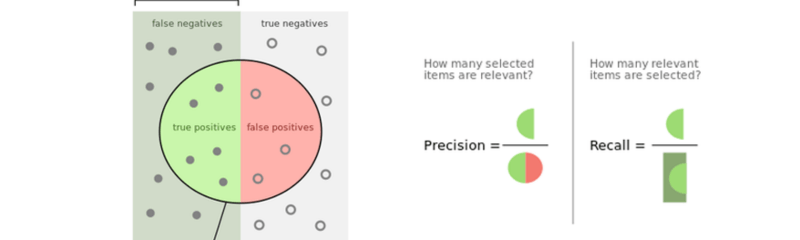
The concept transcends memory alone. In AI, precision recall refers to algorithms that minimize false positives while maximizing true retrievals, a critical factor in search engines, recommendation systems, and autonomous decision-making. Meanwhile, in elite sports and military training, precision recall isn’t just about remembering—it’s about reproducing skills under stress. The line between human cognition and machine learning blurs when both systems rely on the same underlying principle: optimizing retrieval pathways to reduce error margins. The question isn’t whether precision recall matters, but how deeply it will reshape industries where accuracy isn’t negotiable.
From the lab to the battlefield, from the boardroom to the operating room, the science of memory sharpening is no longer theoretical. It’s a competitive advantage. But how did we arrive at this moment? And what does the future hold for systems—biological and artificial—that prioritize flawless retrieval over mere recognition?
The Complete Overview of Precision Recall
At its core, precision recall is the intersection of memory fidelity and contextual accessibility. Unlike passive recognition (e.g., identifying a face in a crowd), precision recall demands the reconstruction of details—whether a sequence of chess moves, a surgical procedure, or a complex dataset—with minimal degradation over time. This capability isn’t innate; it’s cultivated through deliberate practice, neural plasticity, and, increasingly, algorithmic design. In cognitive science, the term often overlaps with episodic memory—the ability to replay past events in vivid detail—but extends to procedural memory (skills) and semantic memory (facts) when precision is critical.The distinction between "recall" and "high-fidelity recall" lies in the margin of error. A student memorizing a poem for an exam might recall the lines correctly but with hesitation; a seasoned actor, however, can deliver them with emotional nuance and technical precision. The difference isn’t just volume of repetition—it’s the quality of encoding. Studies in neuroscience reveal that precision recall hinges on three pillars: pattern separation (distinguishing similar memories), pattern completion (filling gaps in fragmented cues), and reconsolidation (updating memories during retrieval to strengthen them). When these mechanisms align, the result is a recall system that operates closer to perfection.
Historical Background and Evolution
The study of recall predates modern psychology, with roots in ancient mnemonic techniques. The Greeks and Romans developed method loci (memory palaces) to enhance oratory and legal arguments, but these systems prioritized volume over precision. The shift toward precision recall began in the 19th century, when experimental psychologists like Hermann Ebbinghaus quantified memory decay through the forgetting curve. His work revealed that without reinforcement, memories degrade predictably—but if retrieval is active and structured, decay slows dramatically. This insight laid the groundwork for spaced repetition, a cornerstone of modern memory training.The 20th century brought two paradigm shifts. First, cognitive neuroscience mapped the brain’s recall pathways, identifying the hippocampus as the gatekeeper of episodic memory and the prefrontal cortex as the orchestrator of working memory. Second, computational models emerged, particularly in AI, where precision recall became synonymous with exact-match retrieval. Early database systems like IBM’s IMS (1960s) prioritized speed over accuracy, but as applications demanded higher stakes—financial transactions, medical diagnostics, autonomous vehicles—the tolerance for errors plummeted. Today, precision recall in AI isn’t just about finding data; it’s about verifying its integrity, a challenge that has spurred innovations like vector databases and probabilistic graph models.
Core Mechanisms: How It Works
The brain’s recall process is a dynamic interplay of neural networks. When you retrieve a memory, the hippocampus reactivates the original neural ensemble, but the prefrontal cortex filters the output for relevance. This dual-process model explains why some memories are recalled with photographic clarity while others fade. Precision recall thrives when encoding is multisensory—combining visual, auditory, and kinesthetic cues—and when retrieval is contextualized. For example, a pianist recalling a concerto doesn’t rely solely on sheet music; they reconstruct the piece through tactile feedback, auditory imagination, and emotional association.Table of Contents
- The Complete Overview of Precision Recall
- Historical Background and Evolution
- Core Mechanisms: How It Works
- Key Benefits and Crucial Impact
- Major Advantages
- Comparative Analysis
- Future Trends and Innovations
- Conclusion
- Comprehensive FAQs
- Q: How can I improve my precision recall naturally?
- Q: What role does emotion play in precision recall?
- Q: Can AI achieve true precision recall, or is it limited to pattern matching?
- Q: Are there industries where precision recall is more critical than others?
- Q: How does precision recall differ from recognition?
- Q: What are the ethical concerns around enhancing precision recall?
In artificial systems, precision recall is achieved through feature engineering and loss functions that penalize ambiguity. A recommendation algorithm, for instance, might use collaborative filtering to predict user preferences, but to achieve precision recall, it must also account for why a user liked a specific item—contextual metadata that reduces false positives. Similarly, in robotics, precision recall isn’t just about recognizing an object; it’s about replicating the exact force and trajectory needed to manipulate it, a task requiring real-time sensory feedback loops. The key difference between human and machine recall? Biology relies on plasticity; AI relies on optimization.
Key Benefits and Crucial Impact
The demand for precision recall has surged in domains where errors carry catastrophic consequences. In medicine, a surgeon’s ability to recall anatomical variations mid-procedure can mean the difference between success and complication. In cybersecurity, precise recall of threat patterns allows for faster incident response. Even in creative fields, writers and composers leverage high-precision recall to maintain consistency across long-form works. The economic value of refining recall isn’t just about efficiency—it’s about reducing risk. A study by McKinsey found that organizations investing in cognitive training saw a 21% improvement in decision-making accuracy, directly attributable to sharper recall mechanisms.The implications extend beyond performance. Precision recall is reshaping how we think about memory itself. No longer viewed as a passive storage unit, the brain is now understood as an active prediction engine. When recall is precise, it doesn’t just retrieve information—it simulates future scenarios based on past data. This predictive recall is why athletes visualize success before execution, why musicians rehearse mentally, and why AI systems like AlphaGo anticipate opponent moves. The boundary between memory and foresight is dissolving, and precision recall is the bridge.
"Memory is not a file cabinet; it’s a dynamic system that reconstructs the past to serve the present." — Endel Tulving, Cognitive Psychologist
Major Advantages
- Error Reduction: In high-stakes fields (e.g., aviation, surgery), precision recall minimizes critical mistakes by ensuring accurate retrieval of protocols, checklists, and anatomical details.
- Adaptive Learning: Systems that refine recall—whether human or AI—adapt faster to new information by leveraging existing precise memory structures (e.g., a chess player recalling openings to anticipate novel moves).
- Contextual Accuracy: Unlike generic recall, precision recall incorporates environmental and emotional cues, improving retrieval in real-world scenarios (e.g., a detective recalling a crime scene’s spatial layout).
- Scalability in AI: Algorithms trained on precision recall (e.g., transformers with attention mechanisms) handle larger datasets without sacrificing accuracy, enabling advancements in NLP and computer vision.
- Neural Plasticity: Deliberate training to enhance precision recall strengthens synaptic connections, delaying cognitive decline and improving long-term memory retention.

Comparative Analysis
| Human Precision Recall | AI/Machine Precision Recall |
|---|---|
|
|
|
Weakness: Prone to interference (e.g., confusing similar memories). Strength: Adaptive to novel contexts via creativity. |
Weakness: Lacks true understanding; relies on pattern matching. Strength: Consistency and speed in structured tasks. |
| Training Method: Mnemonics, deliberate practice, neurofeedback. | Training Method: Backpropagation, transfer learning, synthetic data augmentation. |
Future Trends and Innovations
The next frontier in precision recall lies at the intersection of neuroscience and synthetic intelligence. Brain-computer interfaces (BCIs) like Neuralink aim to augment human recall by interfacing directly with memory centers, potentially restoring or enhancing precision in patients with cognitive decline. Meanwhile, AI researchers are exploring neuromorphic computing—hardware designed to mimic the brain’s parallel processing—to create recall systems that are both energy-efficient and highly accurate. The goal isn’t just to replicate human precision but to surpass it in domains where biological limitations apply.Another horizon is predictive recall, where systems don’t just retrieve past data but simulate future states based on it. In healthcare, this could mean recalling not just a patient’s medical history but predicting potential adverse reactions to treatments. In finance, it could involve recalling market patterns to forecast volatility. The challenge will be balancing precision with adaptability—ensuring recall systems remain robust against noise while staying flexible enough to handle uncertainty. As quantum computing matures, we may even see recall algorithms that operate at speeds and scales beyond classical limits, redefining what’s possible in both memory and computation.

Conclusion
Precision recall is more than a cognitive or technical skill—it’s a paradigm shift in how we interact with information. Whether in the mind of a memory champion, the circuits of an AI, or the protocols of a high-reliability organization, the ability to retrieve data with near-perfect accuracy is becoming non-negotiable. The science behind it reveals a universe of possibilities: from reversing memory loss to building machines that think in patterns rather than pixels. Yet the most profound implication may be philosophical. If precision recall can reconstruct the past with fidelity, what does that say about our ability to shape the future?The answer lies in the intersection of discipline and innovation. Humans must train their recall systems deliberately; machines must be designed to prioritize accuracy over speed. The result isn’t just better memory—it’s a redefinition of what memory itself can achieve.
Comprehensive FAQs
Q: How can I improve my precision recall naturally?
A: Focus on active retrieval (self-testing), spaced repetition (reviewing material at increasing intervals), and contextual association (linking new information to existing memories). Techniques like the Pomodoro method for spaced study and memory palaces for visual-spatial recall have been scientifically validated. Additionally, physical exercise (especially aerobic) and deep sleep enhance hippocampal function, critical for precision recall.
Q: What role does emotion play in precision recall?
A: Emotion acts as a "superglue" for memory. The amygdala tags emotionally charged events with higher precision during encoding, making them easier to recall later. This is why people remember traumatic or joyful events in vivid detail. In AI, emotional context is simulated via affective computing, where systems analyze tone or sentiment to prioritize recall of "high-emotion" data points (e.g., customer complaints in service chatbots).
Q: Can AI achieve true precision recall, or is it limited to pattern matching?
A: Current AI excels at pattern-based precision recall (e.g., matching vectors in a database) but lacks true understanding. However, advances in neurosymbolic AI—combining deep learning with symbolic reasoning—are bridging this gap. For instance, a system might recall not just that "Paris is the capital of France" but why it’s classified as such in a hierarchical knowledge graph. True precision recall in AI may require consciousness-like properties, a topic of ongoing debate.
Q: Are there industries where precision recall is more critical than others?
A: Yes. High-risk fields like aviation, nuclear operations, and surgery demand near-flawless recall of protocols. In creative industries, precision recall ensures consistency (e.g., a film director recalling exact shot compositions). Cybersecurity relies on it for threat detection, while finance uses it for fraud pattern recognition. Even education benefits—studies show students with strong precision recall perform 30% better in problem-solving tasks.
Q: How does precision recall differ from recognition?
A: Recognition is passive (e.g., identifying a face in a crowd), while precision recall is active and reconstructive (e.g., describing the face’s features from memory). Recognition relies on familiarity; recall demands generation. In AI, recognition might involve classifying an image as a "cat," whereas precision recall would involve detailing its breed, color, and behavioral quirks. The brain’s hippocampus is primarily for recall; the rhinal cortex handles recognition.
Q: What are the ethical concerns around enhancing precision recall?
A: Enhancements like neurostimulation or AI-driven memory augmentation raise questions about privacy (e.g., implanted memories) and equity (who can afford cognitive upgrades?). There’s also the risk of over-reliance—if humans delegate recall to AI, could natural memory skills atrophy? Ethical frameworks are emerging, but the debate is still evolving, particularly as BCIs and memory-editing tools (e.g., CRISPR for neural pathways) advance.
Leave a Comment
Comments are moderated before appearing. The data you submit is processed according to the Privacy Policy of Bevvy.