What Is the Length? Decoding Measurement’s Hidden Role in Design, Science & Everyday Life
When an architect sketches a skyscraper’s silhouette, the first question isn’t about aesthetics—it’s what is the length of the foundation needed to support 100 floors. That same query haunts engineers calculating the stress on a bridge’s span or physicists defining the universe’s expanding dimensions. Length isn’t just a number; it’s the silent architect of functionality, the bridge between theory and reality. Yet its definition has evolved from the human forearm to laser-precise atomic standards, reflecting humanity’s relentless pursuit of accuracy.
Consider the Eiffel Tower: its 324-meter height wasn’t arbitrary. It was a calculated response to Paris’s need for a monument that could be seen from miles away—where what is the length of visibility became a matter of national pride. Similarly, in digital design, a 16:9 aspect ratio isn’t just a ratio; it’s the result of decades of optimizing how human eyes perceive proportions. Length, in every field, is both a constraint and a creative tool, dictating what’s possible before a single line is drawn or equation solved.
The paradox of length lies in its duality: it’s the most tangible of measurements yet the most abstract. You can’t hold a kilometer, but you can feel its absence when a road curves beyond the horizon. It’s the metric that turns chaos into order—whether in the symmetry of a snowflake or the chaos of a stock market’s daily fluctuations. Understanding what is the length isn’t just about units; it’s about uncovering the invisible rules that govern everything from a child’s first steps to the trajectory of a rocket.

The Complete Overview of Length as a Fundamental Concept
Length is the most universal of spatial measurements, serving as the foundation for geometry, physics, and even philosophy. At its core, it represents the distance between two points, but its implications stretch far beyond simple definitions. In engineering, what is the length of a beam determines its load-bearing capacity; in astronomy, it defines the scale of galaxies. The concept transcends disciplines, yet its precision varies wildly—from the rough estimate of a carpenter’s eye to the subatomic measurements of particle accelerators. This duality makes length both a practical tool and a philosophical puzzle, forcing us to question whether measurement is a discovery or an invention.
The ambiguity of length becomes clearer when examining its cultural interpretations. In ancient Egypt, the cubit—the distance from a pharaoh’s elbow to fingertips—was a royal standard, embedding power into physical dimensions. Meanwhile, in modern manufacturing, a tolerance of 0.001 millimeters can make or break a smartphone’s assembly line. The answer to what is the length isn’t fixed; it’s context-dependent, shaped by technology, tradition, and necessity. This fluidity explains why length remains one of the most debated yet essential concepts in science and industry.
Historical Background and Evolution
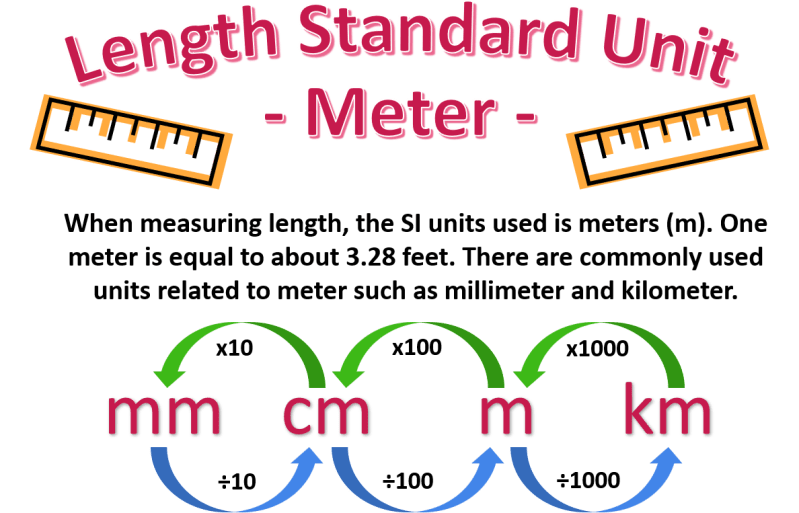
The history of measuring length is a story of human ambition. Early civilizations relied on body parts: the digit (finger width), palm, foot, and cubit were universal, but inconsistent. The Romans standardized the pes (foot) as 29.6 cm, while the British foot later diverged to 30.48 cm—a discrepancy that still causes headaches in international trade. These organic units worked for local trade but failed on a global scale, leading to the meter’s birth in 1799, defined as one ten-millionth of the Earth’s quadrant. This scientific approach aimed to universalize what is the length, but even it wasn’t perfect: the original platinum-iridium bar shrank slightly over time.
Table of Contents
- The Complete Overview of Length as a Fundamental Concept
- Historical Background and Evolution
- Core Mechanisms: How It Works
- Key Benefits and Crucial Impact
- Major Advantages
- Comparative Analysis
- Future Trends and Innovations
- Conclusion
- Comprehensive FAQs
- Q: Why does the meter’s definition keep changing?
- Q: How does length affect digital design (e.g., UI/UX)?
- Q: Can length be negative or infinite?
- Q: How do different cultures measure length informally?
- Q: What’s the smallest measurable length?
- Q: How does length influence music?
- Q: Why do some countries still use feet and inches?
- Q: Can length be subjective?
The 20th century brought revolutionary shifts. In 1960, the meter was redefined using light wavelengths, and by 1983, it became tied to the speed of light—a constant of nature. This change wasn’t just technical; it was philosophical. Length could no longer be tied to a physical object but was now a derived property of the universe itself. Today, the attometer (10-18 meters) measures atomic nuclei, while the parsec (3.26 light-years) stretches across the cosmos. The evolution of length reflects humanity’s growing ability to measure what was once unimaginable, yet the core question—what is the length of something—remains timeless.
Core Mechanisms: How It Works
Length operates on three levels: physical, theoretical, and perceptual. Physically, it’s the distance between two points in Euclidean space, governed by the rules of geometry. Theoretically, it’s a dimension in relativity, where space-time curvature bends our understanding of what is the length of a moving object (length contraction). Perceptually, it’s how humans interpret scale—why a 10-meter hallway feels vast in a mansion but claustrophobic in a submarine. These layers interact constantly: a bridge’s span length must account for thermal expansion (physical), relativistic effects on GPS satellites (theoretical), and driver psychology (perceptual).
The tools to measure length have also diversified. Traditional rulers and calipers give direct readings, but modern methods include laser interferometry (used in LIGO to detect gravitational waves) and quantum entanglement-based measurements. Even biological systems use length: DNA’s helix length is measured in nanometers, while a virus’s capsid length determines its infectivity. The mechanism isn’t just about precision; it’s about adapting the right tool to the scale of the question. Whether asking what is the length of a molecule or a mountain range, the approach must match the phenomenon’s complexity.
Key Benefits and Crucial Impact
Length is the silent enabler of progress. Without precise measurements, modern infrastructure—from skyscrapers to microchips—would collapse into chaos. The impact of understanding what is the length extends to safety (e.g., calculating the crash distance of an airplane), efficiency (optimizing supply chains with container sizes), and even art (the golden ratio’s 1.618:1 proportions in classical architecture). Misjudging length can have catastrophic consequences: the Tacoma Narrows Bridge’s 1940 collapse was partly due to underestimating aerodynamic forces on its span length. Conversely, mastering it unlocks innovations like nanotechnology, where feature lengths of 5 nanometers define transistor performance.
The cultural impact is equally profound. Length shapes identity—national flags’ proportions, religious symbols’ dimensions, even fashion trends (the length of a dress hemline signaling eras). In sports, a basketball court’s length of 94 feet isn’t just a rule; it’s a stage for human athleticism. The question what is the length thus becomes a lens to examine power, tradition, and innovation. It’s not just about numbers; it’s about the stories they tell.
“Measurement is the first step that leads to control and eventually to mastery.” — Lord Kelvin
Major Advantages
- Precision in Engineering: Tolerances as small as 0.0001 millimeters ensure medical implants fit perfectly, while beam lengths in bridges are calculated to distribute weight evenly.
- Scientific Discovery: The Hubble constant (70 km/s/Mpc) defines the universe’s expansion rate by measuring cosmic distances, while protein length determines their function in biology.
- Economic Efficiency: Standardized container lengths (20 or 40 feet) revolutionized global shipping, reducing costs by 30% through interlocking units.
- Artistic Harmony: The length of musical notes in a symphony follows mathematical ratios, creating emotional resonance (e.g., Beethoven’s Fifth Symphony’s 4-note motif).
- Everyday Convenience: Doorway widths (32 inches) and bed lengths (75 inches) are optimized for human ergonomics, reducing accidents and improving comfort.
Comparative Analysis
| Aspect | Traditional Units | Modern Standards |
|---|---|---|
| Definition Source | Body parts (cubit, foot) or arbitrary objects (yardstick). | Fundamental constants (speed of light, Planck length). |
| Precision Range | Millimeters to kilometers (human-scale). | Attometers (10-18 m) to megaparsecs (1022 m). |
| Cultural Bias | Varied by region (e.g., British vs. US feet). | Universal (SI units adopted by 95% of nations). |
| Technological Dependency | Manual tools (calipers, chains). | Lasers, atomic clocks, and AI-driven calibration. |
Future Trends and Innovations
The future of length measurement is being redefined by quantum technology. Researchers are developing quantum rulers that use entangled particles to achieve resolutions beyond classical limits, potentially measuring lengths at the Planck scale (1.6 × 10⁻³⁵ meters). Meanwhile, topological metrology could redefine length in higher dimensions, where traditional geometry fails. In industry, self-correcting measurement systems using AI are already adjusting for environmental factors like temperature shifts in real time. Even in biology, DNA origami is creating nanoscale structures with precise length controls, blurring the line between engineering and biology.
Philosophically, the question what is the length may soon extend beyond physical space. String theory suggests extra dimensions with compactified lengths (as small as 10-35 meters), while digital twins in manufacturing create virtual representations where length is a programmable variable. As augmented reality becomes ubiquitous, measuring virtual lengths—like the distance between holographic objects—will require new frameworks. The evolution of length isn’t just about smaller units; it’s about reimagining what can be measured and why.

Conclusion
Length is the quiet backbone of civilization, its importance often overshadowed by the grandeur of the structures it defines. Yet without the answer to what is the length, we’d lack the precision to launch satellites, design life-saving drugs, or even build a stable table. Its history mirrors humanity’s progress: from primitive approximations to atomic-scale certainties. The journey from cubits to light-speed measurements reveals a truth: length isn’t just a metric; it’s a language. It communicates feasibility, sets boundaries, and enables breakthroughs across every field.
As technology pushes the limits of what can be measured, the question what is the length will continue to evolve. It will challenge us to define new scales, question old assumptions, and perhaps even redefine the nature of space itself. In an era where the smallest particles and the largest galaxies both demand measurement, length remains the bridge between the tangible and the theoretical—a reminder that precision is the first step toward understanding the universe, one dimension at a time.
Comprehensive FAQs
Q: Why does the meter’s definition keep changing?
A: The meter’s redefinitions (1799: platinum bar; 1960: light wavelength; 1983: speed of light) reflect a shift from physical artifacts to fundamental constants. Earlier methods were prone to degradation or loss (e.g., the original bar was stolen in 1875). Using light—an unchanging constant—ensures global consistency, as even if the meter’s physical standard were destroyed, its definition would remain tied to the universe’s fabric.
Q: How does length affect digital design (e.g., UI/UX)?
A: In digital interfaces, length dictates usability. A button’s height length of 48 pixels is optimal for touch targets, while typography’s line length (45–75 characters) improves readability. Misjudging length can cause layout breaks (e.g., a 300px banner on a mobile screen) or accessibility issues (insufficient tap targets). Tools like CSS’s rem units ensure scalable length across devices, but even pixels have psychological impacts—shorter lines feel faster to scan.
Q: Can length be negative or infinite?
A: In classical physics, length is non-negative, but in relativity, proper length (distance in an object’s rest frame) can appear contracted to an outside observer due to time dilation. “Infinite length” isn’t physical but appears in theoretical models like string theory (where extra dimensions may be compactified to Planck-scale lengths) or cosmology (the observable universe’s diameter length is ~93 billion light-years, but the universe itself may be infinite).
Q: How do different cultures measure length informally?
A: Many cultures use body-based units even today. In Japan, shaku (30.3 cm) is still used for tatami mats, while in India, the hath (18 inches) measures fabric. The Maasai of Kenya use a cow’s stride (~1.5 meters) for long distances. These systems persist due to tradition, but they’re often calibrated to standard units (e.g., 1 shaku ≈ 0.303 meters). Informal length measurements reveal how culture shapes perception of scale.
Q: What’s the smallest measurable length?
A: The Planck length (~1.6 × 10⁻³⁵ meters) is the smallest meaningful measurement in physics, where quantum gravity effects dominate. Below this, space-time’s fabric may break down into a “foam” of virtual particles. Current technology can’t measure it directly, but experiments like LIGO (detecting gravitational waves from length changes of 10-18 meters) edge closer. Future quantum sensors may push limits further.
Q: How does length influence music?
A: In music, length governs rhythm (note durations), form (song structures like 4-minute pop songs vs. 90-minute symphonies), and even instrument design (a violin’s body length of ~56 cm affects its tone). The golden ratio (~1.618) appears in classical compositions (e.g., Beethoven’s Moonlight Sonata’s phrase lengths), while modern EDM relies on beat lengths of 128 BPM for danceability. Even silence has length: a 4-second pause in a film score can heighten tension.
Q: Why do some countries still use feet and inches?
A: The US, UK, and Liberia retain imperial units due to path dependence: infrastructure (roads, buildings) was built using feet/inches, and conversion costs are prohibitive. However, science and trade increasingly use metric. For example, while US roads are measured in miles, GPS coordinates use meters. The length of a football field (100 yards) remains imperial, but NFL broadcasts now show metric equivalents—a hybrid system reflecting practical and cultural inertia.
Q: Can length be subjective?
A: Yes. Perceptual length varies by context: a 10-foot hallway feels longer in a narrow house than in a spacious gallery. Optical illusions (e.g., the Müller-Lyer arrow illusion) distort perceived length. Even colors can affect judgment—a red background makes objects appear shorter. Neuroscience shows the brain combines visual cues (shading, texture) with prior knowledge to “estimate” length, making it partly subjective despite objective measurements.
Leave a Comment
Comments are moderated before appearing. The data you submit is processed according to the Privacy Policy of Bevvy.