Mastering How Many Ounces Is in a Quart—The Definitive Measurement Breakdown
The question "how many ounces is in a quart" isn’t just a trivial kitchen math problem—it’s a gateway to understanding the intricate web of volume measurements that govern everything from baking recipes to scientific experiments. For home cooks, it’s the difference between a perfectly moist cake and a dense brick. For chemists, it’s the precision needed to calibrate reactions. Yet, despite its simplicity, the answer isn’t universally fixed. The US customary system, the imperial system, and even metric conversions introduce layers of complexity, forcing clarity where ambiguity might otherwise reign.
At its core, the relationship between quarts and ounces hinges on two critical factors: system consistency and contextual application. The US liquid quart, for instance, stands at 32 fluid ounces—a figure etched into American culinary tradition. But cross the Atlantic, and the imperial quart (used in the UK and Commonwealth) diverges slightly, with 40 imperial fluid ounces. This discrepancy isn’t mere academic trivia; it’s a real-world challenge for travelers, global chefs, and engineers who must navigate these systems seamlessly. The stakes are higher than most realize: miscalculating "how many ounces in a quart" could mean ruining a soufflé or misdosing a pharmaceutical compound.
The confusion deepens when metric conversions enter the equation. While the US system relies on fluid ounces and quarts, the metric world operates on liters and milliliters, where 1 quart ≈ 0.946 liters. This isn’t just a conversion—it’s a philosophical divide between systems built on base-10 logic versus those rooted in historical trade weights. The answer to "how many ounces are in a quart" thus becomes a microcosm of broader measurement debates: standardization, practicality, and the enduring tension between tradition and innovation.

The Complete Overview of "How Many Ounces Is in a Quart"
The conversion "how many ounces is in a quart" is deceptively simple on the surface but reveals a fascinating interplay of history, science, and everyday utility. In the US customary system—the framework governing American cooking, construction, and commerce—a quart is defined as 32 fluid ounces (fl oz). This relationship is non-negotiable in recipes, fuel efficiency calculations, and even beverage labeling. However, the imperial quart (used in the UK, Canada, and other Commonwealth nations) contains 40 imperial fluid ounces, a discrepancy that stems from 18th-century British standardization efforts. The metric system further complicates matters, where 1 US quart equals approximately 946.353 milliliters, or roughly 32.00004 US fluid ounces—a near-perfect match, but not exact.Understanding these distinctions is critical for accuracy. A baker in New York following a recipe labeled in US quarts won’t achieve the same results as a chef in London using an imperial quart, even if the ingredient lists appear identical. The same principle applies to industrial settings: a brewery in Portland measuring hops by the quart must account for whether their scales use US or imperial ounces, lest their batch yield deviate from expectations. The answer to "how many ounces in a quart" isn’t just a number—it’s a lens into how different cultures and industries prioritize precision, tradition, and adaptability.
Historical Background and Evolution
The quart’s origins trace back to medieval England, where volume measurements were tied to the capacity of everyday containers. The term itself derives from the Latin quartarius, meaning "a quarter," reflecting its role as a quarter of a gallon—a unit originally defined by the volume of wine a man could carry on his arm. By the 14th century, English law codified the wine gallon (≈231 cubic inches), which later evolved into the imperial gallon. The US, however, rebelled against these British standards during the American Revolution, adopting its own system in 1824. This divergence explains why "how many ounces is in a quart" yields different answers on either side of the Atlantic.The US system’s quart was standardized to 32 fluid ounces as part of a broader effort to simplify trade and reduce fraud. Meanwhile, the imperial quart retained its 40-ounce structure, a holdover from pre-metric British commerce. The metric system’s adoption in the 19th century added another layer, as scientists and engineers sought a universal standard. Today, the US remains one of the few nations still using the imperial system for daily measurements, making "how many ounces in a quart" a persistent point of confusion for global audiences. The persistence of these systems underscores how deeply measurement units are woven into cultural identity—whether in a farmer’s grain bin or a pastry chef’s scale.
Core Mechanisms: How It Works
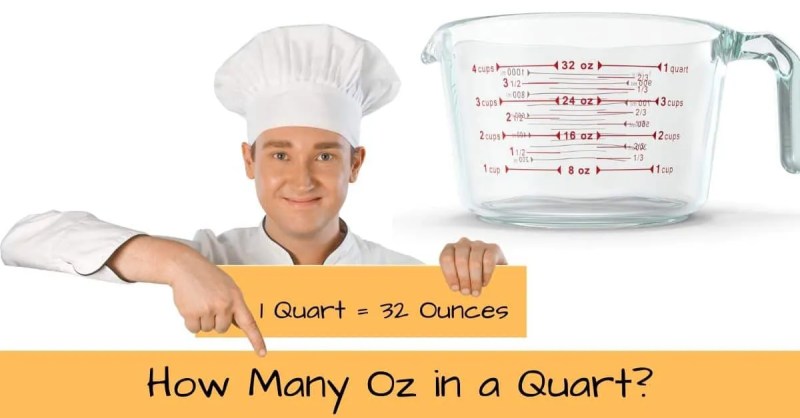
The conversion "how many ounces is in a quart" operates on a hierarchical structure within each measurement system. In the US, the chain is straightforward:1 quart = 2 pints = 4 cups = 32 fluid ounces.
This consistency is maintained through calibrated tools like graduated cylinders and kitchen measuring cups, which are manufactured to these exact specifications. The imperial system follows a similar logic but with adjusted values:
1 imperial quart = 2 imperial pints = 4 imperial cups = 40 imperial fluid ounces.
The key difference lies in the base unit: a US fluid ounce is 1.0408757 imperial fluid ounces, a nuance critical for cross-system calculations.
Table of Contents
- The Complete Overview of "How Many Ounces Is in a Quart"
- Historical Background and Evolution
- Core Mechanisms: How It Works
- Key Benefits and Crucial Impact
- Major Advantages
- Comparative Analysis
- Future Trends and Innovations
- Conclusion
- Comprehensive FAQs
- Q: Why does the US use 32 ounces in a quart while the UK uses 40?
- Q: Can I use a US quart measurement in an imperial recipe without converting?
- Q: How do I convert quarts to ounces for dry ingredients like flour?
- Q: Is there a universal quart measurement in science?
- Q: Why do some countries use both US and imperial quarts?
- Q: How can I remember the difference between US and imperial quarts?
- Q: Are there any industries where quarts are still critical?
- Q: What’s the most common mistake people make with quart conversions?
- Q: Can I convert quarts to ounces using a simple formula?
- Q: Why does the US still use quarts if the metric system is more precise?
For metric conversions, the process involves dimensional analysis. Since 1 US gallon = 3.78541 liters, dividing by 4 (quarts per gallon) yields 0.9463525 liters per quart. To convert liters back to ounces, multiply by 33.8140226 (ounces per liter), resulting in 32.00004 US fluid ounces—a figure so close to 32 that most practical applications treat it as identical. However, in high-precision fields like pharmaceuticals or aerospace, these micro-differences can have tangible consequences.
Key Benefits and Crucial Impact
The clarity provided by understanding "how many ounces is in a quart" extends far beyond the kitchen. In culinary arts, it ensures recipes are reproducible, whether scaling a batch of cookies from a home oven to a commercial mixer. For scientists, it’s the foundation of volumetric analysis, where even a 1% error in measuring reactants can alter experimental outcomes. The automotive industry relies on these conversions for fuel efficiency ratings, while healthcare professionals use them to administer liquids safely. The ripple effects of precision in volume measurements touch nearly every sector of modern life, making the answer to this question a cornerstone of functional literacy.Beyond practicality, the study of measurement systems fosters cross-cultural competence. Travelers, expatriates, and global businesses must navigate these distinctions to avoid costly mistakes. A misstep in interpreting "how many ounces in a quart" could lead to overfilling a gas tank, mislabeling a shipment, or serving a dish with incorrect seasoning. The stakes are rarely life-or-death, but the cumulative impact of such errors—across industries and individuals—is undeniable.
"Measurement is the first step that leads to control and eventually to mastery." — Lord Kelvin
Major Advantages
- Culinary Consistency: Accurate conversions prevent recipe failures, ensuring textures and flavors align with intent. A quart of milk in a US recipe won’t behave the same as an imperial quart in a British pudding.
- Scientific Precision: Laboratories rely on exact volume measurements for chemical reactions, drug dosages, and material testing. Even a 0.5-ounce discrepancy can skew results.
- Commercial Accuracy: Industries like brewing, distilling, and food manufacturing depend on standardized quarts to maintain product quality and comply with regulations.
- Cross-System Adaptability: Understanding both US and imperial quarts enables seamless operation in global markets, where recipes, manuals, and specifications may use either system.
- Educational Foundation: Mastery of these conversions builds critical thinking skills, teaching individuals to question assumptions and verify sources—a skill applicable to all areas of life.

Comparative Analysis
| System | Quart to Ounces Conversion |
|---|---|
| US Customary | 1 quart = 32 fluid ounces (exact) |
| Imperial (UK/Commonwealth) | 1 quart = 40 imperial fluid ounces |
| Metric | 1 US quart ≈ 32.00004 US fluid ounces (≈0.946 liters) |
| Dry Quarts (US) | 1 dry quart = 37.23696 US fluid ounces (used for grains, not liquids) |
Future Trends and Innovations
As globalization accelerates, the demand for unified measurement standards may grow, pressuring nations to adopt metric systems universally. However, cultural resistance and entrenched industries—particularly in the US—suggest this transition will be gradual. Innovations in digital measurement tools, such as AI-driven kitchen scales and IoT-enabled lab equipment, are already bridging gaps by automatically converting between systems. These technologies could render "how many ounces is in a quart" a moot point for future generations, as devices handle conversions in real time.Meanwhile, educational reforms are emphasizing measurement literacy from an early age, integrating cross-system comparisons into STEM curricula. The rise of home brewing and artisanal food movements has also heightened awareness of these distinctions, as hobbyists seek precision in small-batch production. Whether through technology or education, the future of volume measurements will likely prioritize flexibility—allowing users to toggle between systems effortlessly while maintaining the historical integrity of each.
Conclusion
The question "how many ounces is in a quart" serves as a microcosm of humanity’s relationship with measurement: a blend of historical legacy, practical necessity, and occasional frustration. While the answer—32 fluid ounces in the US, 40 in the imperial system—may seem straightforward, the layers of context reveal why these conversions matter. They shape how we cook, build, trade, and innovate, serving as a reminder that even the most mundane calculations are underpinned by centuries of evolution.For the home cook, the takeaway is simple: double-check your system. For the scientist or engineer, it’s about embracing precision as a non-negotiable. And for everyone else, it’s a lesson in adaptability—a skill as valuable in the kitchen as it is in the boardroom. The next time you measure a quart, remember: you’re not just pouring liquid. You’re participating in a tradition that spans continents and centuries.
Comprehensive FAQs
Q: Why does the US use 32 ounces in a quart while the UK uses 40?
The difference stems from the American Revolution, when the US standardized its own measurement system to break from British imperial units. The UK retained its 40-ounce imperial quart, which was based on older wine-gallon definitions. The two systems diverged permanently in 1824.
Q: Can I use a US quart measurement in an imperial recipe without converting?
No. A US quart (32 oz) is about 20% smaller than an imperial quart (40 oz). Using them interchangeably will alter ingredient ratios, potentially ruining the dish. Always convert or use the correct system for the recipe’s origin.
Q: How do I convert quarts to ounces for dry ingredients like flour?
Dry quarts (used for grains, flour, etc.) differ from liquid quarts. In the US, 1 dry quart = 37.23696 fluid ounces. For practical purposes, 1 dry quart ≈ 37.24 oz. Use a kitchen scale for accuracy, as volume measurements for dry goods vary by density.
Q: Is there a universal quart measurement in science?
No. Scientific contexts typically use metric liters or milliliters for precision. However, some US-based labs may still reference quarts in informal settings. Always confirm the expected system in research protocols or industrial standards.
Q: Why do some countries use both US and imperial quarts?
Countries like Canada and the UK officially use the imperial system but often incorporate US measurements in everyday life due to proximity to the US market. Australia, meanwhile, uses metric liters predominantly but retains imperial terms in colloquial language (e.g., "a pint of milk").
Q: How can I remember the difference between US and imperial quarts?
A simple mnemonic: "US is less"—the US quart (32 oz) is smaller than the imperial quart (40 oz). Alternatively, recall that the UK’s larger quart reflects its historical emphasis on wine and ale measurements, where volume mattered more than weight.
Q: Are there any industries where quarts are still critical?
Yes. Brewing, distilling, and pharmaceuticals rely on precise quart measurements. The automotive industry uses quarts for oil capacity ratings, while food manufacturing scales recipes in quarts for consistency. Even some construction trades reference quarts for paint or adhesive volumes.
Q: What’s the most common mistake people make with quart conversions?
The most frequent error is assuming all quarts are equal. Mixing US and imperial measurements—especially in cooking or DIY projects—leads to incorrect proportions. Always verify the system used in recipes, manuals, or specifications.
Q: Can I convert quarts to ounces using a simple formula?
For US quarts: 1 quart × 32 = 32 oz. For imperial quarts: 1 quart × 40 = 40 oz. For metric conversions, use 1 US quart ≈ 946.353 mL, then convert mL to oz (1 oz ≈ 29.5735 mL). Digital converters can automate this for complex calculations.
Q: Why does the US still use quarts if the metric system is more precise?
The US clings to customary units due to inertia, cost, and cultural attachment. Transitioning would require retraining millions, retooling industries, and updating infrastructure—efforts deemed impractical for marginal gains in precision. Many argue the metric system’s benefits outweigh the transition costs, but resistance persists.
Leave a Comment
Comments are moderated before appearing. The data you submit is processed according to the Privacy Policy of Bevvy.