How Many Oz in a Quart? The Exact Conversion You Need to Know
The question "how many oz in a quart" isn’t just a trivial math exercise—it’s a foundational piece of knowledge for anyone who cooks, bakes, brews, or works in fields requiring precise volume measurements. Whether you’re scaling a recipe from a British cookbook to American units or calibrating industrial equipment, understanding this conversion separates guesswork from accuracy. The answer isn’t just 32—it’s a gateway to mastering a system of measurement that has shaped trade, science, and daily life for centuries.
Yet even today, confusion persists. A quick search reveals debates over whether it’s 32 fluid ounces or 33.8, or whether dry quarts differ from liquid ones. The discrepancy stems from the duality of the U.S. customary system, where volume measurements for liquids and dry goods weren’t always aligned. This ambiguity isn’t just academic; it can lead to costly errors in manufacturing, culinary arts, or even pharmaceutical dosing. Clarifying "how many ounces make a quart" isn’t about memorization—it’s about demystifying a system designed for practicality, not perfection.
The quart itself is a relic of imperial trade, a unit that evolved from Roman quadrantes (a quarter of a gallon) to the standardized measurements of the British Empire, which the U.S. later adopted—then tweaked. What follows is the definitive breakdown: the exact conversion, its historical roots, and why the answer matters beyond the kitchen.
The Complete Overview of How Many Oz in a Quart
The U.S. customary system defines 1 liquid quart as exactly 32 fluid ounces, a ratio fixed by the National Institute of Standards and Technology (NIST) in 1959. This standard applies to liquids—water, milk, beer, or any fluid measured in cups, pints, or gallons. However, the system splits when dealing with dry quarts, where the conversion shifts to 2.15042 dry pints (or ~2.11338 liters), reflecting the volume of dry goods like grains or fruits. The disparity exists because early imperial units were calibrated for different mediums: liquids flowed freely, while dry goods packed differently.This duality isn’t just a quirk—it’s a legacy of the 18th-century British Weights and Measures Act, which standardized liquid measures for trade but left dry measures to regional custom. The U.S. retained both systems post-independence, creating a patchwork that persists today. For most everyday uses, especially in cooking or beverage production, the 32 oz = 1 quart rule holds. But for bakers measuring flour or farmers handling grain, the dry quart’s nuances become critical. Understanding these distinctions ensures precision, whether you’re filling a keg or frosting a cake.
Historical Background and Evolution
The quart’s origins trace back to medieval Europe, where trade demanded consistent volume measures. The term quart derives from the Latin quartus ("a quarter"), as it was originally one-quarter of a wine gallon—a unit used by the Roman Empire. By the 12th century, English brewers adopted the London quart, a wooden measure for ale, which evolved into the imperial quart under King Henry VIII’s 1516 ale measure regulations. These early quarts weren’t uniform; regional variations abounded until the 19th century, when the British Parliament standardized the imperial system in 1824.The U.S. inherited this system post-Revolution but diverged in the 19th century, particularly with the Weights and Measures Act of 1836, which redefined dry and liquid measures separately. The liquid quart was tied to the gallon (4 quarts = 1 gallon), while the dry quart was linked to the bushel—a holdover from agricultural trade. The 1959 U.S. redefinition of the gallon (now 231 cubic inches) solidified the 32 oz = 1 liquid quart standard, but dry quarts remained tied to weight-based calculations. This bifurcation explains why a quart of milk and a quart of rice occupy different volumes.
Core Mechanisms: How It Works
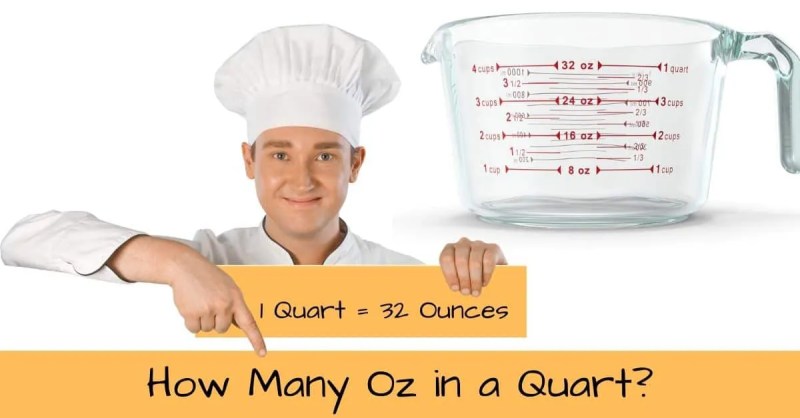
The conversion hinges on the U.S. customary cup, which equals 8 fluid ounces. Since 1 quart = 4 cups, the math is straightforward: 4 cups × 8 oz = 32 oz. This consistency extends to the gallon: 1 gallon = 4 quarts = 128 oz. The system’s elegance lies in its divisibility—halves (pints), quarters (cups), and eighths (gills)—though the gill (1/4 pint) is rarely used today.Table of Contents
- The Complete Overview of How Many Oz in a Quart
- Historical Background and Evolution
- Core Mechanisms: How It Works
- Key Benefits and Crucial Impact
- Major Advantages
- Comparative Analysis
- Future Trends and Innovations
- Conclusion
- Comprehensive FAQs
- Q: Why does the U.S. still use quarts instead of liters?
- Q: Is a quart of water the same weight as 32 ounces?
- Q: Can I use a quart as a standard measure for cooking internationally?
- Q: Why do dry and liquid quarts have different volumes?
- Q: How do I convert quarts to milliliters for metric recipes?
- Q: Are there any countries that use quarts today?
- Q: What’s the easiest way to remember "how many oz in a quart"?
- Q: Can a quart measure both liquids and dry goods accurately?
- Q: How does temperature affect quart measurements?
- Q: Are there any historical documents that reference quarts?
For dry quarts, the calculation shifts to volume by displacement. A dry quart holds 67.2 cubic inches, derived from the bushel’s 1,284.32 cubic-inch standard. This means 1 dry quart of rice weighs less than 1 liquid quart of water due to air gaps between grains. The distinction is critical in industries where density matters, such as baking or distilling. Modern metrology ensures these definitions are legally binding in the U.S., but global standards (like the metric liter) often cause confusion when converting recipes or technical specifications.
Key Benefits and Crucial Impact
Precision in volume measurements isn’t just about correctness—it’s about efficiency. In culinary arts, misjudging "how many ounces in a quart" can alter texture, flavor, or even safety (e.g., under-measuring yeast in bread). For brewers, the difference between liquid and dry quarts affects alcohol content calculations. Even in healthcare, pharmaceuticals dosed in fluid ounces rely on this conversion to ensure patient safety. The system’s rigidity also supports global trade; while most countries use metric liters, the U.S. retains customary units for practicality in industries like construction or aviation.The quart’s enduring relevance lies in its balance of simplicity and adaptability. It’s small enough for daily use but scalable for industrial applications. Historian Simon Schaffer noted, "Measurement is not neutral; it shapes how we think about quantity." The quart’s dual nature reflects this—it’s both a tool for exactitude and a remnant of historical pragmatism.
"The quart is a testament to how systems evolve: not by design, but by necessity." —Dr. Lisa Rosenbaum, Measurement History Scholar
Major Advantages
- Culinary Consistency: Recipes assume 32 oz per quart for liquids; dry conversions require separate tables to avoid errors.
- Industrial Standardization: Breweries and food processors rely on these conversions for batch consistency and regulatory compliance.
- Legal Clarity: The NIST’s 1959 definitions resolve disputes in contracts involving volume-based transactions.
- Educational Foundation: Teaching "how many ounces in a quart" introduces students to unit analysis, a critical STEM skill.
- Cultural Legacy: The quart appears in idioms (e.g., "a quart low") and historical documents, linking measurement to language.

Comparative Analysis
| Unit | Equivalent in Ounces (Liquid) |
|---|---|
| 1 Fluid Ounce (fl oz) | 1 fl oz |
| 1 Cup | 8 fl oz |
| 1 Pint | 16 fl oz (2 cups) |
| 1 Quart | 32 fl oz (4 cups) |
Future Trends and Innovations
While the U.S. shows no signs of abandoning customary units, hybrid systems are emerging. Digital scales now display both metric and imperial conversions, reducing errors in professional kitchens. The International System of Units (SI) remains dominant globally, but industries like aviation and construction retain customary units for legacy reasons. Advances in 3D printing and nanotechnology may further blur lines, as precise volume measurements become critical at microscopic scales.The quart’s future lies in its adaptability. As AI-driven recipe generators gain popularity, they’ll likely embed these conversions automatically, eliminating user error. Meanwhile, educational reforms may emphasize dual-unit literacy, preparing students for a world where both metric and imperial systems coexist.

Conclusion
The answer to "how many ounces in a quart" is 32 for liquids, but the story behind it reveals far more—a system shaped by trade, war, and scientific progress. Its duality isn’t a flaw but a feature, reflecting the complexity of real-world measurement. Whether you’re a chef, engineer, or home brewer, grasping this conversion ensures accuracy in a world where precision matters.The next time you pour a quart of milk or mix a dry ingredient, remember: you’re participating in a tradition that spans millennia. And in an era of global standards, the quart remains a stubbornly useful relic—proof that some old ways are worth keeping.
Comprehensive FAQs
Q: Why does the U.S. still use quarts instead of liters?
The U.S. customary system predates the metric system’s global adoption in the 19th century. Industries like construction and aviation retain it for practicality, though most scientific and medical fields now use metric units. A 2019 NIST report noted that full metric conversion would cost billions and disrupt long-standing practices.
Q: Is a quart of water the same weight as 32 ounces?
Yes, because water’s density is 1 oz per fluid ounce at room temperature. However, other liquids (e.g., honey) may weigh more due to higher density, while dry goods like flour weigh less per quart due to air gaps.
Q: Can I use a quart as a standard measure for cooking internationally?
No. Outside the U.S., a "quart" may refer to the metric liter (1.0567 liquid quarts). Always check local standards or use grams/milliliters for consistency in global recipes.
Q: Why do dry and liquid quarts have different volumes?
Historical trade practices required separate standards. Liquids were measured by flow (e.g., wine barrels), while dry goods (e.g., grain) were measured by volume in containers. The U.S. retained both after independence.
Q: How do I convert quarts to milliliters for metric recipes?
Multiply liquid quarts by 946.353 (since 1 liquid quart ≈ 0.946 liters). For dry quarts, use 2.11338 liters. Example: 2 liquid quarts = 1,892.706 mL.
Q: Are there any countries that use quarts today?
Only the U.S. and Liberia officially use customary units, though the UK retains "imperial quarts" (slightly larger at 1.1365 liters) for legacy purposes like beer brewing.
Q: What’s the easiest way to remember "how many oz in a quart"?
Use the mnemonic "32 = 4 × 8" (4 cups per quart, 8 oz per cup). For dry quarts, memorize that they’re ~20% larger by volume than liquid quarts.
Q: Can a quart measure both liquids and dry goods accurately?
No. Liquid quarts are calibrated for flow; dry quarts account for packing density. Using a liquid quart for dry ingredients (or vice versa) risks under- or over-measurement.
Q: How does temperature affect quart measurements?
Liquid expansion/contraction with temperature can alter volume slightly (e.g., water peaks at 4°C). For precision, measure at room temperature (20°C/68°F).
Q: Are there any historical documents that reference quarts?
Yes. The Magna Carta (1215) referenced ale measures, and Benjamin Franklin’s Poor Richard’s Almanack (1736) included quart-based recipes. Colonial trade records often used quarts to standardize shipments.
Leave a Comment
Comments are moderated before appearing. The data you submit is processed according to the Privacy Policy of Bevvy.