How J.R.R. Tolkien’s Genius Shaped Fantasy Forever
The name J.R.R. Tolkien is synonymous with fantasy, a titan whose work transcends the genre to become a cornerstone of modern literature. Born in 1892 to a British father and a mother of Hungarian descent, Tolkien’s childhood was steeped in myth and language—a foundation that would later birth entire worlds. His early fascination with fairy tales, particularly those of William Morris, collided with his academic rigor as a philologist at Oxford, where he specialized in Old and Middle English. This duality—poetic imagination paired with scholarly precision—would define his magnum opus: The Lord of the Rings, a saga so rich in detail that it redefined what epic storytelling could achieve.
Yet Tolkien’s genius lay not merely in creating a sprawling fantasy realm but in grounding it in real-world linguistic and historical depth. Middle-earth’s languages—Elvish, Dwarvish, and Khuzdul—were not afterthoughts but meticulously constructed systems, complete with grammars, alphabets, and evolving histories. His obsession with mythopoeia (the creation of myth) led him to craft a secondary world so immersive that readers didn’t just consume his stories; they inhabited them. The Hobbit, initially a children’s tale, became a gateway to a universe that would captivate adults for generations, proving that fantasy could be both escapist and intellectually profound.
Tolkien’s influence extends beyond literature into pop culture, gaming, and even linguistics. His work inspired generations of writers, from Ursula K. Le Guin to George R.R. Martin, while his linguistic innovations (like the concept of "constructed languages") laid groundwork for modern fantasy worldbuilding. Yet his legacy is also one of moral complexity, where the struggle between good and evil is never black-and-white but shaded by tragedy, sacrifice, and the weight of history. To understand Tolkien is to grasp how fantasy can mirror—and elevate—the human experience.
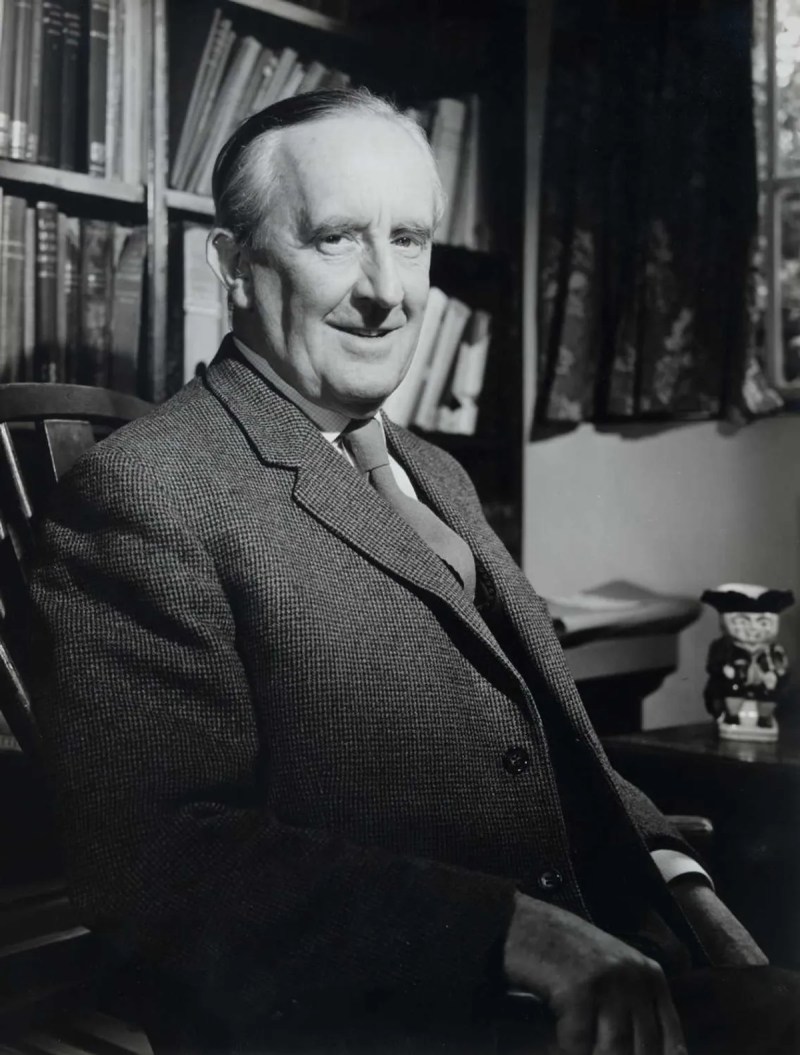
The Complete Overview of J.R.R. Tolkien’s Legacy
J.R.R. Tolkien was more than an author; he was a mythmaker, a linguist, and a reluctant prophet of a genre that would dominate global storytelling. His life spanned two world wars, personal tragedy (the deaths of his wife and children), and the rise of a new literary form. Tolkien’s academic background—particularly his work on Old Norse and Finnish languages—infused his fiction with an authenticity that set it apart. Unlike many fantasy writers of his time, he didn’t invent Middle-earth as a backdrop but as a living, breathing history, complete with maps, calendars, and genealogies. This attention to detail made his work feel tangible, as if the reader could step into the Shire or the Misty Mountains.What makes Tolkien’s legacy enduring is his ability to blend the personal with the universal. His stories grapple with themes of power, corruption, and the resilience of the small against the mighty—reflections of his own experiences in World War I, where he fought in the trenches and lost many of his closest friends. Yet his work also transcends autobiography. Tolkien’s mythopoeic approach—creating myths rather than retelling them—gave fantasy a legitimacy it had never before possessed. Before The Lord of the Rings, fantasy was often dismissed as escapist; Tolkien proved it could be a vehicle for profound philosophical and ethical questions.
Historical Background and Evolution
Tolkien’s literary journey began in the trenches of World War I, where he witnessed the horrors of industrialized warfare. His experiences shaped his later works, particularly The Lord of the Rings, which explores themes of heroism, sacrifice, and the cost of power. After the war, Tolkien returned to Oxford, where he met C.S. Lewis and the Inklings, a group of writers who discussed their works in a supportive, critical environment. This period was crucial for Tolkien’s development, as he began expanding his early stories—like The Hobbit—into the larger legendarium of Middle-earth.The publication of The Hobbit in 1937 was a turning point. Initially written as a children’s book, it became a surprise hit, leading to Tolkien’s decision to publish The Lord of the Rings. The trilogy, however, faced initial skepticism from publishers, who doubted its commercial viability. It wasn’t until the 1960s, after the book’s success in paperback and its adoption by college students, that Tolkien’s reputation as a literary giant was cemented. His later years were marked by a growing recognition of his influence, though he remained modest, insisting that his work was merely a continuation of ancient mythic traditions.
Core Mechanisms: How It Works
Tolkien’s storytelling is defined by his mythopoeic method—the creation of a secondary world with its own history, languages, and cultures. Unlike many fantasy writers who focus on plot or character, Tolkien prioritized worldbuilding as a living entity. His languages, for instance, weren’t just tools for dialogue but fully realized systems that evolved over time. Elvish, in particular, was developed using phonetic rules derived from Finnish and other languages, giving it a sense of authenticity that felt ancient yet coherent.Table of Contents
- The Complete Overview of J.R.R. Tolkien’s Legacy
- Historical Background and Evolution
- Core Mechanisms: How It Works
- Key Benefits and Crucial Impact
- Major Advantages
- Comparative Analysis
- Future Trends and Innovations
- Conclusion
- Comprehensive FAQs
- Q: What inspired J.R.R. Tolkien to create Middle-earth?
- Q: How did Tolkien’s academic background influence his writing?
- Q: Why did Tolkien initially write The Hobbit as a children’s book?
- Q: How did The Lord of the Rings change the fantasy genre?
- Q: What is Tolkien’s most underrated work?
- Q: How has Tolkien’s influence extended beyond literature?
Another key mechanism is Tolkien’s use of mythic archetypes. His characters and conflicts draw from Norse sagas, Arthurian legend, and even biblical themes, but he reinterprets them through a Christian lens. This fusion of the sacred and the secular is what gives his work its depth. For example, the One Ring’s corruption mirrors the biblical concept of original sin, while the fall of Númenor echoes the myth of Atlantis. Tolkien’s genius lies in his ability to make the fantastical feel mythically true, as if Middle-earth had always existed beyond the pages of his books.
Key Benefits and Crucial Impact
J.R.R. Tolkien’s impact on literature and culture is immeasurable. He didn’t just create a fantasy world; he established the rules of engagement for the genre. Before Tolkien, fantasy was often seen as frivolous or derivative. After him, it became a respected literary form capable of exploring complex themes. His influence is evident in everything from Game of Thrones to The Witcher, where intricate worldbuilding and moral ambiguity are now standard.Tolkien’s work also revolutionized linguistic creativity. His constructed languages (like Quenya and Sindarin) proved that fantasy worlds could have depth beyond plot and character. This innovation has inspired everything from Dungeons & Dragons to Star Wars, where languages like Basic and Huttese owe a debt to Tolkien’s philological rigor.
> "Fantasy is a natural human activity. It certainly does not destroy or even insult Reason; and it does not either blunt or even distract the attention from a wide variety of too-obvious truths. On the contrary. The keener the reader’s taste, the better fantasy will suit him, while cruder tastes will be satisfied by crude art." — J.R.R. Tolkien, On Fairy-Stories
Major Advantages
- Worldbuilding as an Art Form: Tolkien’s meticulous construction of Middle-earth’s history, languages, and cultures set a new standard for fantasy, proving that a secondary world could be as rich as the real one.
- Moral Complexity: Unlike many adventure stories, Tolkien’s works explore the nuances of good and evil, showing that even heroes are flawed and villains are often tragic figures.
- Linguistic Innovation: His creation of Elvish and other languages demonstrated that fantasy could be intellectually rigorous, blending creativity with academic precision.
- Cultural Legacy: Tolkien’s influence extends beyond books into film, gaming, and music, shaping how fantasy is consumed and interpreted by new generations.
- Philosophical Depth: His stories engage with timeless questions about power, corruption, and the nature of heroism, making them relevant across centuries.

Comparative Analysis
| Aspect | J.R.R. Tolkien | Modern Fantasy (e.g., George R.R. Martin) |
|---|---|---|
| Worldbuilding Depth | Meticulous, historical, and linguistic (e.g., Elvish languages, detailed maps). | Often plot-driven, with worldbuilding serving character arcs (e.g., A Song of Ice and Fire). |
| Moral Themes | Clear good vs. evil with nuanced characters (e.g., Gollum’s tragedy). | Ambiguous morality, where heroes and villains blur (e.g., Game of Thrones). |
| Influence on Media | Foundational for film, gaming, and literature (e.g., Lord of the Rings films, D&D). | Direct adaptations and spin-offs (e.g., HBO’s House of the Dragon). |
| Language and Style | Poetic, archaic, and scholarly (e.g., The Silmarillion). | Modern, conversational, and fast-paced (e.g., Martin’s prose). |
Future Trends and Innovations
As fantasy continues to evolve, Tolkien’s influence remains a touchstone. Modern writers and game designers still turn to his work for inspiration, particularly in immersive worldbuilding. Virtual reality and interactive storytelling may soon allow readers to "step into" Middle-earth in ways Tolkien could only imagine. Additionally, his linguistic innovations could see a resurgence in AI-generated languages, where algorithms create new tongues for fantasy worlds.Tolkien’s themes—power, corruption, and the struggle between light and dark—are timeless. Future fantasy may explore these ideas through new lenses, perhaps incorporating sci-fi elements or reimagining mythic structures. Yet no matter how the genre shifts, Tolkien’s legacy ensures that fantasy will always be rooted in depth, history, and the human spirit.

Conclusion
J.R.R. Tolkien was more than a writer; he was a visionary who redefined fantasy as a serious art form. His work bridges the gap between academia and imagination, proving that stories can be both entertaining and intellectually profound. From the quiet hills of the Shire to the battlefields of Mordor, Tolkien’s Middle-earth remains a testament to the power of mythopoeia.As long as readers seek escapism with meaning, Tolkien’s influence will endure. His legacy is not just in the books he wrote but in the worlds he inspired—worlds where language, history, and heroism intertwine to create something truly extraordinary.
Comprehensive FAQs
Q: What inspired J.R.R. Tolkien to create Middle-earth?
A: Tolkien’s inspiration came from a mix of personal experiences, linguistic studies, and mythic traditions. His childhood love of fairy tales, his academic work on Old English and Finnish languages, and the tragedies of World War I all shaped Middle-earth. He once said that his stories were "a fundamental desire to defend Middle-earth, the land that he loved, against the encroaching darkness."
Q: How did Tolkien’s academic background influence his writing?
A: Tolkien’s expertise in philology (the study of language) allowed him to create fully realized languages for Middle-earth, such as Elvish and Dwarvish. His knowledge of Norse and Finnish myths also gave his worldbuilding an authentic, historical feel. Unlike many fantasy writers, Tolkien treated languages as living systems, complete with grammars and evolving dialects.
Q: Why did Tolkien initially write The Hobbit as a children’s book?
A: Tolkien wrote The Hobbit as a bedtime story for his children, expanding it into a full manuscript. He didn’t initially intend it for adults, but publishers encouraged him to submit it for wider publication. The book’s success led to The Lord of the Rings, which Tolkien saw as a more serious work—though both stories share themes of adventure, heroism, and the struggle against evil.
Q: How did The Lord of the Rings change the fantasy genre?
A: Before Tolkien, fantasy was often seen as lightweight or derivative. The Lord of the Rings elevated the genre by demonstrating that fantasy could be epic, morally complex, and deeply philosophical. Its success paved the way for modern fantasy, proving that readers craved stories with rich worldbuilding, historical depth, and timeless themes.
Q: What is Tolkien’s most underrated work?
A: While The Lord of the Rings is his most famous work, many scholars argue that The Silmarillion—a collection of myths and legends about Middle-earth’s early history—is his most ambitious. Published posthumously, it explores themes of creation, fall, and redemption with a depth that rivals religious epics. Tolkien himself considered it his "true" work, though it was unfinished at his death.
Q: How has Tolkien’s influence extended beyond literature?
A: Tolkien’s impact is vast. His work inspired:
- Film and TV (The Lord of the Rings trilogy, The Hobbit films).
- Gaming (Dungeons & Dragons, The Witcher, Middle-earth: Shadow of Mordor).
- Music (from metal bands like Blind Guardian to symphonic compositions).
- Academic fields like linguistics and medieval studies.
Leave a Comment
Comments are moderated before appearing. The data you submit is processed according to the Privacy Policy of Bevvy.