What Is Medical Coding? The Hidden Language Powering Modern Healthcare
Medical coding is the silent architecture of healthcare—a system that converts complex medical procedures, diagnoses, and treatments into alphanumeric codes. Without it, hospitals couldn’t bill insurers, researchers couldn’t analyze public health trends, and clinicians wouldn’t have the data to improve patient outcomes. Yet, despite its ubiquity, few outside the industry grasp how this process functions or why it’s indispensable. The answer lies in its dual role: a precision tool for financial transactions and a critical data framework for modern medicine.
At its core, what is medical coding boils down to translation. Every doctor’s note, lab result, or surgical intervention must be rendered into standardized codes—whether it’s the CPT code for a colonoscopy or the ICD-10 entry for diabetes with complications. These codes aren’t arbitrary; they’re meticulously structured to ensure consistency across providers, payers, and regulatory bodies. The stakes are high: a miscoded claim can delay payments, trigger audits, or even misdirect treatment protocols. Yet, the system’s efficiency hinges on an often-overlooked workforce—coders who bridge the gap between clinical care and administrative processes.
The paradox of medical coding is its invisibility. Patients never see the codes, but their accuracy directly affects the cost of their care. Insurers rely on them to validate claims, governments use them to track disease prevalence, and hospitals depend on them to allocate resources. When a coder assigns the wrong code for a hypertension diagnosis, it’s not just an administrative error—it’s a ripple effect that could alter a patient’s financial burden or a hospital’s reimbursement rates. Understanding what medical coding entails isn’t just academic; it’s essential to grasping how healthcare systems operate.
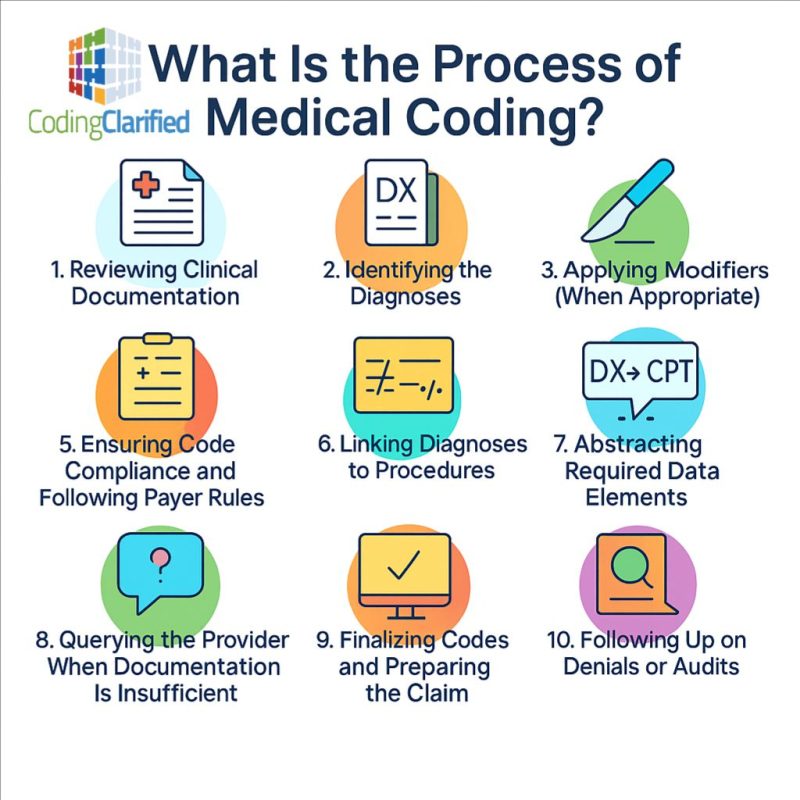
The Complete Overview of What Is Medical Coding
Medical coding is the linchpin of healthcare’s administrative infrastructure, serving as the common language that unifies disparate systems—from electronic health records (EHRs) to insurance claims processing. Its primary function is to standardize medical data into a format that can be universally understood, analyzed, and monetized. This standardization is critical because healthcare is inherently fragmented: thousands of providers, each with their own documentation styles, must communicate seamlessly with insurers, government agencies, and research institutions. Without coding, this chaos would collapse into inefficiency, fraud, and misallocation of funds. The system’s three pillars—diagnostic coding (ICD-11), procedural coding (CPT/HCPCS), and modifiers—create a framework that ensures every medical service or condition is documented with surgical precision.The role of a medical coder is both technical and interpretive. Coders must decipher physician notes, lab reports, and imaging results, then map them to the correct codes while adhering to strict guidelines set by organizations like the World Health Organization (ICD) and the American Medical Association (CPT). This process isn’t just about accuracy; it’s about context. For example, a code for "fracture of the femur" (S72.0) might seem straightforward, but modifiers could specify whether it was open, closed, or sustained during a fall—each variation affecting treatment protocols and reimbursement. The complexity escalates with conditions like chronic obstructive pulmonary disease (COPD), where coders must navigate multiple ICD-11 entries to capture the full clinical picture. This duality—balancing technical rigor with clinical nuance—makes medical coding a hybrid discipline that demands both medical knowledge and administrative expertise.
Historical Background and Evolution
The origins of medical coding trace back to the late 19th century, when the need for standardized disease classification became apparent during public health crises. In 1893, Jacques Bertillon developed an early mortality classification system to track causes of death—a precursor to today’s ICD (International Classification of Diseases). However, it wasn’t until 1948 that the World Health Organization formalized the ICD as a global standard, initially for epidemiological research. The system’s first major expansion came in 1979 with ICD-9-CM, which introduced clinical modifications for the U.S. healthcare system, enabling billing and reimbursement. Yet, as medical science advanced, the limitations of ICD-9 became glaring: its 14,000 codes were insufficient for modern diagnostics, and its alphanumeric structure couldn’t accommodate the granularity required for chronic disease management or procedural coding.The transition to ICD-10-CM in 2015 marked a turning point in what is medical coding. With over 68,000 codes, ICD-10 expanded to include laterality (left/right), severity levels, and detailed procedural distinctions. This shift wasn’t just about volume; it reflected a paradigm change in how healthcare data is used. The new system was designed to support value-based care, population health management, and big data analytics—capabilities that ICD-9 couldn’t handle. Meanwhile, procedural coding evolved with the Current Procedural Terminology (CPT) system, introduced in 1966 by the AMA, which standardized physician services. Today, CPT’s 7,000+ codes cover everything from a routine office visit (99213) to complex cardiac surgeries (33533). The evolution of these systems mirrors the broader transformation of healthcare from fee-for-service to data-driven, outcomes-focused models.
Core Mechanisms: How It Works
The mechanics of medical coding revolve around three interconnected processes: documentation review, code assignment, and compliance verification. The workflow begins with the clinician’s documentation—whether in an EHR, handwritten notes, or dictated reports. Coders then cross-reference this information against official codebooks (ICD-11, CPT, HCPCS) to select the most accurate entries. For instance, a patient with type 2 diabetes (E11.9) who undergoes a coronary artery bypass graft (33533) would require both a diagnostic and procedural code, along with modifiers to specify complications or comorbidities. This step is where human judgment meets algorithmic precision; coders must interpret ambiguous notes (e.g., "patient has joint pain" could be M25.510 for knee pain or M54.5 for radiculopathy) while avoiding "upcoding" (assigning higher-reimbursement codes) or "downcoding" (underrepresenting services).Table of Contents
- The Complete Overview of What Is Medical Coding
- Historical Background and Evolution
- Core Mechanisms: How It Works
- Key Benefits and Crucial Impact
- Major Advantages
- Comparative Analysis
- Future Trends and Innovations
- Conclusion
- Comprehensive FAQs
- Q: How long does it take to become a certified medical coder?
- Q: Can medical coding be automated entirely?
- Q: What’s the difference between ICD-11 and ICD-10?
- Q: How do medical coders handle disputes with insurers?
- Q: Is medical coding a good career for remote work?
- Q: How does medical coding affect patient privacy?
- Q: What industries use medical coding besides hospitals?
The second phase involves compliance checks, where coders ensure codes align with medical necessity, payer policies, and regulatory requirements. For example, a claim for a CT scan (71270) must include justification—was it for trauma, cancer staging, or routine screening? Each payer (Medicare, Blue Cross, etc.) has specific edit rules to prevent fraud, and coders use software like Encounter Forms or Optum360 to flag discrepancies. The final output is a claim submission, where codes become the currency of healthcare transactions. Behind the scenes, clearinghouses and payer systems validate these codes against national databases (e.g., NUBC’s National Correct Coding Initiative) before processing payments. This entire pipeline—from chart to check—relies on coding’s invisible but indispensable role in ensuring financial viability for providers.
Key Benefits and Crucial Impact
The impact of medical coding extends far beyond billing departments. It is the backbone of healthcare’s financial ecosystem, enabling providers to recoup costs, insurers to manage risk, and governments to allocate resources based on data. Without coding, the $4.3 trillion U.S. healthcare industry would lack a universal language to track spending, identify trends, or enforce accountability. Hospitals use coded data to optimize revenue cycles, while public health agencies rely on it to monitor disease outbreaks—such as the rapid ICD-10-based tracking of COVID-19 cases in 2020. Even clinical research depends on standardized codes to pool patient data across institutions. The system’s efficiency reduces administrative burdens, cuts claim denials by up to 30%, and ensures compliance with laws like HIPAA and the Affordable Care Act.At its heart, what is medical coding is about precision in ambiguity. Healthcare documentation is often inconsistent—physicians use shorthand, abbreviations, or subjective terms—but coders must translate these into objective, billable entries. This process mitigates errors that could lead to underpayment or audits. For example, a miscoded diabetes diagnosis (E11 vs. E10 for type 1) could trigger a Medicare audit, costing a practice thousands in recoupments. Similarly, procedural codes must reflect the exact service rendered; billing for a "level 4 office visit" (99214) when the documentation only supports a "level 3" (99213) would be flagged as fraudulent. The ripple effects of accurate coding touch every stakeholder, from the patient’s out-of-pocket costs to the hospital’s bottom line.
"Medical coding is the Rosetta Stone of healthcare—without it, the language of medicine would fragment into chaos, and the industry’s data-driven future would collapse." — Dr. Lisa Bernstein, Chief Data Officer, Cleveland Clinic
Major Advantages
- Financial Accuracy: Ensures providers receive correct reimbursement for services rendered, reducing claim denials and write-offs. Studies show proper coding can improve cash flow by 15–25%.
- Regulatory Compliance: Aligns with CMS, HIPAA, and ICD-11 guidelines, protecting organizations from fines or legal action. For example, ICD-10’s granularity helps avoid penalties for "unbundling" codes.
- Data Standardization: Enables cross-institutional research, public health surveillance, and predictive analytics. The CDC uses ICD codes to track opioid overdoses or cancer incidence rates.
- Operational Efficiency: Automates claim processing, reducing manual errors and speeding up payments. Hospitals using AI-assisted coding tools report a 40% reduction in coding-related delays.
- Patient Care Improvements: Accurate coding identifies high-risk patients for preventive interventions. For instance, a coder spotting repeated ER visits for asthma (J45.909) can trigger care coordination programs.

Comparative Analysis
| Aspect | ICD-11 (Diagnostic Coding) | CPT (Procedural Coding) |
|---|---|---|
| Primary Use | Diagnoses, symptoms, and conditions (e.g., hypertension, pneumonia). | Medical, surgical, and diagnostic procedures (e.g., colonoscopy, MRI). |
| Managed By | World Health Organization (global) / CMS (U.S. modifications). | American Medical Association (AMA). |
| Update Frequency | Major revisions every 10 years (next in 2025); annual updates. | Annual updates (e.g., 2024 added 450+ new codes for AI-guided surgeries). |
| Complexity for Coders | High—requires clinical knowledge to distinguish between similar codes (e.g., "chronic pain" vs. "neuropathic pain"). | Moderate—structured by body system but demands procedural expertise (e.g., differentiating a "biopsy" from an "excision"). |
Future Trends and Innovations
The future of medical coding is being reshaped by artificial intelligence, interoperability, and value-based care models. AI-powered tools like Optum’s CodeRyte or 3M’s Encoder are already reducing coder workloads by 30% through natural language processing (NLP), which extracts codes directly from clinical notes. These systems don’t replace human judgment but automate the tedious parts—such as flagging inconsistent documentation or suggesting the most likely codes based on patterns. However, the ethical implications of AI coding remain debated: can an algorithm fully grasp the nuances of a physician’s handwritten "patient has worsening dyspnea on exertion"? The answer may lie in hybrid models where AI assists but coders retain final approval.Another disruptor is real-time coding, where claims are processed as services are rendered (e.g., via EHR-integrated coding tools like Epic’s Coding Assistant). This eliminates backlogs and reduces denials by catching errors before submission. Meanwhile, the shift to value-based reimbursement (e.g., Medicare’s Bundled Payments) is pushing coders to document outcomes, not just services. For example, a hip replacement (27130) might now require additional codes for post-op complications or physical therapy adherence. As healthcare moves toward patient-centered data, coders will need to master social determinants of health (SDOH) coding (e.g., Z59.6 for homelessness), which affects treatment plans and reimbursement. The industry’s next frontier may be blockchain-based coding, where immutable records prevent fraud and enable seamless data sharing across borders.

Conclusion
Medical coding is the unsung hero of healthcare—a discipline that operates in the shadows yet holds the keys to financial stability, regulatory compliance, and data-driven innovation. Its evolution from a mortality tracking tool to a cornerstone of modern medicine reflects broader shifts in how we value and monetize health data. As AI and interoperability redefine the role of coders, the core principle remains unchanged: what is medical coding is the art of translating chaos into clarity, ensuring that every diagnosis, procedure, and patient interaction is captured with precision. The stakes couldn’t be higher. In an era where miscoded claims can bankrupt small practices and data inaccuracies misdirect public health responses, the need for skilled coders—and robust coding systems—is more critical than ever.Yet, the field faces challenges. The coding shortage (with 50,000+ unfilled positions in the U.S.) threatens to overwhelm hospitals, while the complexity of ICD-11 demands continuous education. The solution may lie in automation without dehumanization: leveraging AI to handle volume while training coders to focus on clinical acumen. One thing is certain: as long as healthcare relies on reimbursement, compliance, and analytics, medical coding will remain its indispensable language. The question isn’t whether it will endure—it’s how it will adapt to the next wave of medical and technological revolutions.
Comprehensive FAQs
Q: How long does it take to become a certified medical coder?
A: Certification typically requires 1–2 years of education (associate degree or diploma programs) followed by passing exams like the CPC (Certified Professional Coder) or CCS (Certified Coding Specialist). Apprenticeships or on-the-job training can accelerate entry for those with prior healthcare experience. The AAPC and AHIMA offer accelerated certification tracks for experienced professionals.
Q: Can medical coding be automated entirely?
A: No—while AI and NLP tools (e.g., Nuance’s PowerScribe) can suggest codes, human oversight is essential for accuracy, especially in ambiguous cases. The 2023 CMS final rule emphasizes that automated coding must comply with medical necessity and documentation integrity standards, requiring coder review for final approval.
Q: What’s the difference between ICD-11 and ICD-10?
A: ICD-11 (implemented in 2022 for global use, with U.S. adoption planned for 2025) introduces digital-first design, allowing for electronic clinical modifications and expanded mental health/substance use codes. Key improvements include laterality indicators (left/right), severity levels, and combination codes (e.g., "hypertension with heart disease" in one entry). ICD-10 lacks these granularities, making it less adaptable for modern diagnostics.
Q: How do medical coders handle disputes with insurers?
A: Coders use appeals processes outlined by payers (e.g., Medicare’s Redetermination or Alabama Medicare Administrative Contractor). They gather additional documentation, such as peer review support or physician statements, to justify codes. Tools like ZirMed’s Appeal Manager help track disputes and deadlines, with success rates improving when coders provide specific code references and clinical evidence.
Q: Is medical coding a good career for remote work?
A: Yes—remote medical coding is growing, with roles offered by companies like RevCycle Solutions or HealthTech firms. Coders need secure EHR access (e.g., via Citrix or VPN) and certification (CPC/CCS). According to FlexJobs, remote coding jobs pay $45,000–$70,000/year, with flexibility to choose shifts. However, compliance with state licensing laws (e.g., Florida’s requirement for in-person oversight) may limit full remote options in some regions.
Q: How does medical coding affect patient privacy?
A: Coders must adhere to HIPAA’s "minimum necessary" rule, ensuring only authorized personnel access patient data. De-identified coding (removing PHI) is used for analytics, while encrypted databases protect coded records. Violations can result in $1,000–$50,000 fines per incident, per the HHS Office for Civil Rights. Training on PHI handling is mandatory for all coders.
Q: What industries use medical coding besides hospitals?
A: Beyond hospitals, medical coding is critical in:
- Insurance companies (e.g., UnitedHealthcare, Aetna) for claim processing.
- Public health agencies (CDC, WHO) for disease tracking.
- Legal firms specializing in medical malpractice or fraud cases.
- Pharmaceutical/biotech for clinical trial data coding.
- Government contractors (e.g., VA hospitals, military healthcare).
Leave a Comment
Comments are moderated before appearing. The data you submit is processed according to the Privacy Policy of Bevvy.