The Hidden Truth Behind What Is World's Most Popular Sport – Global Dominance Explained
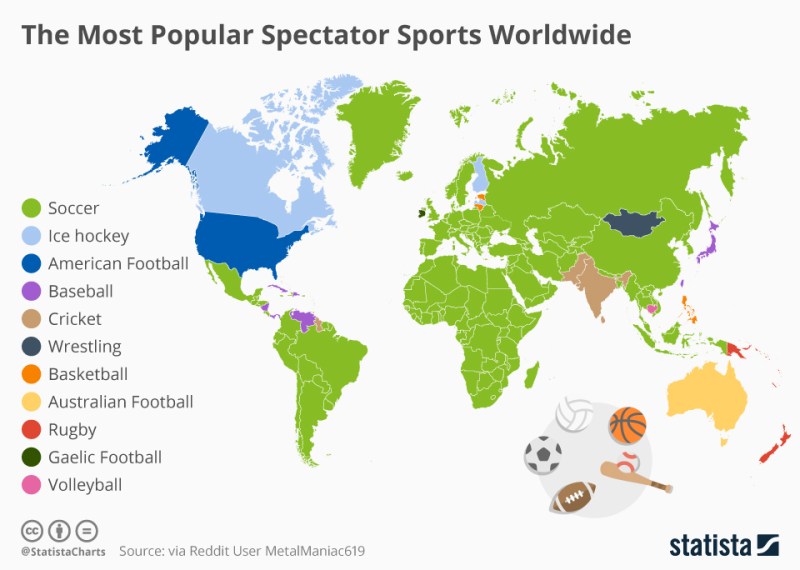
The numbers don't lie: when asked "what is world's most popular sport," the answer isn't just a game—it's a global phenomenon that reshapes economies, fuels national pride, and moves markets. While American football dominates in the U.S. and cricket rules in South Asia, one sport claims unmatched supremacy worldwide. With over 4 billion fans, 250 million active players, and a $50 billion annual industry, its reach dwarfs even the most dominant rivals. Yet the title isn't decided by fan counts alone—it's about participation, cultural penetration, and the sheer scale of its economic and social footprint.
This dominance isn't accidental. The sport's governing body, founded in 1904, now operates in 211 countries, making it the only major global federation with universal representation. Its simplicity—11 players, a round ball, and goals at either end—contrasts with its profound complexity: tactical geniuses like Johan Cruyff and Pep Guardiola have redefined strategy, while legends like Pelé and Messi transcend athleticism to become cultural icons. The question of "what is world's most popular sport" isn't just statistical—it's a study in how a game becomes a language, a religion, and a unifying force in a fractured world.
But here's the paradox: despite its ubiquity, the sport's popularity varies wildly by region. In Africa, it's a lifeline for communities; in Europe, it's a weekend ritual; in the Americas, it's both a pastime and a profession. Its global appeal isn't monolithic—it adapts. From street football in favelas to high-stakes club rivalries in Madrid, the game's DNA is the same, yet its expression is endlessly diverse. This duality—standardized yet fluid—explains why, when polls ask "what is world's most popular sport," the answer isn't just a name but a testament to humanity's shared passion.
The Complete Overview of What Is World's Most Popular Sport
The answer to "what is world's most popular sport" is association football—commonly called soccer outside North America. Its dominance isn't just about numbers; it's about the sport's ability to function as both a microcosm of society and a mirror of global politics. The FIFA World Cup, held every four years, is the world's most-watched sporting event, with the 2022 tournament drawing 1.57 billion cumulative viewers. For context, the Super Bowl—America's biggest sporting spectacle—attracts roughly 112 million viewers. The disparity underscores football's unique position as the only sport where the final isn't just a game but a cultural reset button for billions.
What makes football the undisputed answer to "what is world's most popular sport" is its democratization. Unlike cricket, which requires expensive equipment and infrastructure, or American football, which demands specialized fields, football can be played anywhere with minimal resources. A patch of dirt, a makeshift goal, and a ball suffice. This accessibility has turned it into a universal language. In Brazil, it's a way out of poverty; in Germany, it's a vehicle for national identity; in Japan, it's a tool for cultural soft power. The sport's adaptability—from beach football in Rio to futsal in Europe—ensures it remains relevant across all strata of society.
Historical Background and Evolution
The origins of football trace back to ancient China (with "cuju"), but the modern game emerged in 19th-century England, where standardized rules were codified in 1863 by the Football Association. The first international match in 1872 between Scotland and England marked the beginning of football's global expansion. By the early 20th century, British sailors, traders, and colonial administrators spread the game to Africa, Asia, and the Americas, often as a tool of cultural assimilation. The first FIFA Congress in 1904 formalized the sport's international governance, laying the foundation for its current dominance in answering "what is world's most popular sport."
Table of Contents
- The Complete Overview of What Is World's Most Popular Sport
- Historical Background and Evolution
- Core Mechanics: How It Works
- Key Benefits and Crucial Impact
- Major Advantages
- Comparative Analysis
- Future Trends and Innovations
- Conclusion
- Comprehensive FAQs
- Q: Why is football more popular than cricket or basketball globally?
- Q: How does the FIFA World Cup contribute to football's dominance?
- Q: Are there regions where football isn't the most popular sport?
- Q: How has technology changed football's popularity?
- Q: What role does football play in social development?
- Q: Will football remain the world's most popular sport in 2050?
Football's evolution has been marked by three key phases: amateurism (pre-1960s), professionalization (1960s–1990s), and globalization (post-1990s). The 1966 World Cup in England cemented football's status as a global spectacle, while the 1994 tournament in the U.S. introduced the sport to millions of new fans. The turn of the millennium saw the rise of the Premier League as a global brand, with clubs like Manchester United and Real Madrid becoming household names. Today, the sport's economic model—driven by broadcasting rights, sponsorships, and merchandise—makes it a $50 billion industry, far outpacing competitors like basketball or tennis.
Core Mechanics: How It Works
The beauty of football lies in its simplicity: two teams of 11 players each compete to score by getting the ball into the opponent's net. However, the execution is deceptively complex. The Laws of the Game, governed by FIFA, dictate everything from offside rules to substitutions. A match lasts 90 minutes (plus stoppage time), divided into two halves, with three officials overseeing play. The sport's tactical depth—formations like 4-4-2 or 3-5-2, pressing systems, and set-piece strategies—requires a level of strategic thinking often compared to chess. This blend of physicality and intellect is why football, when asked "what is world's most popular sport," consistently wins.
What sets football apart from other sports is its fluidity. Unlike basketball or hockey, where play stops frequently, football is a continuous, high-speed game with minimal interruptions. This relentless motion, combined with the unpredictable nature of matches (where underdogs can defeat giants), creates an addictive narrative arc. The lack of a clock—only stoppages for injuries or fouls—adds to the tension. Even casual observers are drawn into the ebb and flow of possession, counterattacks, and defensive resilience. This dynamic, unpredictable quality is why football's global fanbase remains unmatched in answering the question of "what is world's most popular sport."
Key Benefits and Crucial Impact
Football's popularity isn't just a matter of preference—it's a force for social change. In regions like Africa and South America, the sport provides education, employment, and hope to marginalized communities. Clubs like Manchester United's partnership with street football programs in Brazil demonstrate how football can be a tool for development. Economically, the sport generates jobs, from stadium workers to broadcasters, and stimulates tourism. The 2018 World Cup in Russia injected $14 billion into the economy, while the 2022 Qatar tournament created 350,000 jobs. Culturally, football fosters unity; during the 2010 World Cup in South Africa, the tournament was credited with reducing racial tensions.
Yet football's impact isn't without controversy. The sport's commercialization has led to issues like player exploitation, match-fixing, and the gentrification of local communities. The 2022 World Cup in Qatar, held amid allegations of labor abuses, sparked global debates about ethics in sports. Still, the sport's ability to mobilize change—whether through campaigns like "Kick It Out" against racism or initiatives like FIFA's "Football for Good"—proves its potential as a catalyst for progress. The question of "what is world's most popular sport" is also a question of responsibility: how will this global phenomenon continue to shape the world?
"Football is the only game where the underdog can become a giant overnight. It's not just a sport; it's a metaphor for life." — Pelé
Major Advantages
- Universal Accessibility: Requires minimal equipment (a ball and open space), making it playable in any environment, from urban parks to rural fields.
- Cultural Neutrality: Unlike cricket (associated with colonialism) or American football (tied to U.S. identity), football transcends cultural barriers, adapting to local traditions while maintaining a global identity.
- Economic Scalability: From grassroots leagues to billion-dollar clubs, football's economic model supports both small communities and multinational corporations.
- Emotional Resonance: Matches evoke deep emotions—joy, heartbreak, pride—creating lifelong fans and cultural touchstones (e.g., Maradona's "Hand of God," Zidane's headbutt).
- Diplomatic Tool: Used to ease tensions (e.g., 1966 World Cup healing post-WWII England) and promote soft power (e.g., Japan's 2022 World Cup bid as a PR campaign).

Comparative Analysis
| Metric | Football (Soccer) | Cricket | Basketball |
|---|---|---|---|
| Global Fanbase (Billions) | 4.0 | 2.5 | 1.0 |
| Active Players (Millions) | 250 | 150 | 450 (but concentrated in U.S.) |
| Major Tournament Viewership (Peak) | 1.57B (World Cup 2022) | 1.2B (ICC World Cup 2019) | 1.3B (NBA Finals 2021) |
| Economic Impact (Annual Revenue, $B) | 50 | 10 | 80 (but mostly U.S.-centric) |
Future Trends and Innovations
The answer to "what is world's most popular sport" may soon evolve with technology. VAR (Video Assistant Referee) has already transformed officiating, reducing human error, while AI is being used to analyze player performance and predict match outcomes. The rise of esports football—games like FIFA and eFootball—is attracting younger audiences, with tournaments like the FIFA eWorld Cup drawing millions of viewers. Meanwhile, sustainability is becoming a priority; clubs like Barcelona are adopting eco-friendly stadiums, and FIFA has pledged carbon neutrality by 2030. These innovations ensure football remains relevant in an era where attention spans are shrinking and digital engagement is king.
Geopolitically, football's future hinges on its ability to navigate controversies. The 2026 World Cup, co-hosted by the U.S., Canada, and Mexico, aims to expand the sport's reach in North America, while Africa's push for more World Cup slots reflects the continent's growing influence. However, issues like human rights abuses in host nations and the commercialization of youth football threaten the sport's integrity. The challenge for football in the next decade is to balance growth with ethics—proving that the answer to "what is world's most popular sport" can also be a model for global responsibility.

Conclusion
The question "what is world's most popular sport" isn't just about statistics—it's about understanding a phenomenon that reflects humanity's love for competition, community, and spectacle. Football's dominance isn't static; it's a living entity that adapts to cultural shifts, technological advancements, and geopolitical changes. Its ability to unite diverse populations, from the favelas of Rio to the streets of London, is unparalleled. Yet, as the sport grows, so do its challenges: corruption, inequality, and ethical dilemmas. The future of football will depend on whether it can reconcile its global appeal with its moral obligations.
One thing is certain: as long as there are fields, balls, and dreams, football will remain the world's most popular sport. Its story isn't just about goals scored or trophies lifted—it's about the stories of the people who play it, the fans who live it, and the world that watches in awe. In answering "what is world's most popular sport," we're really asking: what makes us human? And football, more than any other game, gives us the answer.
Comprehensive FAQs
Q: Why is football more popular than cricket or basketball globally?
A: Football's global popularity stems from its accessibility (minimal equipment needed), cultural neutrality (adaptable to any region), and the World Cup's unmatched viewership. Cricket is dominant in South Asia but lacks the same universal appeal, while basketball, though growing, is still tied to the U.S. market.
Q: How does the FIFA World Cup contribute to football's dominance?
A: The World Cup is the pinnacle of global sports, with the 2022 tournament drawing 1.57 billion viewers. It serves as a cultural reset, unifying nations under a shared passion, and its quadrennial cycle ensures sustained global engagement.
Q: Are there regions where football isn't the most popular sport?
A: Yes. In the U.S., American football and basketball dominate; in India, cricket is the national obsession; and in parts of East Asia, baseball or table tennis hold sway. However, football remains the most widely played and watched sport worldwide.
Q: How has technology changed football's popularity?
A: Innovations like VAR, AI analytics, and eSports football (e.g., FIFA video games) have expanded the sport's reach, especially among younger audiences. Streaming services and social media have also democratized access, making football more interactive and global.
Q: What role does football play in social development?
A: Football is used as a tool for education, poverty alleviation, and peacebuilding. Programs like Street Football Worldwide and FIFA's "Football for Good" initiative leverage the sport to empower communities, reduce inequality, and foster cross-cultural understanding.
Q: Will football remain the world's most popular sport in 2050?
A: Its dominance depends on addressing challenges like corruption, sustainability, and ethical hosting. If football evolves with technology and maintains its grassroots appeal, it will likely retain its title. However, rising sports like esports or cricket's expansion could pose future competition.
Leave a Comment
Comments are moderated before appearing. The data you submit is processed according to the Privacy Policy of Bevvy.