How Instant Payouts Reshape Earnings: Mastering Real-Time Results Payouts Strategies
Financial transactions no longer adhere to the sluggish cadence of traditional banking. The demand for real-time results payouts strategies has surged as industries from fintech to e-commerce prioritize speed, transparency, and liquidity. Where waiting days—or even weeks—for funds was once standard, today’s high-performance systems deliver payouts in seconds, reshaping how businesses and individuals monetize their efforts. This shift isn’t just about convenience; it’s a competitive necessity in markets where delays equate to lost opportunities.
The mechanics behind these strategies are rooted in advanced infrastructure: blockchain’s decentralized ledgers, API-driven payment gateways, and AI-driven fraud detection. These systems don’t just process transactions—they optimize them, ensuring that every dollar earned is accessible immediately. For freelancers, content creators, and SaaS providers, the difference between a delayed payout and an instant one can mean the gap between covering rent or facing a cash flow crisis. The question isn’t whether real-time payout strategies work, but how to implement them effectively without sacrificing security or scalability.
Yet, the evolution of these strategies isn’t linear. Early adopters faced skepticism—how could payouts be instant without compromising verification? Today, the answer lies in layered authentication, smart contracts, and real-time audit trails. The result? A paradigm where financial agility meets regulatory compliance, proving that speed and security aren’t mutually exclusive. This article dissects the anatomy of instant earnings systems, their transformative impact, and the roadmap for businesses aiming to stay ahead.

The Complete Overview of Real-Time Results Payouts Strategies
Real-time results payouts strategies represent a fusion of technology and financial innovation, designed to eliminate the friction between effort and compensation. At their core, these systems leverage three pillars: instantaneous processing, automated verification, and dynamic liquidity management. Unlike traditional payout models that batch transactions or impose holding periods, real-time strategies execute payments the moment a condition is met—whether it’s a sale, a view, or a completed task. This immediacy isn’t just a feature; it’s a strategic advantage that reduces churn, boosts retention, and aligns incentives between platforms and users.
The adoption of these strategies has been accelerated by the rise of digital-first economies. Cryptocurrency platforms, for instance, pioneered near-instant settlements through blockchain, while affiliate networks now offer payouts within hours of conversion. Even traditional banks are catching up, with some offering same-day ACH transfers for qualifying transactions. The key differentiator? The ability to automate trust—using cryptographic proofs, KYC integrations, and real-time analytics to validate transactions without human intervention. For businesses, this means lower operational costs; for users, it means financial autonomy.
Historical Background and Evolution
The concept of instant payouts traces back to the late 1990s with the advent of online payment processors like PayPal, which promised faster transactions than checks or wire transfers. However, these systems were still constrained by legacy banking infrastructure, with payouts often taking 3–5 business days. The real breakthrough came with the 2010s, as fintech startups and cryptocurrencies introduced decentralized payout frameworks. Bitcoin’s blockchain enabled transactions to settle in minutes, while companies like Stripe and Square began offering same-day funding options for merchants. The COVID-19 pandemic further catalyzed demand, as remote work and gig economies required flexible, immediate access to earnings.
Table of Contents
- The Complete Overview of Real-Time Results Payouts Strategies
- Historical Background and Evolution
- Core Mechanisms: How It Works
- Key Benefits and Crucial Impact
- Major Advantages
- Comparative Analysis
- Future Trends and Innovations
- Conclusion
- Comprehensive FAQs
- Q: Are real-time payouts secure?
- Q: Can I receive real-time payouts in any currency?
- Q: How do I qualify for real-time payouts?
- Q: What are the costs associated with real-time payouts?
- Q: What happens if a real-time payout is disputed?
- Q: Can small businesses implement real-time payouts?
Today, real-time payout strategies are no longer niche—they’re table stakes. Platforms like Patreon and Ko-fi now offer instant payouts for creators, while gaming and esports ecosystems use microtransactions with real-time settlements. Even traditional industries, from retail to healthcare, are adopting these models to improve cash flow and customer satisfaction. The evolution reflects a broader shift: from systems built around batch processing to ones optimized for continuous, on-demand liquidity. The challenge now is scaling these solutions without sacrificing reliability or compliance.
Core Mechanisms: How It Works
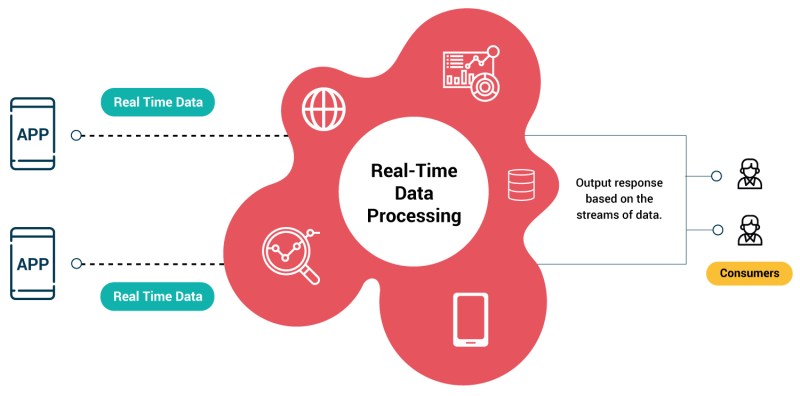
The backbone of real-time payout systems lies in three technical layers: transaction initiation, verification, and execution. Initiation begins with an event trigger—a completed sale, a verified task, or a reached milestone—sent via API or webhook to the payout engine. Verification then employs a combination of rule-based checks (e.g., minimum thresholds) and AI-driven fraud detection (e.g., behavioral biometrics). Once validated, the system executes the payout through a liquidity pool, using instant settlement networks like FedNow (for USD) or stablecoins (for crypto). The entire process is logged in a tamper-proof ledger, ensuring transparency.
What sets these systems apart is their ability to dynamically adjust payout conditions. For example, an affiliate marketer might receive a bonus for early conversions, while a freelancer could get partial payments upon project milestones. This granularity is enabled by smart contracts—self-executing agreements that enforce payout rules without intermediaries. The result? A real-time earnings ecosystem where compensation is tied directly to performance, not arbitrary processing cycles. For businesses, this means higher engagement; for users, it means financial agility.
Key Benefits and Crucial Impact
The adoption of real-time results payout strategies isn’t just about speed—it’s about redefining the economics of effort. For users, the primary benefit is financial autonomy: no more waiting for payroll cycles or bank clearances. This immediacy reduces stress, improves cash flow management, and enables micro-investing or emergency spending. For businesses, the advantages are equally transformative: lower default rates, higher user retention, and the ability to compete with platforms offering instant gratification. The data backs this up—studies show that platforms with real-time payouts see up to 40% higher engagement than those with delayed settlements.
Beyond operational efficiency, these strategies foster trust. In an era where users expect the same instant gratification as streaming or delivery services, delayed payouts feel like a relic. Real-time payout systems align incentives perfectly: users get rewarded immediately for their contributions, while platforms reduce the risk of attrition. The ripple effects extend to the broader economy, as instant liquidity enables smaller businesses and freelancers to reinvest earnings quickly, fueling innovation and growth.
"The future of payments isn’t about moving money faster—it’s about making money move meaningfully. Real-time payouts don’t just settle transactions; they settle trust."
— Dr. Elena Vasquez, Chief Economist at Global Fintech Alliance
Major Advantages
- Financial Agility: Users access earnings instantly, enabling better budgeting and emergency responses. Businesses reduce cash flow gaps by aligning payouts with revenue cycles.
- Reduced Churn: Platforms with delayed payouts lose users to competitors offering immediacy. Real-time systems retain talent by rewarding contributions on the spot.
- Fraud Mitigation: Advanced verification layers (e.g., multi-factor authentication, AI monitoring) reduce chargebacks and disputes, lowering operational costs.
- Global Scalability: Cross-border payouts settle in real time via stablecoins or instant transfer networks, eliminating FX delays and fees.
- Data-Driven Optimization: Real-time analytics allow platforms to adjust payout structures dynamically, incentivizing high-value behaviors (e.g., upsells, referrals).

Comparative Analysis
| Traditional Payout Models | Real-Time Payout Strategies |
|---|---|
| Batch processing (daily/weekly) | Event-triggered, instant settlement |
| High operational overhead (manual reviews) | Automated verification with AI/blockchain |
| Delayed liquidity (3–5 business days) | Same-second or same-minute funding |
| Limited global reach (banking dependencies) | Borderless transactions via digital assets or instant networks |
Future Trends and Innovations
The next frontier for real-time payout strategies lies in predictive liquidity—systems that not only process payments instantly but also anticipate financial needs. Machine learning models will analyze spending patterns to pre-authorize funds for recurring expenses (e.g., subscriptions, bills) before they’re due, effectively turning payouts into proactive financial tools. Another innovation is tokenized earnings, where users receive payouts in utility tokens that can be spent within an ecosystem (e.g., NFT marketplaces, gaming platforms), eliminating conversion friction.
Regulatory clarity will also shape the future. As central banks explore Central Bank Digital Currencies (CBDCs), real-time payouts could become the default for government disbursements (e.g., stimulus, benefits), further normalizing instant settlements. For businesses, the trend will be toward embedded finance, where payouts are seamlessly integrated into workflows—think a freelancer receiving payment upon project completion within their project management tool. The goal? To make real-time earnings invisible yet ubiquitous, just like electricity.
Conclusion
The shift to real-time results payout strategies is more than a technological upgrade—it’s a redefinition of how value is exchanged. By eliminating delays, these systems reduce financial anxiety for users and operational friction for businesses. The most successful implementations will balance speed with security, leveraging automation without sacrificing trust. As industries from gig work to SaaS adopt these models, the standard for payouts will rise: anything less than real-time will feel like a step backward.
For businesses hesitant to transition, the question isn’t whether to adopt these strategies but how quickly. The platforms that master instant, automated payouts will dominate their markets—not because they’re faster, but because they’re smarter. The future belongs to those who turn transactions into real-time relationships between platforms and their users.
Comprehensive FAQs
Q: Are real-time payouts secure?
A: Yes, but security depends on the underlying infrastructure. Systems using blockchain (e.g., Bitcoin, Ethereum) or regulated instant transfer networks (e.g., FedNow, SWIFT gpi) employ cryptographic verification and fraud detection. Always choose platforms with multi-layered authentication and compliance certifications like PCI-DSS or GDPR.
Q: Can I receive real-time payouts in any currency?
A: Most real-time systems support major currencies (USD, EUR, GBP) via instant transfer networks. For cryptocurrencies, payouts are near-instant, but converting to fiat may introduce slight delays. Cross-border payouts in local currencies are improving with CBDCs and stablecoins, but fees and regulatory hurdles can vary by region.
Q: How do I qualify for real-time payouts?
A: Qualification typically requires verified identity (KYC/AML) and meeting minimum thresholds (e.g., $10–$50). Some platforms offer tiered access—freelancers on Upwork must reach $100, while crypto exchanges like Binance allow instant withdrawals for verified users. Always check the platform’s payout policies for specifics.
Q: What are the costs associated with real-time payouts?
A: Costs vary by provider:
- Crypto payouts: Network fees (e.g., Bitcoin’s ~$5–$20 per transaction).
- Fiat instant transfers: Platform fees (1–3%) + potential bank fees.
- Stablecoins: Minimal fees (~$0.10–$1 per transaction).
Q: What happens if a real-time payout is disputed?
A: Most systems have chargeback or reversal policies similar to credit cards, but resolutions are faster due to automated fraud detection. For crypto, transactions are irreversible, so double-check recipient addresses. Platforms like PayPal or Stripe may freeze funds during investigations, but real-time systems aim to resolve disputes within 24–48 hours.
Q: Can small businesses implement real-time payouts?
A: Absolutely. Solutions like Stripe Instant Payouts, Payoneer, or crypto-friendly tools (e.g., BitPay) are designed for SMBs. Startups can integrate APIs to offer instant payouts to contractors or customers. The key is choosing a provider with low minimums and scalable pricing.
Leave a Comment
Comments are moderated before appearing. The data you submit is processed according to the Privacy Policy of Bevvy.