The Hidden Forces Behind r Selected Species: Nature’s Fast-Lane Survivors
The first time a single mosquito larva multiplies into a swarm capable of overwhelming an entire village, or when a patch of dandelions erupts into a yellow carpet overnight, it’s not just chance—it’s the triumph of an ancient evolutionary strategy. These are the r selected species, organisms wired for explosive growth, short lifespans, and sheer numerical dominance. Their success isn’t measured in longevity or parental investment; it’s in raw, relentless reproduction. From the humble fruit fly to the invasive Burmese python, these species exploit instability, outpace competitors, and leave lasting ecological footprints—often at the expense of slower, more deliberate lifeforms.
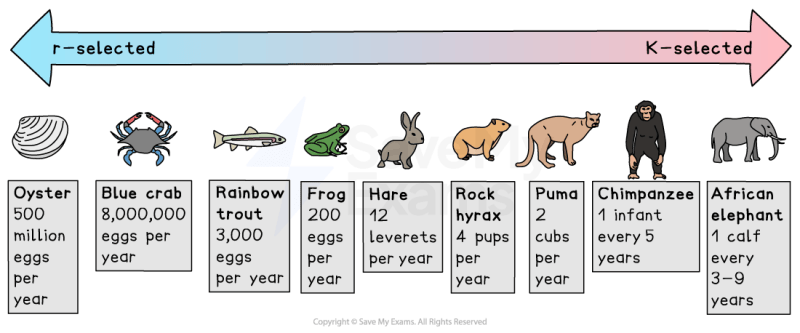
What makes them tick? The answer lies in r/K selection theory, a framework that splits life into two extremes: those that bet big on quantity (r-strategists) and those that prioritize quality (K-strategists). The former thrive in chaos—floods, fires, or human disruption—where survival depends on sheer numbers. Their offspring arrive early, mature fast, and die young, but their sheer volume ensures dominance. This isn’t just theory; it’s observable in real-time, from the sudden bloom of algae after a storm to the rapid spread of rats in a post-disaster city. The trade-off is stark: speed over stability, fecundity over fidelity.
Yet their rise isn’t always benign. Some r selected species become ecological nightmares, choking out native flora or disrupting food webs. Others, like certain bacteria or weeds, evolve resistance to pesticides or antibiotics with alarming speed. Understanding them isn’t just academic—it’s critical for agriculture, conservation, and even public health. The question isn’t if these species will dominate, but how we’ll navigate their dominance.
The Complete Overview of r Selected Species
The term r selected species originates from r/K selection theory, a cornerstone of evolutionary ecology proposed by Robert MacArthur and Edward O. Wilson in 1967. At its core, the theory posits that species occupy a spectrum of reproductive strategies shaped by their environment. R-strategists (or r-selected species) maximize reproductive output in unstable, resource-rich conditions, while K-strategists (K-selected) invest heavily in fewer offspring, optimizing survival in stable, competitive environments. The "r" refers to the intrinsic rate of population increase, a mathematical measure of how quickly a species can multiply under ideal conditions. For r selected species, this rate is sky-high—think of a single dandelion seed producing thousands of offspring, each capable of germinating within days.What distinguishes these organisms isn’t just their reproductive pace but their entire life cycle. R selected species typically exhibit small body size, early maturation, short lifespans, and minimal parental care. Their energy is funneled into producing as many offspring as possible, often with high mortality rates. This strategy is a high-risk, high-reward gamble: in a stable environment, it’s inefficient, but in a fluctuating one—where predators, competitors, or disasters can wipe out populations—it’s a survival imperative. Examples abound: insects like the housefly (Musca domestica), which can develop from egg to adult in under a week; weeds like lamb’s quarters (Chenopodium album), which spread aggressively in disturbed soils; and even some bacteria, like E. coli, which divide every 20 minutes under optimal conditions.
Historical Background and Evolution
The concept of r/K selection emerged from a broader debate in ecology about how species adapt to their environments. Early 20th-century naturalists like Charles Elton noted that some species, like rodents or insects, exploded in numbers after disturbances, while others, like elephants or redwoods, maintained steady populations. Elton’s work on population dynamics laid the groundwork, but it was MacArthur and Wilson who formalized the theory in their 1967 paper, The Theory of Island Biogeography. They argued that island ecosystems—isolated and prone to extinction—favored r selected species because their rapid reproduction could quickly repopulate after disturbances. This idea later expanded to mainland ecosystems, where human activity (deforestation, agriculture, urbanization) creates similar "disturbed" conditions.The theory gained traction in the 1970s and 1980s as ecologists studied invasive species, many of which were r selected. The Burmese python in the Everglades, for instance, thrives in the absence of natural predators, its high reproductive rate allowing it to dominate new habitats. Meanwhile, paleoecological studies revealed that r selected species have shaped Earth’s history. After mass extinctions—like the one that wiped out the dinosaurs—survivors were often small, fast-reproducing organisms that could exploit newly vacant niches. Even human evolution reflects this duality: early hominids like Homo erectus had higher fertility rates (r-strategy traits) compared to modern humans, who invest more in fewer offspring (K-strategy traits).
Core Mechanisms: How It Works
The reproductive machinery of r selected species is finely tuned for speed and volume. Their life histories are governed by three key principles: early reproduction, high fecundity, and low survival rates. Early reproduction means maturing quickly—some insects, like the black fly, complete their life cycle in under two weeks. High fecundity is self-explanatory: a single female mayfly can produce thousands of eggs in her brief lifespan. Low survival rates are the trade-off; most offspring die before adulthood, but the sheer numbers ensure genetic continuity. This strategy is only viable in environments where resources are temporarily abundant, such as after a forest fire or a flood, which clears competitors and predators.Table of Contents
- The Complete Overview of r Selected Species
- Historical Background and Evolution
- Core Mechanisms: How It Works
- Key Benefits and Crucial Impact
- Major Advantages
- Comparative Analysis
- Future Trends and Innovations
- Conclusion
- Comprehensive FAQs
- Q: Are all insects r selected species?
- Q: Can a species switch between r and K strategies?
- Q: Why are r selected species often invasive?
- Q: Do r selected species have any ecological benefits?
- Q: How does climate change affect r selected species?
- Q: Are humans r or K selected?
The physiological adaptations underpinning this strategy are striking. Many r selected species have semelparity—reproducing once in their lifetime before dying (e.g., the Pacific salmon). Others, like dandelions, produce vast quantities of lightweight seeds designed for wind dispersal, maximizing the chance of landing in a favorable spot. Even their metabolic rates are optimized for growth: insects like the fruit fly (Drosophila melanogaster) can develop from egg to adult in days, their bodies prioritizing reproduction over other functions. The cost? High mortality, susceptibility to environmental shifts, and limited ability to compete in stable ecosystems.
Key Benefits and Crucial Impact
The dominance of r selected species is a double-edged sword. On one hand, their rapid reproduction ensures resilience in the face of environmental upheaval, filling niches that slower species cannot. This has been critical for ecosystem recovery after disasters—think of the pioneer species like fireweed that colonize burned landscapes. On the other hand, their success can lead to ecological imbalances, such as invasive species outcompeting natives or pest outbreaks overwhelming crops. The economic and ecological costs are staggering: invasive r selected species like the zebra mussel clog waterways, costing billions in damages annually, while agricultural pests like the fall armyworm devastate maize crops in Africa.The theory also sheds light on human behavior and health. Humans, as a species, exhibit mixed r/K traits—high fertility rates in unstable environments (historically) but increasing K-strategy traits in developed nations (lower birth rates, higher parental investment). Even within individuals, r/K selection manifests in trade-offs: organisms allocate energy to reproduction at the expense of growth, defense, or longevity. This principle extends to cancer biology, where tumors often behave like r selected species, rapidly dividing and ignoring signals to stop.
"In nature, the fast are often the fittest—not because they outlast the slow, but because they outnumber them when the world turns chaotic." — Edward O. Wilson, The Diversity of Life
Major Advantages
- Rapid colonization: R selected species exploit new or disturbed habitats faster than K-strategists, making them ideal pioneers in succession. Example: kudzu vine spreads aggressively in abandoned farmland.
- Resilience to disturbance: Their high reproductive rates allow populations to rebound quickly after disasters (e.g., cockroaches surviving nuclear fallout).
- Evolutionary adaptability: Short generation times enable rapid genetic adaptation (e.g., insecticide-resistant mosquitoes).
- Ecological niche exploitation: They dominate temporary resources, like post-fire seeds or carrion, which K-strategists cannot access efficiently.
- Disease and pest potential: Their ability to multiply quickly makes them formidable in agriculture and medicine (e.g., malaria-carrying mosquitoes).

Comparative Analysis
| Trait | R Selected Species | K Selected Species |
|---|---|---|
| Reproductive Strategy | High fecundity, many small offspring, minimal parental care | Low fecundity, few large offspring, extensive parental investment |
| Lifespan | Short (weeks to a few years) | Long (decades to centuries) |
| Body Size | Small (e.g., insects, weeds) | Large (e.g., elephants, whales) |
| Environmental Preference | Unstable, resource-rich, disturbed habitats | Stable, competitive, resource-limited habitats |
Future Trends and Innovations
As human activity continues to alter ecosystems—through climate change, urbanization, and globalization—r selected species are poised to play an even larger role. Rising temperatures and extreme weather events create more "disturbed" conditions, favoring organisms that thrive in chaos. Invasive r selected species will likely proliferate, as seen with the Asian tiger mosquito spreading into Europe. Conversely, K-strategists may decline, leading to homogenization of ecosystems. Technologically, advances in synthetic biology could allow us to engineer r selected traits into crops for rapid growth, or suppress them in pests using gene drives.The intersection of r/K theory and conservation biology will also evolve. Protecting K-strategists (like old-growth forests or endangered mammals) may require actively managing r selected invaders, such as using biological controls or habitat restoration to tip the balance. Meanwhile, in medicine, understanding r selected traits in cancer cells or pathogens could lead to targeted therapies that disrupt their rapid proliferation. The future of r selected species isn’t just about their survival—it’s about how we coexist with them.

Conclusion
R selected species are nature’s opportunists, their success a testament to the power of quantity over quality in the right conditions. They remind us that evolution isn’t a straight line but a spectrum of strategies, each with its own strengths and weaknesses. While they may seem like ecological pests, they’re also the architects of resilience, filling gaps left by disasters and disturbances. The challenge for humanity is to harness this knowledge—whether by controlling invasive r selected species or learning from their adaptability to design sustainable systems.Yet their dominance also forces us to confront uncomfortable truths about our own impact. By creating a planet of fragmented, disturbed habitats, we’ve inadvertently favored r selected species over their slower counterparts. The lesson? Stability breeds diversity; chaos breeds conformity. As we shape the future of Earth’s ecosystems, understanding r selected species isn’t just about ecology—it’s about survival.
Comprehensive FAQs
Q: Are all insects r selected species?
A: Most insects exhibit r selected traits, given their short lifespans and high reproductive rates. However, some—like social insects (ants, bees)—invest heavily in colony maintenance, blurring the line into K-strategy behaviors. The distinction depends on environmental pressures; solitary insects in unstable habitats are classic r selected species, while those in stable nests may show mixed traits.
Q: Can a species switch between r and K strategies?
A: Yes, but it’s rare. Plasticity in life history allows some species to shift strategies based on conditions. For example, dandelions may produce more seeds in disturbed soils (r-strategy) but invest in deeper roots in stable environments (K-like traits). However, most species are locked into one dominant strategy due to genetic and physiological constraints.
Q: Why are r selected species often invasive?
A: Invasive r selected species succeed because they lack natural predators or competitors in new environments, allowing their high reproductive rates to go unchecked. Their short generation times also enable rapid adaptation to local conditions. Human activity—like shipping or trade—accidentally transports them globally, giving them a head start in unfamiliar ecosystems.
Q: Do r selected species have any ecological benefits?
A: Absolutely. They act as pioneer species, breaking down dead matter, pollinating plants, and creating habitats for others. For example, fireweed stabilizes soil after wildfires, while earthworms aerate soil. Without r selected species, ecosystems would struggle to recover from disturbances, leading to long-term degradation.
Q: How does climate change affect r selected species?
A: Climate change creates more disturbed conditions—warmer temperatures, erratic rainfall, and extreme weather—favoring r selected species. Invasive plants and pests thrive, while native K-strategists (like slow-growing trees) decline. This shift can lead to ecosystem homogenization, where only the fastest reproducers dominate, reducing biodiversity.
Q: Are humans r or K selected?
A: Humans exhibit both traits, depending on context. Historically, we showed r selected behaviors (high fertility, rapid population growth). Today, in developed nations, we lean toward K-strategy (low birth rates, high parental investment). This duality reflects our adaptability, but it also highlights the trade-offs: societies with high r selected traits grow faster but may face resource shortages, while K-strategic societies stabilize but risk aging populations.
Leave a Comment
Comments are moderated before appearing. The data you submit is processed according to the Privacy Policy of Bevvy.