What Is Stagflation? The Silent Economic Crisis Reshaping Markets
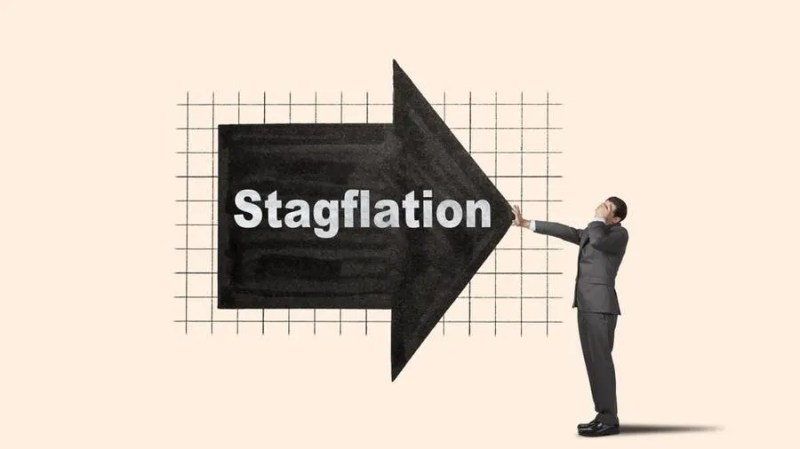
The 1970s were supposed to be a decade of recovery. Instead, they became a masterclass in economic chaos. Gas lines snaked for blocks, wages stagnated, and central banks scrambled to respond to a paradox: inflation soared while growth collapsed. This was what is stagflation—a term that would haunt economists for decades. Unlike traditional recessions, where falling prices and unemployment slow the economy, stagflation combines the worst of both worlds: rising costs, sluggish output, and job losses. Governments and policymakers were caught flat-footed because the tools designed to fight inflation (tighter money) made stagnation worse, and the remedies for stagnation (looser money) fueled inflation further. The result? A decade-long nightmare that reshaped fiscal policy and exposed the fragility of economic models.
Today, the specter of stagflation lingers in the back of every central banker’s mind. From the oil shocks of the 1970s to the supply chain disruptions of the 2020s, the conditions that breed what is stagflation—disrupted supply chains, wage-price spirals, and geopolitical shocks—remain disturbingly familiar. The difference now? Data moves at the speed of algorithms, and the tools to combat it are both more precise and more perilous. Yet the core question remains: How do you fight an economic fire that thrives on both heat and cold?

The Complete Overview of What Is Stagflation
What is stagflation isn’t just another economic buzzword—it’s a self-reinforcing cycle where inflation and stagnation feed off each other, creating a vicious loop that traditional policy struggles to break. At its heart, stagflation is defined by three simultaneous conditions: high inflation, slow economic growth, and rising unemployment. This triad violates the Phillips Curve, the long-held economic theory that suggested inflation and unemployment move in opposite directions. When stagflation strikes, that relationship shatters, leaving policymakers with no clear playbook. The term itself emerged in the 1960s, but it was the 1970s oil crises that turned it from an academic curiosity into a global crisis, forcing economies to confront the limits of Keynesian demand management.The danger of what is stagflation lies in its persistence. Unlike a recession, where the economy eventually recovers, stagflation can linger for years, eroding living standards, corporate profitability, and public trust in institutions. The 1970s in the U.S. saw inflation peak at 14.8% in 1980 while unemployment hovered around 7%, a combination that hadn’t been seen since the Great Depression. Even today, the fear of stagflation haunts markets: the COVID-19 pandemic’s supply shocks, Russia’s invasion of Ukraine, and persistent wage inflation all carry echoes of the 1970s. Understanding what is stagflation isn’t just about history—it’s about recognizing the warning signs before they become a full-blown crisis.
Historical Background and Evolution
The roots of what is stagflation trace back to the 1930s, when economists first grappled with the idea of "cost-push inflation"—where rising production costs (like wages or raw materials) drive up prices without a corresponding boost in demand. But it wasn’t until the 1970s that the term entered mainstream discourse. The first oil shock of 1973, triggered by the Arab oil embargo, sent crude prices soaring overnight. Overnight, the U.S. and Europe faced a double whammy: energy costs skyrocketed, squeezing household budgets and corporate margins, while the sudden drop in oil revenue crippled economies dependent on fossil fuels. Governments responded with stimulus, but the money supply expansion only fueled inflation further. By 1975, the U.S. was in a recession with unemployment at 9%, yet inflation remained stubbornly high at 9%. The term "stagflation" was coined to describe this perplexing mix.The second oil shock in 1979, exacerbated by the Iranian Revolution, pushed inflation to new highs. Central banks, led by the Federal Reserve under Paul Volcker, were forced to adopt aggressive monetary tightening—raising interest rates to 20%—to break the inflation spiral. The result? A brutal but necessary recession that finally crushed inflation by 1983. This period became a case study in what is stagflation: a crisis that required unconventional solutions, including accepting short-term pain to avoid long-term collapse. The lessons from the 1970s shaped modern monetary policy, proving that ignoring stagflation could lead to economic disaster.
Core Mechanisms: How It Works
The mechanics of what is stagflation revolve around three interconnected forces: supply shocks, demand-side rigidities, and wage-price spirals. Supply shocks—like oil crises, pandemics, or wars—disrupt production, driving up costs for businesses and consumers alike. When companies can’t pass these costs onto consumers (due to weak demand), they cut production and lay off workers, deepening stagnation. Meanwhile, workers demand higher wages to offset inflation, but those wage increases further push up prices, creating a self-sustaining loop. This is the wage-price spiral, a hallmark of stagflation that traditional demand-side policies (like stimulus) can’t fix—because the problem isn’t lack of demand, but a broken supply chain.The second critical mechanism is the failure of the Phillips Curve. In normal economic conditions, lower unemployment leads to higher inflation as labor becomes scarce. But in stagflation, the curve flattens or even inverts: unemployment rises while inflation stays high. This happens because the supply shock (e.g., oil prices) dominates demand pressures. Central banks face a dilemma: cutting interest rates to boost growth risks accelerating inflation, while raising rates to tame inflation risks deepening the recession. The 2022-2023 period saw glimpses of this dynamic as the Fed hiked rates aggressively to combat inflation, only to risk tipping the economy into stagnation—a scenario economists now call "stagflation 2.0."
Key Benefits and Crucial Impact
On the surface, what is stagflation seems like an unmitigated disaster. But its impact extends far beyond economic data—it reshapes politics, corporate strategies, and even social contracts. The 1970s stagflation, for instance, accelerated the decline of industrial unions, as companies could no longer afford the wage demands that had fueled post-WWII prosperity. It also forced a shift toward financialization, as corporations turned to debt and shareholder returns to compensate for stagnant real wages. Politically, stagflation eroded public trust in Keynesian economics, paving the way for neoliberal reforms in the 1980s. Even today, the fear of stagflation influences everything from corporate hiring freezes to central bank communication strategies.Table of Contents
- The Complete Overview of What Is Stagflation
- Historical Background and Evolution
- Core Mechanisms: How It Works
- Key Benefits and Crucial Impact
- Major Advantages
- Comparative Analysis
- Future Trends and Innovations
- Conclusion
- Comprehensive FAQs
- Q: What is stagflation, and how is it different from a normal recession?
- Q: What are the most common causes of what is stagflation?
- Q: Can stagflation happen in a modern economy with advanced monetary policy tools?
- Q: How do governments typically respond to what is stagflation?
- Q: Is stagflation a global phenomenon, or can it affect only specific countries?
- Q: What are the long-term effects of stagflation on an economy?
- Q: Are there any historical examples of countries successfully escaping stagflation?
The most immediate victims of stagflation are households and small businesses. Rising prices eat into savings, while stagnant wages and job losses shrink disposable income. The result? A vicious cycle of reduced consumption, which further weakens economic activity. For governments, stagflation forces painful trade-offs: do they prioritize growth (risking inflation) or price stability (risking unemployment)? The answer often lies in structural reforms—like deregulation or supply-side policies—but these take years to implement. Meanwhile, the human cost is immediate: higher poverty rates, increased inequality, and a sense of economic helplessness that can last for generations.
"Stagflation is the one economic phenomenon that exposes the fragility of modern capitalism. It’s not just a recession—it’s a crisis of the system’s ability to adapt." — Larry Summers, Former U.S. Treasury Secretary
Major Advantages
While what is stagflation is widely seen as a negative, there are unintended consequences that can benefit certain sectors or long-term economic restructuring:- Accelerated Innovation: Stagflation forces businesses to become more efficient, leading to breakthroughs in automation, supply chain optimization, and alternative energy sources (as seen in the 1970s shift toward nuclear and solar power).
- Debt Deflation: High real interest rates (a side effect of fighting inflation) can purge excessive debt from the economy, reducing financial instability in the long run.
- Labor Market Reforms: Persistent unemployment can push governments to overhaul labor laws, improving flexibility and reducing structural rigidities (e.g., Germany’s Hartz reforms in the 2000s).
- Geopolitical Realignment: Supply shocks often expose over-reliance on single sources (e.g., oil from the Middle East). Stagflation can spur diversification, as seen in the U.S. pivot to shale gas and renewable energy.
- Monetary Policy Experimentation: Crises like stagflation push central banks to adopt unconventional tools (e.g., quantitative easing, forward guidance), which can later become permanent features of economic management.
Comparative Analysis
Understanding what is stagflation requires distinguishing it from similar but distinct economic conditions. Below is a side-by-side comparison of key differences:| Stagflation | Recession |
|---|---|
| Definition: High inflation + stagnant growth + high unemployment. | Definition: Declining GDP + rising unemployment (but inflation may fall or rise moderately). |
| Cause: Supply shocks (e.g., oil crises, pandemics) or wage-price spirals. | Cause: Demand collapse (e.g., financial crises, consumer confidence drops). |
| Policy Response: Tricky—tight money risks worsening stagnation; loose money risks inflation. | Policy Response: Stimulus (fiscal/monetary) to revive demand. |
| Historical Example: 1970s oil shocks, 2022-2023 post-pandemic inflation. | Historical Example: 2008 Financial Crisis, 1990-91 Recession. |
Future Trends and Innovations
The risk of stagflation in the 2020s is higher than in decades, thanks to a perfect storm of factors: aging populations, deglobalization, climate-related supply disruptions, and persistent wage inflation. The COVID-19 pandemic exposed how quickly supply chains can fracture, while the war in Ukraine demonstrated the fragility of energy markets. Meanwhile, central banks are trapped between fighting inflation and avoiding a growth slowdown—a dilemma that could easily tip economies into stagflation. The solution may lie in structural reforms, such as investing in green energy to reduce fossil fuel dependence, or adopting modern monetary theory (MMT) to fund public projects without debt concerns. However, these changes take time, and the short-term risks remain high.Technology could also play a role in mitigating what is stagflation. Advances in AI-driven supply chain optimization and automation might help businesses absorb shocks, while digital currencies could stabilize inflation expectations. Yet, the biggest challenge remains political will: without coordinated global action, the conditions for stagflation will persist. The 2020s may well be remembered as the decade when the world finally learned to live with—or prevent—the next stagflation crisis.

Conclusion
What is stagflation is more than an economic term—it’s a warning sign of deeper structural weaknesses in the global economy. The 1970s taught us that ignoring it leads to prolonged suffering, while the 2020s remind us that its causes are still very much alive. The key to avoiding a repeat lies in early detection: monitoring supply chain vulnerabilities, wage dynamics, and central bank policies before they spiral out of control. Governments and businesses must also invest in resilience—diversifying supply chains, accelerating green transitions, and preparing for the next inevitable shock.The lesson from history is clear: stagflation doesn’t just happen—it’s allowed to happen. By understanding its mechanisms, recognizing its warning signs, and preparing for its consequences, we can turn the fear of what is stagflation into a blueprint for economic stability.
Comprehensive FAQs
Q: What is stagflation, and how is it different from a normal recession?
Stagflation is a unique economic condition where high inflation, stagnant growth, and rising unemployment occur simultaneously. Unlike a recession—where falling prices and high unemployment slow the economy—stagflation involves rising prices despite weak demand. This violates the Phillips Curve, making it far harder to treat with traditional policies. In a recession, central banks can cut rates to stimulate growth; in stagflation, doing so risks fueling inflation further.
Q: What are the most common causes of what is stagflation?
The primary causes of stagflation include:
- Supply shocks (e.g., oil crises, pandemics, wars).
- Wage-price spirals, where workers demand higher wages to offset inflation, leading businesses to raise prices.
- Structural rigidities, such as labor market inefficiencies or regulatory barriers.
- Monetary policy mismanagement, where central banks keep money too loose for too long.
- Debt overhang, where excessive borrowing limits consumer and business spending.
Q: Can stagflation happen in a modern economy with advanced monetary policy tools?
Yes, stagflation can—and has—occurred even in economies with sophisticated tools like quantitative easing (QE) and forward guidance. The 2022-2023 period saw early signs as central banks hiked rates to combat inflation, risking a growth slowdown. The challenge is that modern tools are designed for demand-side issues (like recessions), not supply-side shocks (like stagflation). If a shock persists long enough, even advanced economies can fall into stagflation, as seen in Japan’s "Lost Decade" of the 1990s.
Q: How do governments typically respond to what is stagflation?
Governments facing stagflation must navigate a difficult trade-off:
- Monetary tightening (raising interest rates) to combat inflation, but this risks deepening stagnation.
- Fiscal austerity to reduce demand, but this can worsen unemployment.
- Supply-side reforms, such as deregulation, tax incentives for investment, or infrastructure spending, to boost productivity.
- Structural adjustments, like breaking up monopolies or improving labor market flexibility.
Q: Is stagflation a global phenomenon, or can it affect only specific countries?
Stagflation can be global (as in the 1970s oil shocks) or localized (e.g., a country with a single-industry economy hit by a supply disruption). In an interconnected world, global shocks (like pandemics or wars) can quickly spread stagflation across borders. However, countries with flexible exchange rates, diversified economies, and strong institutions (e.g., Germany in the 1970s) can mitigate its effects better than those with rigid structures (e.g., Argentina in the 1980s).
Q: What are the long-term effects of stagflation on an economy?
The long-term effects of stagflation include:
- Eroding living standards, as wages fail to keep up with inflation.
- Increased inequality, as debt burdens fall disproportionately on the poor.
- Corporate restructuring, with weaker firms failing and industries consolidating.
- Policy shifts, such as a move toward neoliberal reforms or financialization.
- Social unrest, as public trust in economic institutions declines.
Q: Are there any historical examples of countries successfully escaping stagflation?
Yes, but escaping stagflation requires brutal policy measures and structural reforms. The most notable example is the U.S. under Paul Volcker, who raised interest rates to 20% in the early 1980s, crushing inflation at the cost of a deep recession. Germany in the 1970s used supply-side policies, like energy efficiency investments, to reduce dependence on oil. Japan’s "Lost Decade" (1990s) shows that prolonged stagnation can also occur if reforms are delayed. The key lesson? Act decisively, even if it’s painful.
Leave a Comment
Comments are moderated before appearing. The data you submit is processed according to the Privacy Policy of Bevvy.