The Secret to Sparkle: What Is the Best Clarity for a Diamond?
The question of what is the best clarity for a diamond doesn’t have a one-size-fits-all answer—but it does demand precision. Clarity isn’t just about how "clean" a diamond looks under magnification; it’s a delicate balance between optical perfection, cost, and personal preference. A diamond with flawless clarity might dazzle under a jeweler’s loupe, yet its brilliance could pale next to a slightly included stone when set in a solitaire ring. The market’s obsession with "eye-clean" diamonds obscures a deeper truth: clarity grades are a spectrum, and the "best" choice hinges on how you intend to wear it, how much you’re willing to spend, and whether you prioritize rarity or practicality.
For centuries, diamond clarity was an artisanal judgment—until the Gemological Institute of America (GIA) standardized grading in 1953, turning it into a measurable science. Today, the scale ranges from FL (Flawless) to I3 (Included 3), with each grade reflecting the number, size, and visibility of internal (inclusions) and external (blemishes) imperfections. Yet, the eye’s resolution is limited: most people can’t distinguish between VS2 and SI1 clarity without magnification. This discrepancy creates a paradox: buyers often overpay for grades they can’t perceive, while sellers exploit the ambiguity to justify premiums. The reality? What is the best clarity for a diamond depends on whether you’re chasing a museum-quality gem or a ring that sparkles effortlessly in daily life.
The diamond industry’s marketing machinery has conditioned consumers to associate higher clarity grades with superior quality, but this isn’t always true. A VVS1 diamond might boast microscopic purity, yet its fire could be overshadowed by a VS2 stone with better light performance. Meanwhile, lab-grown diamonds—now accounting for nearly 20% of global sales—have upended traditional clarity expectations by offering near-flawless stones at a fraction of the cost. The rise of "clean" lab diamonds (grades VVS1 to IF) has forced even natural diamond miners to rethink their pricing strategies. So before diving into grades, ask yourself: Do I want a diamond that’s technically perfect, or one that looks perfect to the naked eye?
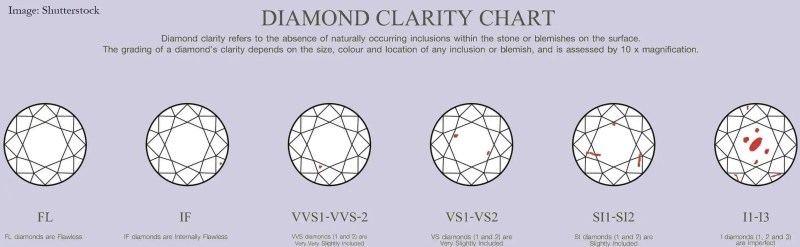
The Complete Overview of Diamond Clarity
Diamond clarity is the measure of a stone’s internal and external flaws, graded under 10x magnification by certified gemologists. The GIA’s 11-point scale—FL, IF, VVS1, VVS2, VS1, VS2, SI1, SI2, I1, I2, I3—serves as the global standard, though other labs (AGS, IGI) use slightly different terminology. Clarity isn’t just about inclusions; it’s about how those imperfections interact with light. A VS2 diamond might have visible crystals under magnification, but if they’re positioned away from the table (the flat top), they won’t detract from the stone’s brilliance. Conversely, a VVS1 diamond with a dark inclusion near the center could appear duller than a SI1 stone with inclusions in less critical zones.The misconception that what is the best clarity for a diamond is always the highest grade ignores the role of cut quality. A poorly cut FL diamond will leak light, while a well-proportioned SI1 stone can outshine it. The GIA’s "Eye-Clean" threshold—where inclusions are invisible to the naked eye—typically falls between VS2 and SI1, making these grades the sweet spot for most buyers. However, this isn’t a hard rule; some SI2 diamonds pass the eye test, while certain VVS2 stones fail due to poor symmetry. The key lies in understanding that clarity is a relative metric, not an absolute one.
Historical Background and Evolution
Before the 20th century, diamond clarity was assessed subjectively, with terms like "water" (clear) or "cloudy" dominating trade language. The first systematic grading attempts emerged in the 1930s, when De Beers introduced the "8-point scale" to standardize transactions. But it wasn’t until 1953 that the GIA formalized the 11-point scale we use today, revolutionizing how diamonds were bought and sold. This shift was partly driven by the industry’s need to justify rising prices—higher clarity grades became a proxy for exclusivity. The FL and IF categories, in particular, were marketed as "investment-grade," despite their rarity accounting for less than 0.01% of all diamonds mined.The 1980s saw the rise of laser drilling and fracture-filling techniques, which temporarily improved the appearance of lower-clarity diamonds. While these methods were later banned by the GIA (as of 2018), they highlighted a critical flaw in the grading system: clarity could be enhanced, not just inherent. Today, lab-grown diamonds have further complicated the narrative. Because they’re created in controlled environments, they often emerge with fewer inclusions than natural stones, making VVS1 and IF grades more accessible. This has forced traditional diamond dealers to either lower prices or rebrand lab diamonds as "simulants" to maintain margins. The evolution of clarity grading reflects broader trends: from artisanal craftsmanship to industrial precision, and now to ethical and technological disruption.
Core Mechanisms: How It Works
Clarity grading begins with a diamond being viewed under 10x magnification, where gemologists examine its inclusions—tiny crystals, feathers (cracks), or clouds (clustered pinpoints)—and blemishes (surface irregularities). The GIA’s protocol evaluates three factors: type (nature of the inclusion), size (relative to the diamond’s dimensions), and position (how close the flaw is to the center or table). For example, a VS2 diamond might have a single pinpoint inclusion, while an SI1 could have multiple eye-visible feathers. The challenge lies in predicting how these flaws will affect light performance; a well-placed inclusion might go unnoticed, whereas a poorly positioned one can create a "window" effect, reducing sparkle.Table of Contents
- The Complete Overview of Diamond Clarity
- Historical Background and Evolution
- Core Mechanisms: How It Works
- Key Benefits and Crucial Impact
- Major Advantages
- Comparative Analysis
- Future Trends and Innovations
- Conclusion
- Comprehensive FAQs
- Q: Can a diamond with lower clarity grades (like SI2) still look beautiful?
- Q: Does clarity affect a diamond’s durability?
- Q: Are lab-grown diamonds graded the same way as natural diamonds?
- Q: Can a diamond’s clarity grade change over time?
- Q: Is it worth paying extra for a higher clarity grade if the difference is invisible?
- Q: How can I ensure I’m not overpaying for clarity?
Light interaction is where clarity meets optics. Diamonds refract light through their facets, and inclusions can either scatter or absorb it. A VVS1 diamond’s inclusions are so small they don’t disrupt light paths, but a VS2 stone’s might create subtle shadows. The GIA’s "Light Performance" studies reveal that diamonds with inclusions in the wings (outer zones) often outperform those with central flaws. This is why some SI1 stones appear brighter than VVS2 counterparts: the inclusions are strategically located. Understanding this mechanism answers a critical question: What is the best clarity for a diamond isn’t just about the grade—it’s about how that grade interacts with the stone’s cut and setting.
Key Benefits and Crucial Impact
The pursuit of what is the best clarity for a diamond isn’t merely aesthetic; it’s an economic and emotional decision. A higher clarity grade can increase a diamond’s resale value, though this varies by market. In 2023, FL and IF diamonds saw a 12% premium over VVS1 in auction houses, while SI2 stones often sold at a 20% discount. Yet, the real benefit lies in the stone’s durability. Flawless diamonds are less prone to cracking under stress, making them ideal for high-wear jewelry like engagement rings. For collectors, clarity is a status symbol; a FL diamond from the Argyle mine, for instance, can fetch six figures due to its scarcity.The psychological impact is equally significant. Studies in Journal of Consumer Research show that buyers associate higher clarity grades with "purity" and "love," even when the difference is imperceptible. This perception drives demand for VS2 and above, despite SI1 often being the most cost-effective "eye-clean" option. The trade-off? Lower clarity grades can mean more inclusions, which may require careful setting to avoid visibility. For example, a three-stone ring might hide inclusions better than a solitaire. The crux of the clarity debate is balancing visibility, cost, and longevity—three factors that define a diamond’s true value.
"Clarity is the soul of a diamond, but the eye is its judge. What looks perfect to one person may not to another—and that’s the beauty of it." — Dr. Emily S. Koivula, GIA Senior Research Scientist
Major Advantages
- Optical Purity: FL and IF diamonds offer unobstructed light passage, maximizing brilliance. However, the difference between VVS1 and VS2 is often negligible to the naked eye.
- Resale Value: Higher clarity grades (especially VVS1 and above) retain value better in the secondary market, though lab-grown diamonds are eroding this premium.
- Durability: Flawless diamonds are less prone to internal fractures, making them ideal for active lifestyles. Lower grades may require more frequent inspections.
- Cost Efficiency: SI1 and SI2 diamonds can offer "eye-clean" results at 30–50% below VS2 prices, making them the best value for most buyers.
- Customization: Inclusions in SI grades can be strategically placed during cutting to enhance light performance, offering a tailored look.

Comparative Analysis
| Clarity Grade | Key Characteristics & Best Use Cases |
|---|---|
| FL (Flawless) | No inclusions or blemishes under 10x magnification. Rare (0.01% of diamonds). Best for collectors, museum pieces, or ultra-luxury jewelry. |
| VVS1-VVS2 (Very, Very Slightly Included) | Minor inclusions visible only under magnification. Nearly eye-clean. Ideal for solitaire rings or high-end settings where purity is prioritized. |
| VS1-VS2 (Very Slightly Included) | Inclusions may be eye-visible in some lighting. The "sweet spot" for brilliance and affordability. Perfect for engagement rings or vintage-style jewelry. |
| SI1-SI2 (Slightly Included) | Noticeable inclusions under magnification; some may be eye-visible. Best value for "eye-clean" results. Suited for three-stone rings or halo settings. |
Future Trends and Innovations
The diamond clarity landscape is shifting due to three major forces: technology, ethics, and consumer behavior. Lab-grown diamonds are pushing natural stones to refine their clarity marketing, as lab diamonds now achieve FL and IF grades more consistently. Advances in AI-powered grading—such as the GIA’s 2024 pilot program using machine learning to detect inclusions—could further standardize clarity assessments, reducing human error. Meanwhile, blockchain verification is emerging to track a diamond’s clarity history from mine to retail, addressing concerns about enhanced or misgraded stones.Ethical clarity is another frontier. Consumers are increasingly asking, "Is the diamond’s clarity natural, or was it altered?" Techniques like laser drilling (now banned) and fracture-filling (still controversial) have led to stricter regulations. The rise of "clean" lab diamonds—those without treatments—is forcing traditional dealers to either adopt transparent sourcing or risk obsolescence. By 2030, clarity grading may evolve to include sustainability metrics, where a diamond’s environmental impact (e.g., water usage in mining) influences its perceived "purity." The future of what is the best clarity for a diamond won’t just be about inclusions—it’ll be about transparency, technology, and responsibility.

Conclusion
The quest to determine what is the best clarity for a diamond ultimately circles back to a simple truth: there’s no universal answer. What matters most is alignment with your priorities. If you’re buying for investment, VVS1 or FL may be worth the premium. If you’re prioritizing daily wear, SI1 could offer the same sparkle at a fraction of the cost. The diamond industry’s obsession with higher grades has created a perception gap—one that savvy buyers are now exploiting by focusing on eye-clean results over technical perfection.As lab-grown diamonds redefine clarity standards and AI reshapes grading, the conversation is expanding beyond inclusions to encompass ethics and innovation. The best clarity for you might not be the highest grade on paper—it’s the one that aligns with your vision, budget, and values. Whether it’s a VS2 stone that catches the light just right or an SI1 diamond that tells a story of craftsmanship, the real clarity lies in understanding the trade-offs.
Comprehensive FAQs
Q: Can a diamond with lower clarity grades (like SI2) still look beautiful?
A: Absolutely. Many SI2 diamonds are "eye-clean" when set properly—especially in designs with multiple stones (e.g., halo settings) or intricate metalwork that distracts from inclusions. The key is working with a jeweler who understands how to position the diamond to minimize visibility. For solitaire rings, SI1 is often the better choice, but SI2 can work in certain cuts (like radiant or oval) where inclusions are less noticeable.
Q: Does clarity affect a diamond’s durability?
A: Yes, but indirectly. Flawless (FL) and internally flawless (IF) diamonds are structurally stronger because they lack internal weaknesses (like feathers or clouds) that could propagate cracks under stress. Lower clarity grades with large inclusions may be more prone to chipping or breaking if the inclusion is near the surface. However, well-cut diamonds of any clarity can last decades with proper care.
Q: Are lab-grown diamonds graded the same way as natural diamonds?
A: Yes, lab-grown diamonds receive identical clarity grades from the GIA and other major labs. However, lab diamonds often achieve higher clarity grades (VVS1 and above) more frequently due to controlled growth conditions. This has led to a shift in consumer expectations—many now expect lab diamonds to be "near-flawless" at a lower price point, which is pressuring natural diamond suppliers to justify their premiums.
Q: Can a diamond’s clarity grade change over time?
A: No, a diamond’s clarity grade is fixed at the time of grading. However, its appearance can change due to wear, cleaning methods (e.g., ultrasonic treatments can sometimes expose hidden inclusions), or damage (like chips that create new blemishes). Some inclusions may become more visible as the diamond’s facets wear down, but the grade itself doesn’t "drop." If a diamond is recut, its clarity may be reassessed.
Q: Is it worth paying extra for a higher clarity grade if the difference is invisible?
A: It depends on your goals. If you’re buying for resale or investment, higher grades (VVS1 and above) may hold value better. But for personal wear, the extra cost often doesn’t justify the marginal improvement in brilliance. Many jewelers recommend VS2 as the optimal balance—it’s eye-clean, affordable, and offers better light performance than some VVS2 stones with poorly placed inclusions. Always prioritize cut quality over clarity if brilliance is your top concern.
Q: How can I ensure I’m not overpaying for clarity?
A: Start by asking your jeweler for a diamond clarity plot—a diagram showing the location and size of inclusions. This helps you visualize whether flaws will be visible in your chosen setting. Compare prices across retailers for the same clarity/cut/color/carat (the "4Cs") to spot overcharging. Be wary of diamonds graded by less stringent labs (e.g., IGI), as their standards can vary. Finally, consider lab-grown diamonds, where VVS1 and IF grades are more common and prices are 70–90% lower than natural stones.
Leave a Comment
Comments are moderated before appearing. The data you submit is processed according to the Privacy Policy of Bevvy.