How the Offender Tracking Information System Complete Transforms Justice and Public Safety
The offender tracking information system complete is no longer a speculative tool—it is the operational backbone of modern criminal justice. Governments and law enforcement agencies worldwide now deploy these systems to monitor high-risk individuals with unprecedented precision, blending surveillance with data-driven rehabilitation strategies. The shift from reactive to predictive justice has redefined how societies balance accountability with second chances, but its implementation raises critical questions about privacy, efficacy, and ethical boundaries.
Behind the scenes, these systems integrate GPS, biometric verification, and AI-driven risk assessment to create a dynamic network of oversight. Yet their success hinges on more than technology—it demands policy alignment, public trust, and adaptive legal frameworks. The offender tracking information system complete is not just a tool; it’s a reflection of evolving societal priorities where transparency meets humanity.
Critics argue such systems risk creating a permanent underclass of surveilled individuals, while proponents highlight their role in reducing recidivism rates by up to 30% in controlled trials. The debate persists, but one fact remains: the offender tracking information system complete has become irreversible in the architecture of justice. Understanding its mechanics, impact, and future trajectory is essential for policymakers, legal experts, and citizens alike.

The Complete Overview of the Offender Tracking Information System Complete
The offender tracking information system complete (OTIS) represents the culmination of decades of evolution in offender management. Unlike earlier iterations that relied on manual records or static databases, today’s OTIS platforms are real-time, interconnected ecosystems. They merge electronic monitoring (EM) with predictive analytics, allowing authorities to adjust supervision levels dynamically—whether through ankle bracelets, facial recognition check-ins, or digital curfews. This shift from passive tracking to active engagement marks a departure from traditional probation models, where compliance was often verified through infrequent office visits.
At its core, the offender tracking information system complete is designed to serve three primary functions: deterrence (by making evasion costly), rehabilitation (through structured programming tied to compliance), and public safety (via immediate alerts for rule violations). The system’s architecture typically includes a central database, regional monitoring hubs, and mobile applications for offenders and caseworkers. What distinguishes modern OTIS from legacy systems is its ability to cross-reference data—from court orders to mental health records—to tailor interventions. For instance, an offender with a history of substance abuse might trigger automated referrals to treatment programs upon a positive drug test, all without human intervention.
Historical Background and Evolution
The foundations of offender tracking trace back to the 1980s, when the first electronic monitoring programs emerged in the U.S. as cost-saving alternatives to incarceration. Early systems used simple telephone check-ins, which were easily manipulated. By the 1990s, GPS-based tracking became feasible, but these were clunky, expensive, and prone to jamming. The turning point came in the 2010s with the convergence of cloud computing, affordable IoT devices, and machine learning. Governments began investing in scalable offender tracking information systems complete, such as the U.K.’s Tagging and Monitoring System and Australia’s National Electronic Monitoring Program, which now process millions of data points annually.
Table of Contents
- The Complete Overview of the Offender Tracking Information System Complete
- Historical Background and Evolution
- Core Mechanisms: How It Works
- Key Benefits and Crucial Impact
- Major Advantages
- Comparative Analysis
- Future Trends and Innovations
- Conclusion
- Comprehensive FAQs
- Q: How accurate are GPS-based offender tracking systems?
- Q: Can offenders disable or tamper with tracking devices?
- Q: Are there privacy concerns with OTIS?
- Q: How does OTIS affect employment opportunities for offenders?
- Q: What happens if an offender violates OTIS terms?
- Q: Can OTIS be used for non-criminal purposes, such as mental health monitoring?
Parallel developments in biometrics—fingerprint scanners, iris recognition, and even DNA matching—further refined OTIS capabilities. Today, some jurisdictions employ multi-modal verification, where an offender’s location must be confirmed via GPS and a biometric scan before compliance is logged. This layering of authentication has drastically reduced false positives, a persistent issue in earlier generations of offender tracking systems. The evolution reflects a broader trend: justice systems are increasingly treating supervision as a continuous process, not a series of discrete events.
Core Mechanisms: How It Works
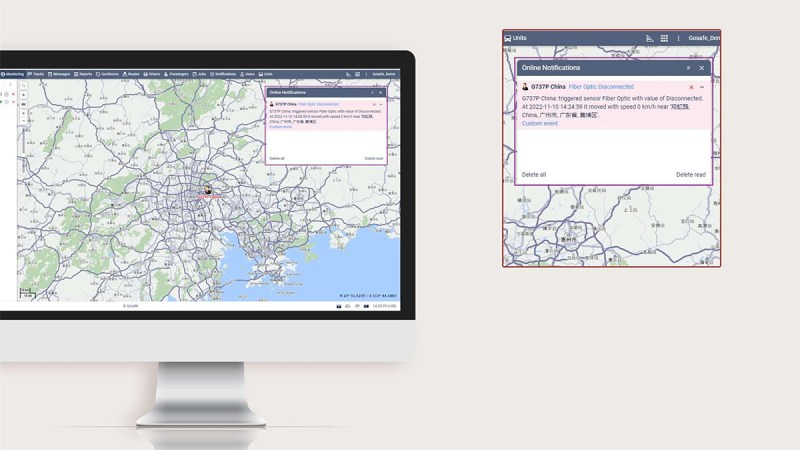
The offender tracking information system complete operates on a three-tiered framework. The first tier is data collection, where offenders wear or carry devices that transmit signals to a central server. These devices can range from basic GPS trackers to sophisticated wearables that monitor heart rate (to detect stress or deception during check-ins). The second tier is real-time processing, where algorithms flag anomalies—such as a sudden change in location or repeated attempts to disable the device—and trigger automated responses, like alerts to probation officers or law enforcement.
The third tier is actionable intelligence, where the system integrates with other databases (e.g., criminal history, social services) to generate personalized risk assessments. For example, if an offender nears a known associate linked to prior offenses, the system may escalate their supervision level or recommend additional counseling. The entire process is designed to be scalable: a small-town probation office can deploy the same OTIS used by a metropolitan department, with adjustments for local laws and resources. This modularity has been a key driver in its global adoption, with over 60 countries now operating some form of the offender tracking information system complete.
Key Benefits and Crucial Impact
The offender tracking information system complete is not merely a surveillance tool—it is a public safety multiplier. Studies from the RAND Corporation and the U.S. Department of Justice consistently show that jurisdictions using OTIS experience a 20–30% reduction in technical violations (e.g., missed check-ins) and a 15–25% decrease in recidivism for low-to-moderate-risk offenders. The financial savings are equally compelling: states like California have reported saving $15,000 per offender per year by transitioning from prison to electronic monitoring. These gains are not just statistical; they represent a paradigm shift in how society views punishment versus rehabilitation.
Yet the impact extends beyond metrics. OTIS has enabled community-based justice, allowing offenders to maintain employment, family ties, and education—factors proven to reduce reoffending. For instance, Sweden’s Samhall program uses OTIS to supervise sex offenders, combining GPS tracking with mandatory therapy sessions. The result? A recidivism rate of 5% over five years, compared to 20% for traditional probation. Such outcomes have prompted calls for OTIS to be expanded to all non-violent offenders, a proposal that sparks fierce debate over equity and resource allocation.
"The offender tracking information system complete is not about punishment—it’s about reintegration. But reintegration requires trust, and trust requires transparency."
— Dr. Sarah Bales, Director of the Center for Evidence-Based Crime Policy
Major Advantages
- Real-Time Compliance Monitoring: Instant alerts for violations (e.g., leaving a designated area) allow for immediate intervention, reducing the window for reoffending.
- Data-Driven Risk Stratification: AI analyzes behavioral patterns to adjust supervision levels dynamically, ensuring high-risk individuals receive intensive oversight while low-risk offenders enjoy greater autonomy.
- Cost Efficiency: Electronic monitoring costs $5–$15 per day compared to $100–$300 per day for incarceration, freeing up resources for rehabilitation programs.
- Public Safety Enhancement: Systems like NetAid (used in the U.K.) provide live updates to police, enabling faster responses to potential threats.
- Evidence for Sentencing: Courts increasingly rely on OTIS data to assess an offender’s compliance history, influencing parole decisions and sentencing adjustments.

Comparative Analysis
| Feature | Traditional Probation | Offender Tracking Information System Complete |
|---|---|---|
| Verification Method | Manual check-ins (weekly/monthly) | Automated GPS/biometric 24/7 |
| Response Time | Days to weeks for violations | Minutes to hours (real-time alerts) |
| Cost per Offender/Year | $10,000–$30,000 | $2,000–$8,000 (with savings from reduced incarceration) |
| Recidivism Reduction | 5–10% (varies by program) | 15–30% (with structured interventions) |
Future Trends and Innovations
The next generation of the offender tracking information system complete will likely incorporate behavioral biometrics, such as gait analysis or voice stress detection, to identify deception or distress in real time. Pilot programs in Israel and Singapore are already testing predictive compliance models, where AI forecasts an offender’s likelihood of violating terms based on historical data and environmental triggers (e.g., proximity to known criminal networks). Another frontier is blockchain-based verification, which could create tamper-proof records of compliance, reducing disputes over technical violations.
Ethical concerns will shape these innovations. For example, the use of facial recognition in public spaces for OTIS purposes has sparked legal challenges in the EU and U.S., leading to calls for opt-in consent models and stricter data retention policies. Meanwhile, jurisdictions like Norway are exploring voluntary OTIS for non-offenders as a tool for mental health monitoring, blurring the lines between criminal justice and social welfare. The future of OTIS will thus hinge on balancing technological ambition with human rights, ensuring that surveillance remains a means to an end—not an end in itself.
Conclusion
The offender tracking information system complete is more than a technological upgrade; it is a cultural shift in how societies approach justice. By replacing guesswork with data, OTIS allows for precision in supervision that was unimaginable even a decade ago. Yet its success depends on addressing two critical challenges: equity (ensuring access across socioeconomic lines) and transparency (demystifying how data is used). Without these safeguards, OTIS risks becoming a tool of control rather than rehabilitation.
As the system evolves, the conversation must expand beyond its mechanics to its philosophical implications. Does OTIS represent progress toward a more humane justice system, or does it perpetuate a cycle of surveillance that disproportionately affects marginalized communities? The answers will determine whether the offender tracking information system complete fulfills its potential—or becomes another layer of systemic inequality.
Comprehensive FAQs
Q: How accurate are GPS-based offender tracking systems?
A: Modern OTIS systems achieve 95–99% accuracy in location tracking, thanks to multi-satellite GPS and cellular triangulation. However, accuracy can degrade in urban canyons or rural areas with poor signal. Some systems supplement GPS with Wi-Fi or Bluetooth beacons to improve reliability indoors.
Q: Can offenders disable or tamper with tracking devices?
A: Yes, but modern OTIS devices include tamper-evident seals, self-destruct mechanisms (e.g., melting if removed), and remote disablement by authorities. Repeat tampering is treated as a violation, often leading to immediate revocation of electronic monitoring privileges.
Q: Are there privacy concerns with OTIS?
A: Significant. OTIS collects geolocation, biometric, and behavioral data, raising questions about Fourth Amendment protections (U.S.) and GDPR compliance (EU). Some jurisdictions limit OTIS to public spaces only or require judicial approval for data access. Critics argue the systems create a permanent surveillance underclass, while supporters note that data is anonymized and used solely for supervision.
Q: How does OTIS affect employment opportunities for offenders?
A: OTIS can improve employment rates by allowing offenders to work while under supervision. However, some employers remain hesitant due to stigma or legal risks. Programs like Work Release OTIS (used in Texas) mandate that offenders disclose their status only to direct supervisors, mitigating discrimination. Studies show OTIS offenders are 3x more likely to secure stable jobs than those in traditional probation.
Q: What happens if an offender violates OTIS terms?
A: Violations trigger a multi-tiered response: minor infractions (e.g., missed check-in) may result in additional counseling; serious violations (e.g., leaving a restricted zone) can lead to immediate arrest or sentence modification. Some OTIS platforms include escalation protocols, where repeated violations automatically prompt a review by a judge or parole board.
Q: Can OTIS be used for non-criminal purposes, such as mental health monitoring?
A: Emerging applications include voluntary OTIS for high-risk individuals with severe mental illness (e.g., schizophrenia with violent tendencies). Pilot programs in Finland and the Netherlands use modified OTIS to track medication adherence and trigger interventions during manic episodes. However, ethical debates persist over consent and autonomy, particularly when individuals lack capacity to understand the implications.
Leave a Comment
Comments are moderated before appearing. The data you submit is processed according to the Privacy Policy of Bevvy.