Understanding what is a class action lawsuit: Power, justice, and strategy
When a single legal battle becomes a movement, it’s often because the stakes aren’t just about money—they’re about principle. A class action lawsuit isn’t just another courtroom drama; it’s a mechanism designed to level the playing field when individuals, overwhelmed by legal costs or sheer numbers, face off against corporations or entities with vast resources. The power of these lawsuits lies in their ability to aggregate countless grievances into one unified case, turning individual injustices into collective leverage. Yet, despite their potential, many still misunderstand what is a class action lawsuit—whether it’s how it’s certified, who benefits, or why some cases fail.
The legal landscape has evolved significantly since the concept was formalized, adapting to modern challenges like data breaches, environmental harm, and workplace discrimination. Today, what is a class action lawsuit is as much about strategy as it is about justice. It’s a tool that can force accountability on a scale no single plaintiff could achieve alone, but it also demands precision—from class certification to settlement negotiations. The difference between a landmark victory and a dismissed case often hinges on these details, making the process both a legal and a tactical puzzle.
At its core, the question of what is a class action lawsuit reveals deeper tensions: between corporate power and consumer rights, between efficiency and fairness, and between the promise of justice and the reality of legal constraints. Whether you’re a business navigating risk, a consumer seeking redress, or simply curious about how these cases unfold, understanding the mechanics—and the limitations—of class actions is essential. The following breakdown cuts through the ambiguity, offering clarity on how these lawsuits function, their impact, and what the future might hold.

The Complete Overview of What Is a Class Action Lawsuit
A class action lawsuit is a legal proceeding where a group of plaintiffs—often numbering in the thousands or even millions—band together to pursue a single claim against a defendant. Unlike individual lawsuits, where each plaintiff files separately, class actions consolidate claims under a single case, streamlining the process and reducing the burden on courts. This structure is particularly valuable when the harm inflicted is widespread but individually minor, such as price-fixing schemes, defective products, or discriminatory practices. The defendant, typically a corporation or government entity, faces a unified front, which can deter settlements or force systemic changes.The strength of a class action lies in its ability to democratize justice. Without it, individuals might lack the resources or incentive to challenge powerful entities, leaving wrongs unaddressed. Yet, the process is not without its complexities. Courts must first determine whether the case qualifies as a class action—a decision that hinges on criteria like commonality of claims, adequacy of representation, and whether the class is too large or disparate to be managed effectively. This preliminary hurdle, known as class certification, is often the most contentious phase, as defendants frequently argue that the class is improperly defined or that individual claims vary too widely.
Historical Background and Evolution
The modern concept of what is a class action lawsuit traces back to English common law, where early forms of collective litigation emerged in the 15th century. However, it was in the United States that class actions took shape as a formal legal tool. The Federal Rules of Civil Procedure, adopted in 1938, codified Rule 23, which established the framework for class actions. This rule was a response to the need for efficiency in handling mass claims, particularly during the post-World War II era when consumer protection and antitrust cases proliferated.The evolution of class actions has mirrored broader societal shifts. In the 1970s and 1980s, landmark cases like Eisen v. Carlisle & Jaekel (1974) and Amchem Products v. Windham (1992) clarified the standards for class certification, emphasizing the need for fairness to defendants and plaintiffs alike. More recently, the rise of digital platforms and data privacy concerns has spurred a wave of class actions targeting tech giants, from antitrust violations to misinformation campaigns. These cases highlight how what is a class action lawsuit has adapted to new forms of harm, from algorithmic discrimination to cybersecurity failures.
Core Mechanisms: How It Works
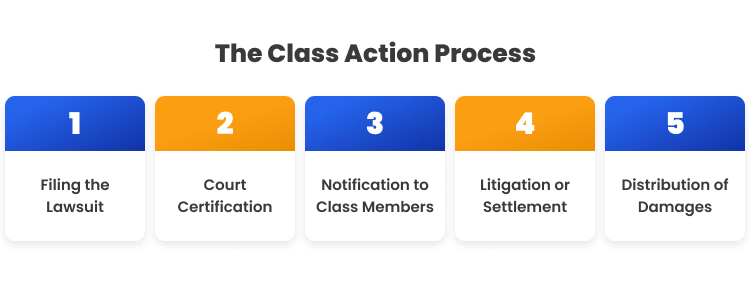
The lifecycle of a class action lawsuit begins with the filing of a complaint that identifies a common legal theory shared by the class members. For example, a case alleging that a pharmaceutical company misled consumers about a drug’s side effects would group all affected patients under a single claim. The next critical step is class certification, where the court evaluates whether the case meets Rule 23’s requirements: numerosity (too many plaintiffs to sue individually), commonality (shared legal or factual issues), typicality (the plaintiffs’ claims are representative), and adequacy of representation (the class counsel can fairly protect the interests of all members).Table of Contents
- The Complete Overview of What Is a Class Action Lawsuit
- Historical Background and Evolution
- Core Mechanisms: How It Works
- Key Benefits and Crucial Impact
- Major Advantages
- Comparative Analysis
- Future Trends and Innovations
- Conclusion
- Comprehensive FAQs
- Q: What is a class action lawsuit, and how does it differ from a mass tort?
- Q: Can I join a class action lawsuit if I didn’t know about it?
- Q: How are settlements distributed in a class action?
- Q: What happens if a class action is dismissed before settlement?
- Q: Are there limits to how much a class action lawyer can earn?
- Q: Can a company settle a class action without admitting wrongdoing?
- Q: How long does a typical class action lawsuit take to resolve?
- Q: What should I do if I think I’m part of a class action?
Once certified, the case proceeds as a single litigation, with discovery, motions, and trials conducted on behalf of the entire class. Settlements are common, often negotiated between the plaintiffs’ attorneys and the defendant, with court approval required to ensure fairness. If the case goes to trial, the verdict applies to all class members unless they opt out. Post-judgment, distribution of compensation or injunctive relief follows, though administrative challenges—such as tracking class members or calculating individual damages—can delay resolution for years.
Key Benefits and Crucial Impact
The impact of what is a class action lawsuit extends far beyond the courtroom. For plaintiffs, these lawsuits provide a pathway to justice that individual claims cannot. Corporations, meanwhile, face the prospect of massive liabilities, which can incentivize reform or deter future misconduct. The collective nature of class actions also reduces the risk of "forum shopping," where defendants exploit differences in state laws to avoid accountability. By consolidating claims, these lawsuits create a more predictable and efficient legal process, benefiting both plaintiffs and defendants alike.Yet, the benefits are not without controversy. Critics argue that class actions can lead to "lottery justice," where windfall settlements disproportionately enrich plaintiffs’ attorneys while leaving class members with minimal compensation. Others contend that the threat of class actions stifles innovation or forces companies to litigate rather than address underlying issues. Despite these debates, the role of class actions in enforcing consumer rights and corporate accountability remains undeniable.
"Class actions are the great equalizer in the legal system, allowing those with little power to challenge those with great power. But they must be wielded carefully—balancing access to justice with fairness to all parties." — Justice Stephen Breyer, U.S. Supreme Court
Major Advantages
- Access to Justice: Individuals with weak claims—such as those involving small monetary losses—can combine forces to make litigation viable. Without class actions, many wrongs would go unredressed due to prohibitive legal costs.
- Efficiency: Consolidating thousands of claims into one case reduces court congestion and lowers administrative burdens for both plaintiffs and defendants.
- Deterrence: The prospect of massive damages or injunctive relief can prompt corporations to self-regulate, avoiding the reputational and financial risks of litigation.
- Systemic Change: Class actions often target structural issues (e.g., environmental harm, workplace discrimination) rather than individual grievances, leading to broader policy reforms.
- Attorney Accountability: While critics focus on attorney fees, class action rules require court oversight to ensure settlements are fair and that class members receive adequate compensation.
Comparative Analysis
| Class Action Lawsuit | Individual Lawsuit |
|---|---|
| Consolidates claims from multiple plaintiffs under one case. | Single plaintiff vs. single defendant; no aggregation. |
| Requires class certification, which can be contentious. | No certification needed; proceeds as a standalone case. |
| Often results in larger settlements due to collective impact. | Settlements or damages are limited to the individual plaintiff. |
| Attorney fees are typically a percentage of the recovery (e.g., 25-33%). | Attorney fees are negotiated individually, often on an hourly basis. |
Future Trends and Innovations
The future of what is a class action lawsuit is being shaped by technological advancements and shifting legal priorities. Artificial intelligence and big data are already transforming class action litigation, enabling attorneys to identify patterns of harm across vast datasets—such as tracking consumer fraud or algorithmic bias. However, these tools also raise ethical questions about privacy and the potential for overreach in defining class memberships. Additionally, the rise of global class actions, where plaintiffs from multiple jurisdictions unite against multinational corporations, is testing the limits of international legal cooperation.Another trend is the growing use of opt-out class actions, where members of the class are presumed to be included unless they actively opt out. This model, favored in some European jurisdictions, aims to maximize participation but has faced criticism for diluting individual autonomy. Meanwhile, legislative reforms—such as those proposed in the U.S. to cap attorney fees or limit class action filings—could reshape the landscape, striking a balance between access to justice and corporate fairness.

Conclusion
The question of what is a class action lawsuit is more than a legal inquiry—it’s a reflection of how society balances power, accountability, and justice. These lawsuits have democratized the pursuit of remedies, allowing ordinary individuals to challenge entities that would otherwise operate without consequence. Yet, their effectiveness depends on careful oversight, fair representation, and a commitment to systemic fairness. As the legal and technological environments evolve, so too will the role of class actions, ensuring they remain a vital tool for redress in an increasingly complex world.For businesses, understanding the mechanics of class actions is not just about risk management—it’s about anticipating how collective action can drive change. For consumers, recognizing the potential of these lawsuits empowers them to seek justice when individual recourse is unavailable. Ultimately, the enduring relevance of what is a class action lawsuit lies in its ability to adapt, ensuring that the promise of collective justice remains within reach.
Comprehensive FAQs
Q: What is a class action lawsuit, and how does it differ from a mass tort?
A: A class action lawsuit consolidates claims where plaintiffs share a common legal theory (e.g., deceptive advertising). A mass tort, by contrast, involves multiple individual lawsuits arising from a single event (e.g., a defective medical device), where each plaintiff has unique injuries. Class actions are governed by Rule 23, while mass torts often proceed as separate cases with coordinated discovery.
Q: Can I join a class action lawsuit if I didn’t know about it?
A: Yes, but the process depends on the case. In opt-in class actions, you must actively join; in opt-out class actions, you’re included unless you exclude yourself. Courts notify potential class members via mail, publication, or electronic means, but tracking down all affected individuals can be challenging, especially in digital-era cases (e.g., data breaches). Always check with the plaintiffs’ attorneys or court filings for specifics.
Q: How are settlements distributed in a class action?
A: Settlements in class actions are typically distributed based on a formula defined in the court-approved agreement. For monetary claims, payments may be proportional to individual losses (e.g., in price-fixing cases), while injunctive relief (e.g., policy changes) benefits the entire class. Administrative fees, attorney costs (usually 25-33% of the recovery), and court oversight ensure transparency, though delays in distribution are common due to the sheer volume of claimants.
Q: What happens if a class action is dismissed before settlement?
A: If a court dismisses a class action lawsuit before settlement, individual plaintiffs can pursue their claims separately, though they may face higher costs and weaker leverage against the defendant. Dismissals often occur due to failures in class certification (e.g., lack of commonality) or procedural errors. Some plaintiffs may refile under a different legal theory or in a different jurisdiction, but success is not guaranteed.
Q: Are there limits to how much a class action lawyer can earn?
A: Yes, but the rules vary. In federal court, attorney fees in class actions are typically capped at 25-33% of the recovery, subject to court approval. Some states impose stricter limits (e.g., California’s 25% cap for consumer cases). Courts review fee requests based on factors like the complexity of the case, the risk taken by counsel, and the benefits to class members. Critics argue these caps are insufficient to incentivize high-stakes litigation, while supporters see them as necessary to prevent excessive payouts.
Q: Can a company settle a class action without admitting wrongdoing?
A: Absolutely. Settlements in class action lawsuits often include a non-admission of liability clause, where the defendant agrees to pay or take corrective action without conceding fault. This is common in cases where the legal or factual merits are disputed, or where the cost of prolonged litigation outweighs the potential judgment. However, the settlement terms—including injunctive relief or policy changes—may implicitly acknowledge the underlying issues.
Q: How long does a typical class action lawsuit take to resolve?
A: The timeline varies widely. Some cases settle within 1-2 years post-certification, especially if the legal issues are straightforward (e.g., wage theft). Complex cases—such as antitrust violations or environmental harm—can drag on for a decade or more, particularly if appeals or administrative hurdles arise. Factors like defendant cooperation, court backlogs, and the need to identify class members all contribute to delays. For example, the Facebook v. FTC class action (2020) took years to negotiate a $5 billion settlement.
Q: What should I do if I think I’m part of a class action?
A: Start by checking court filings, news reports, or notices from the plaintiffs’ law firm. Websites like ClassAction.org or PACER (for federal cases) can help locate active lawsuits. If you’re unsure, consult a consumer protection attorney or the law firm handling the case—they can advise on opting in/out and your potential recovery. Never assume you’re automatically included; proactive steps are key, especially in opt-out cases.
Leave a Comment
Comments are moderated before appearing. The data you submit is processed according to the Privacy Policy of Bevvy.