The Darkly Delightful World of *Addams Family* Characters: From Gothic Icons to Pop Culture Legends
The Addams Family isn’t just a household name—it’s a cultural institution. Since their debut in Charles Addams’ eerie yet whimsical cartoons in the 1930s, these Addams Family characters have evolved from inked sketches to full-fledged icons, embodying a brand of dark humor and macabre charm that defies conventional family tropes. What began as a series of black-and-white illustrations depicting a household where taxidermy, poison, and piano recitals coexisted seamlessly has grown into a multimedia empire. Today, Addams Family characters like Gomez’s manic energy, Morticia’s serpentine grace, and Wednesday’s deadpan menace remain as recognizable as they are polarizing—a testament to their ability to straddle the line between horror and comedy.
The genius of these Addams Family characters lies in their subversion of expectations. While traditional families in media often prioritize warmth and wholesomeness, the Addamses thrive in their own twisted logic, where a child’s favorite toy is a dismembered doll and the patriarch’s idea of romance involves a chandelier. This inversion isn’t just a quirk; it’s a deliberate commentary on societal norms, wrapped in a layer of absurdist humor. Over decades, the franchise has adapted seamlessly across mediums—from the 1964 TV series to Tim Burton’s 1991 live-action film, the 1992 animated series, and beyond—each iteration refining the balance between the grotesque and the endearing. The result? A legacy that continues to captivate, challenge, and entertain.
Yet, the allure of Addams Family characters extends beyond their surface-level oddities. They reflect deeper cultural conversations about grief, eccentricity, and the beauty of nonconformity. Morticia’s gothic elegance, for instance, predates modern interpretations of the "dark academia" aesthetic by decades, while Wednesday’s detached demeanor foreshadowed the rise of antiheroines in contemporary storytelling. Even the family’s pet, Thing—a shapeless, ever-present blob—has become a symbol of unconditional love in its own bizarre way. Whether you’re a longtime fan or a curious observer, understanding these characters isn’t just about memorizing their quirks; it’s about decoding how they’ve shaped—and been shaped by—pop culture’s ever-evolving landscape.
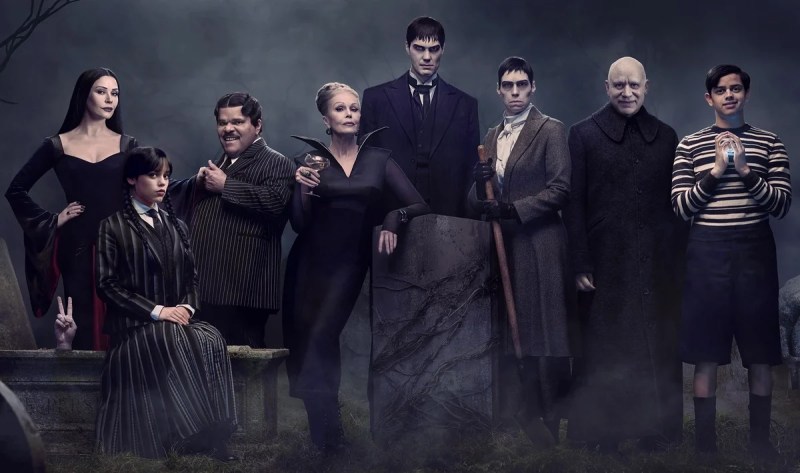
The Complete Overview of Addams Family Characters
The Addams Family characters are a study in contrasts: gothic romance meets slapstick comedy, Victorian mourning meets modern irreverence. At their core, they represent a family unit that operates on its own set of rules, where death is a casual topic of conversation and the family’s "normal" is what outsiders find unsettling. The original cartoon characters—created by Charles Addams—were designed to be deliberately unsettling, but their charm lay in the way they turned the macabre into something almost comforting. This duality is what makes them enduring: they’re both a cautionary tale and a love letter to the beautifully bizarre.What sets Addams Family characters apart is their ability to transcend their medium. Unlike many animated or live-action families that remain confined to their original context, the Addamses have been reimagined across generations, each version adding new layers to their personalities. The 1964 TV series, starring John Astin and Carolyn Jones, softened some of their edges but retained their core eccentricities, making them accessible to mainstream audiences. Then came Tim Burton’s 1991 film, which doubled down on the gothic aesthetic, introducing a darker, more visually striking interpretation that influenced a generation of filmmakers. Even the 1992 animated series and later adaptations have kept the spirit alive, proving that the family’s appeal isn’t tied to any single iteration but to the essence of their characters.
Historical Background and Evolution
The origins of Addams Family characters trace back to the early 20th century, when Charles Addams, a staff cartoonist for The New Yorker, began publishing his eerie family sketches in the 1930s. These illustrations—featuring a lanky patriarch, a raven-haired matriarch, and a brood of equally unsettling offspring—were unlike anything else in mainstream media. Addams drew inspiration from his own fascination with the macabre, as well as influences like Edgar Allan Poe and the works of artist Max Ernst. His characters were never given names in the cartoons, but their personalities were unmistakable: the father’s obsession with traps and torture devices, the mother’s love of poison, and the children’s penchant for playing with bones and skulls.The first major adaptation came in 1964 with The Addams Family, a TV series starring John Astin as Gomez and Carolyn Jones as Morticia. This version introduced names and backstories that would become canon, including Wednesday’s love of taxidermy and Pugsley’s mischievous antics. The show’s success led to a 1965 theatrical short, Halloween with the New Addams Family, and later to the 1977 sequel The Addams Family Values. However, it wasn’t until Tim Burton’s 1991 film that the characters achieved a new level of cultural prominence. Burton’s vision—dark, moody, and visually opulent—captured the spirit of Addams’ original cartoons while adding a layer of cinematic grandeur. The film’s success spawned sequels (Addams Family Values, 1993) and a 1992 animated series that further cemented the family’s place in pop culture.
Core Mechanisms: How It Works
The enduring appeal of Addams Family characters lies in their ability to function as a cohesive unit, where each member’s eccentricity complements the others. Gomez’s over-the-top romanticism and Morticia’s dry wit create a dynamic that’s both comedic and oddly tender, while Wednesday and Pugsley’s childlike fascination with the macabre grounds the family in a sense of normalcy—at least, by their own standards. The family’s "normal" is what outsiders perceive as abnormal, but within their world, their quirks are simply part of daily life. This inversion is a key mechanism of their charm: they’re not trying to be like everyone else; they’re unapologetically themselves.Table of Contents
- The Complete Overview of Addams Family Characters
- Historical Background and Evolution
- Core Mechanisms: How It Works
- Key Benefits and Crucial Impact
- Major Advantages
- Comparative Analysis
- Future Trends and Innovations
- Conclusion
- Comprehensive FAQs
- Q: Who created the original Addams Family characters?
- Q: Why are the Addams Family characters so popular?
- Q: How did Tim Burton’s 1991 film change the franchise?
- Q: Are there any Addams Family characters that weren’t in the original cartoons?
- Q: How has the franchise evolved in recent years?
- Q: What makes Morticia Addams such an iconic character?
- Q: Are there any plans for new Addams Family projects?
Another critical element is the family’s relationship with death and the supernatural. Unlike traditional families that avoid such topics, the Addamses treat them as mundane. Lurch’s undead status, Grandmama’s ghostly presence, and Thing’s ambiguous nature (is it a creature, a toy, or something else?) all contribute to a world where the supernatural is just another part of life. This normalization of the unusual is what makes the Addams Family characters so compelling—they don’t fear what others find frightening; they embrace it. Whether it’s Gomez’s elaborate traps or Morticia’s poisonous tea, their actions are rooted in love, loyalty, and a deep-seated sense of family, even if that family is built on a foundation of the bizarre.
Key Benefits and Crucial Impact
The Addams Family characters have had a profound impact on pop culture, influencing everything from horror-comedy tropes to the way we perceive "family" in media. They’ve given audiences a safe space to explore themes of death, grief, and eccentricity without the heaviness often associated with such topics. In an era where traditional family dynamics are constantly scrutinized, the Addamses offer a refreshing alternative—a family that loves each other fiercely, even if their methods are unconventional. Their success also lies in their adaptability; each new iteration of the franchise has managed to reinvent them while staying true to their core essence, ensuring their relevance across generations.Beyond entertainment, the Addams Family characters have also sparked conversations about mental health and societal norms. Morticia’s gothic aesthetic and Wednesday’s detached demeanor have been interpreted as representations of depression and introversion, respectively, resonating with audiences who see themselves in these characters. The family’s unconditional love for one another, despite their differences, has also been celebrated as a counterpoint to the often toxic depictions of family in media. In many ways, the Addamses are a blueprint for what it means to be a family on your own terms.
"The Addams Family is the only family where the father is a serial killer, the mother is a poisoner, and the children play with bones. And yet, they’re the most loving family on television." — Charles Addams (paraphrased)
Major Advantages
- Subversion of Family Tropes: The Addams Family characters reject traditional notions of what a family should be, offering a counter-narrative that celebrates individuality and nonconformity.
- Dark Humor as a Coping Mechanism: Their brand of humor allows audiences to confront uncomfortable topics like death and grief in a way that’s both funny and cathartic.
- Visual and Narrative Consistency: Across all adaptations, the core personalities of the characters remain intact, making them instantly recognizable regardless of the medium.
- Cultural Relevance: The family’s themes resonate with modern audiences, particularly in discussions about mental health, identity, and the pressure to conform.
- Merchandising and Franchise Potential: Their unique aesthetic and characters have made them a goldmine for merchandise, films, and spin-offs, ensuring their longevity in the entertainment industry.

Comparative Analysis
| Aspect | 1964 TV Series | 1991 Tim Burton Film | 1992 Animated Series |
|---|---|---|---|
| Tone | Lighthearted, comedic, with a touch of camp. | Dark, gothic, visually opulent, and more serious. | Balanced between humor and horror, with a modern sensibility. |
| Character Depth | Names and backstories introduced; personalities softened. | Deeper exploration of themes like grief and identity. | Expanded lore, especially for minor characters like Cousin Itt. |
| Audience Appeal | Family-friendly, broad appeal. | Targeted older teens and adults with a taste for dark fantasy. | Appealed to both children and adults, with a mix of humor and scares. |
| Legacy | Laid the foundation for future adaptations. | Redefined the franchise’s visual and thematic direction. | Bridged the gap between older and newer generations of fans. |
Future Trends and Innovations
The Addams Family characters show no signs of fading into obscurity. With the rise of streaming platforms and the resurgence of gothic aesthetics in media, there’s ample opportunity for new adaptations to explore untapped aspects of their world. A potential animated reboot or a live-action series could delve deeper into the family’s history, perhaps introducing new generations of Addamses or exploring their origins in greater detail. Additionally, the franchise’s merchandising potential remains strong, with opportunities for interactive experiences, such as escape rooms or themed attractions, that immerse fans in the Addamses’ twisted universe.Another trend to watch is the increasing intersection of horror and comedy in modern media. The Addams Family characters paved the way for shows like The Simpsons (with its own macabre family dynamic) and Wednesday, which reimagines the character as a darkly comedic teen detective. Future adaptations could further blur the lines between horror and humor, tapping into the growing appetite for "elevated horror-comedy" that balances scares with wit. Whether through a new film, a spin-off series, or even a video game, the Addamses are poised to remain a staple of pop culture for decades to come.

Conclusion
The Addams Family characters are more than just a quirky ensemble; they’re a cultural phenomenon that has transcended their original medium to become a defining part of 20th and 21st-century storytelling. Their ability to adapt while staying true to their core—whether through the campy charm of the 1964 series or the gothic grandeur of Tim Burton’s films—is a testament to their timeless appeal. They challenge us to rethink what family means, offering a world where love is unconditional, even if it’s expressed through poisonous tea and elaborate traps.As long as audiences crave stories that defy convention, the Addams Family characters will continue to thrive. They’re a reminder that the most compelling narratives often come from the margins—the weird, the dark, and the unexpected. In a world that often demands conformity, the Addamses stand as a celebration of individuality, proving that sometimes, the most fascinating families are the ones that don’t quite fit in.
Comprehensive FAQs
Q: Who created the original Addams Family characters?
A: The characters were created by cartoonist Charles Addams, who first published his eerie family sketches in The New Yorker beginning in the 1930s. Addams never named the characters in his original cartoons, but their personalities were instantly recognizable.
Q: Why are the Addams Family characters so popular?
A: Their popularity stems from their subversion of traditional family tropes, dark humor, and the way they normalize the macabre. The characters resonate because they’re unapologetically themselves, offering a counterpoint to mainstream depictions of family life.
Q: How did Tim Burton’s 1991 film change the franchise?
A: Burton’s film introduced a darker, more gothic aesthetic that redefined the franchise’s visual and thematic direction. It also brought the characters to a new generation, influencing everything from fashion to horror-comedy tropes in modern media.
Q: Are there any Addams Family characters that weren’t in the original cartoons?
A: Yes. Characters like Lurch (the hunchbacked butler) and Grandmama (the ghostly matriarch) were introduced in later adaptations, particularly the 1964 TV series. The 1992 animated series also expanded the roster with characters like Cousin Itt and Ophelia.
Q: How has the franchise evolved in recent years?
A: Recent years have seen a resurgence of interest in the franchise, with Wednesday (2022) bringing Wednesday Addams to the forefront of pop culture. The show reimagines her as a darkly comedic teen detective, blending the original characters’ macabre charm with modern storytelling techniques.
Q: What makes Morticia Addams such an iconic character?
A: Morticia’s iconic status comes from her perfect blend of elegance and menace. Her dry wit, love of poison, and serpentine grace make her one of the most memorable female characters in pop culture history. She’s often cited as an inspiration for gothic fashion and antiheroines in media.
Q: Are there any plans for new Addams Family projects?
A: While no official announcements have been made, given the franchise’s enduring popularity, it’s highly likely that new adaptations—whether films, TV series, or even video games—will continue to explore the world of the Addams Family characters in the coming years.
Leave a Comment
Comments are moderated before appearing. The data you submit is processed according to the Privacy Policy of Bevvy.